Page 5 of 9

Watching Anime: The Many Faces of Astro Boy

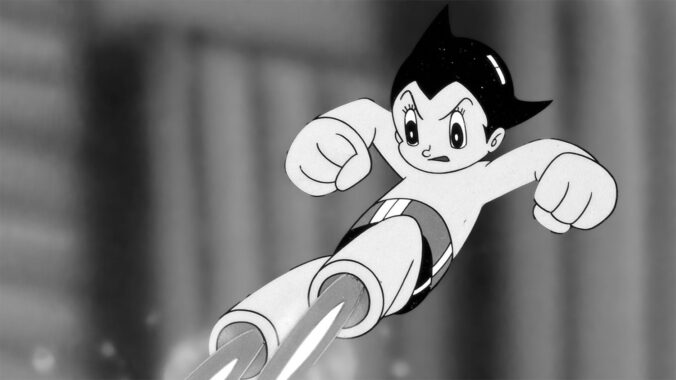
Astro Boy (Tetsuwan Atom) is more than just a cartoon character. He’s a cornerstone of modern Japanese pop culture and a foundational figure in global science fiction storytelling. Created by Osamu Tezuka, the so-called “God of Manga”, Astro Boy first appeared on the printed page in 1952, eventually becoming the star of Japan’s first major animated television series in 1963. Astro is instantly recognizable with his big round eyes (according to Tezuka, inspired by Disney’s Bambi), jet-powered limbs, and heart of gold. But behind his charming appearance lies one of fiction’s most poignant origin stories: a tale of loss, abandonment, identity, and artificial humanity.

Tezuka, a trained medical doctor turned artist, was deeply influenced by Western literature, animation, and post-war trauma. His work often combined fantastical science fiction with deep human concerns. With Astro Boy, he created a character who was simultaneously a child, a weapon, and a mirror for human fears and hopes in an age of rapid technological change.

Astro’s origin story (rebuilt and reimagined across manga, tv, and film) reveals not just changing artistic styles, but also evolving philosophies of life, death, and what it means to be human.

One of Tezuka’s clearest inspirations for Astro Boy was Carlo Collodi’s Pinocchio. Like Geppetto’s wooden puppet, Astro is a creation born of love and grief, a substitute for a lost or absent child. And like Pinocchio, Astro must embark on a journey of self-discovery, confronting internal doubt and external hostility to become “real” in an emotional, if not biological, sense.

However, whereas Pinocchio centers on the transformation of a puppet into a human boy, Astro Boy reverses the trajectory. Astro is built to resemble a real boy but gradually realizes he is not human and never will be. His tragedy lies not in wanting to become human per se but in wanting to be accepted as he is. The constant tension between how he is perceived (a machine, a tool, a weapon) and how he sees himself (a boy with emotions and conscience) makes Astro a far more tragic and modern figure than Pinocchio.

Tezuka’s Astro Boy manga (1952–1968) begins with the death of Dr. Tenma’s young son Tobio in a car accident. Unable to cope with the loss, Tenma creates a robotic duplicate in Tobio’s image, Astro. At first, he believes the robot can fill the void in his heart, but when Astro fails to grow like a real child, Tenma goes cold and eventually sells him to a circus. It is Professor Ochanomizu who later rescues Astro, recognizing his potential and giving him purpose.

This origin emphasizes emotional realism and moral ambiguity. Tenma is both a grieving father and a failed god, a man who tries to cheat death and ends up compounding his tragedy. The story subtly explores whether love for a child must depend on their humanity or whether even a robot can deserve compassion. Astro’s journey is as much internal as external: a search for dignity, acceptance, and autonomy.

The 1963 Astro Boy anime series marked the birth of Japanese tv anime. Targeted at children and produced with limited resources, this version simplifies the manga’s origin story. Tenma still creates Astro after losing his son but abandons him with far less cruelty. Astro quickly transitions into a noble superhero, fighting crime and injustice with a smile.

What’s lost in psychological complexity is gained in accessibility. This version frames Astro as a cheerful icon of modernity, reflecting the era’s post-war optimism. Technology is seen not as a danger but as a friend, something to be embraced. Astro becomes less of a tragic figure and more of a model child: brave, honest, and kind.

The 1980 Astro Boy reboot attempts to restore some of the manga’s emotional depth. Dr. Tenma’s grief is shown with greater gravity, and Astro’s feelings of rejection are more fully explored. The show gives more time to his struggle to understand human behavior, emotion, and his place in society.

This version straddles two audiences: children and nostalgic adults. It maintains the accessibility of the 1963 series but reintroduces key philosophical questions. Can a machine feel love? Should robots have rights? What is the soul? It pushes Astro toward a more mature role, not just as a hero but as a child grappling with adult truths.

Astro Boy‘s 2003 adaptation is the most mature and morally complex. Created for the franchise’s 40th anniversary, it leans into the tragedy of Astro’s origin. Dr. Tenma becomes an obsessed and ultimately villainous figure. After failing to recreate Tobio, he rejects Astro not just emotionally but violently, erasing his memories and casting him into the world alone. Astro only learns about his origin in episode seven.

This version uses Astro’s story to critique social prejudice, AI ethics, and systemic inequality. Robots in this world are oppressed, segregated, and often exploited, echoing real-world histories of racism and classism. Astro becomes a hero and a figure of compassion and forgiveness in a society that dehumanizes him. It reflects the anxieties of its time: fears of surveillance, terrorism, and technological dehumanization. Where earlier versions asked “can robots be human?”, the 2003 series asks “how should we treat the ‘other’, even if it’s not human?”

In the 2009 CG-animated feature, produced by Hong Kong-based Imagi Animation Studios, Astro Boy is given a slick redesign and a simplified origin. Dr. Tenma (voiced by Nicolas Cage) creates Astro after Tobio’s death, rejects him briefly, but is quickly forgiven and redeemed. The story turns into a standard “chosen one” narrative: Astro runs away, finds friendship among outcasts, and returns to save the city from a militaristic villain (voiced by Donald Sutherland). Absent is the thematic depth of earlier versions. Gone are the questions of identity, suffering, or systemic bias. Instead, we get a story of self-acceptance and family-friendly adventure, in line with Hollywood animation conventions. While visually polished, the film loses the existential core of Tezuka’s creation.

Among Astro’s many foes, Pluto stands apart. Created by another scientist to destroy the world’s strongest robots (including Astro), Pluto becomes a tragic figure. In the original manga, he is a tool of hatred who slowly develops a sense of conscience, eventually refusing to kill and sacrificing himself. Pluto’s role is critical: he is Astro’s dark mirror, a machine built for war who comes to yearn for peace. Their confrontation is not just a battle of strength but a clash of ethics. Tezuka uses Pluto to explore how even “evil” machines can change, and whether morality is hardwired or learned.

This relationship was so rich that it became the centerpiece of Naoki Urasawa’s critically acclaimed manga Pluto (2003–2009), a noir-style reimagining that reframes Astro and Pluto’s story for adults, pushing the themes of trauma, war, and identity even further.

One of the most haunting aspects of Astro’s character is that he can never grow up. Built to resemble a 9-year-old boy, he is physically frozen in time, despite gaining wisdom, experience, and pain. Unlike Pinocchio, he will never become a “real boy”. Unlike other child heroes, he cannot age into adulthood.

This places him in the lineage of figures like Peter Pan, the boy who never grows up, and Claudia from Interview with the Vampire, the child turned immortal, cursed to stay young while her mind matures. Like Claudia, Astro’s eternal youth becomes a prison, especially in versions like the manga and the 2003 anime, where his longing for identity and love is rejected because of what he is. His childlike body disarms those around him but also prevents him from being taken seriously. He is too young to be feared, too artificial to be loved, and too powerful to be ignored. A poignant paradox that gives him enduring pathos.

Favorite 1990s Graphic Narrative

  • Sin City (1991), by Frank Miller
  • Bone (1991), by Jeff Smith
  • Hellboy (1993), by Mike Mignola
  • Strangers in Paradise (1993), by Terry Moore,
  • Les Mondes d’Aldébaran (1994), by Leo
  • Preacher (1995), by Garth Ennis and Steve Dillon
  • Batman: The Long Halloween (1996), by Jeph Loeb and Tim Sale
  • Transmetropolitan (1997), by Warren Ellis and Darick Robertson
  • Road to Perdition (1998), by Max Allan Collins and Richard Piers Rayner
  • The League of Extraordinary Gentlemen (1999), by Alan Moore and Kevin O’Neill

In chronological order of first publication.

Five Pearl Harbors

I’ve recently watched six movies that featured the Japanese attack on the US naval base at Pearl Harbor in Hawaii. It’s so interesting how they all used the historical event in different ways and with different purposes.

From Here to Eternity (Fred Zinnemann, 1953) ends with the attack. Before that, we see the intersecting lives of several characters around the island. Private Robert E. Lee Prewitt (Montgomery Clift), Sergeant Milton Warden (Burt Lancaster), and Private Angelo Maggio (Frank Sinatra) navigate the tensions of military life in Pearl Harbor. Karen Holmes (Deborah Kerr), the wife of Warden’s commanding officer, and Alma (Donna Reed), an “entertainer” working at a gentlemen’s club, explore what roles are available in a closed society made for men.

None of the characters are heroes. Prewitt is tragically stubborn, accepting undeserving punishment from his superiors and justifying it as personal integrity. Warden is cynical and pragmatic, caught in a doomed affair with his commanding officer’s wife. Maggio is a self-destructive underdog who has accepted his fate, trying to have a few moments of pleasure before it all ends. All three are locked into a system of institutional cruelty, masculinity under pressure, and the suffocating effects of rigid hierarchies, both military and societal.

The women occupy a paradoxical space, central to the story’s emotional undercurrents and, at the same time, only peripheral in a male-dominated world, their lives shaped by their relationships to the men and their limited agency within a patriarchal order. Karen is the archetype of the disillusioned military wife trapped in a sexless, loveless marriage with an unfaithful husband. Her affair with Warden is an act of both rebellion and desperation. Alma works as a prostitute and dreams of a respectable life back on the mainland. Her romance with Prewitt is fraught with illusions and pragmatism: she wants to love him, but not at the cost of her escape plan.

From Here to Eternity is a brooding, emotionally resonant war drama classic of mid-century American cinema. Adapted from James Jones’s 1951 novel, the film is often remembered for its iconic beachside kiss between Burt Lancaster and Deborah Kerr, but it is far more than a memorable still frame. It is a study of a repressive and masculinized institution that crushes those who don’t conform. The military, as depicted here, is less a protector of freedom than an engine of conformity. Dissent, even principled dissent, is punished. Compassion is a weakness. While sanitized compared to the novel, especially in its portrayal of sexuality and institutional corruption, it still tackles extramarital affairs, prostitution (thinly veiled), and brutality within the ranks with remarkable frankness for the time.

From Here to Eternity is easily the best movie of this batch. It captures a world on the brink of historical catastrophe, populated by people already living through private wars. It reflects the gender norms of its era, sometimes critically and sometimes uncritically, but always with emotional depth. Its women, while not given full narrative autonomy, are as vivid and wounded as the men, and their struggles underscore the film’s bleak view of a world where love is no match for duty, and integrity comes at the cost of survival.

In Harm’s Way (Otto Preminger, 1965) starts with the attack. From there, it tries to build a narrative of a sweeping World War II epic, echoing the grandeur and psychological nuance of earlier war dramas. And it fails. Miserably. In the mid-sixties, it is still trying to build heroes in the style of the mid-forties.

Playing Captain Rockwell Torrey, John Wayne is a paragon of stoicism, a figure of silent suffering and noble command. He is rarely questioned and even more rarely wrong. He begins the film as a granite-jawed archetype of military virtue and ends the same way. Perhaps that’s the point: he is the immovable rock in a sea of shifting loyalties and crises, but it leaves little room for psychological complexity. As the more volatile and morally compromised Commander Paul Eddington, Kirk Douglas offers a counterpoint: his character is flawed, scarred, and driven by guilt. Yet his arc, involving a sexual assault subplot that is handled with both narrative bluntness and emotional detachment, feels poorly justified and oddly sanitized. Patricia Neal is given the unenviable role of Lieutenant Maggie Haines, the nurse who exists primarily to be Wayne’s emotional salve. There is a quiet dignity in her performance but, like all the women in the film, she is relegated to the periphery of a man’s world. Jill Haworth and Paula Prentiss play roles that are at best ornamental and at worst exploitative, especially in scenes where trauma is either brushed aside or used solely as motivation for male characters.

In Harm’s Way is based on James Bassett’s 1962 novel of the same name, but it streamlines, sanitizes, and sentimentalizes much of the content. Where the book offers a mature, morally complex portrait of military life during World War II, the film opts for broad strokes, traditional heroism, and a less introspective tone. And the movie goes on for 165 minutes, trying to weave together a personal melodrama with a broader military campaign but never giving either element the depth or pacing it needs. The romantic subplot feels like a studio-mandated softening of the action, while the strategic developments often devolve into scenes of men staring at maps.

Tora! Tora! Tora! (Richard Fleischer & Toshio Masuda & Kinji Fukasaku, 1970) is all about the attack on Pearl Harbor. While the two movies I commented on previously were based on novels, this one is based on historical documents. Instead of using the episode as the opening or the closing of a fictional story, the goal here was to present the attack as closely as possible to the facts. Tora! Tora! Tora! presents a level of historical fidelity that was rare in war films of its time. Eschewing the melodrama typical of World War II cinema, the film adopts a more analytical, even clinical tone in its dissection of the political and military machinery on both sides of the Pacific.

The American military and intelligence community is shown to be hamstrung by layers of bureaucracy, inter-service rivalry, and a failure of imagination. Rather than depicting the USA as simply caught off guard, Tora! Tora! Tora! presents a nuanced picture of systemic failure. Commanders like Admiral Kimmel and General Short are portrayed as competent men working within a confused and compartmentalized system. Intelligence officers pick up ominous signals, like decoded messages and reports of Japanese fleet movement, but these warnings are either dismissed, misinterpreted, or bogged down by red tape and interdepartmental inertia. The film underscores how rigid thinking and an overreliance on protocol dulled America’s preparedness. This dramatization of bureaucratic dysfunction doesn’t scapegoat individuals. Instead, it indicts a system structurally incapable of responding swiftly and decisively. It’s a chilling message, made all the more effective by the film’s docudrama style.

On the Japanese side, Tora! Tora! Tora! is equally committed to portraying internal divisions and philosophical disagreements. The film avoids reducing the Japanese military to a monolithic villain. Instead, it emphasizes the profound ambivalence among Japanese leaders about the wisdom and morality of attacking the United States. Admiral Yamamoto emerges as a tragic figure, a strategist with grave reservations about war with the USA, famously noting that Japan would only “run wild” for six months before American industrial might turned the tide. His internal conflict is rendered with restraint but clarity, contrasting him with more hawkish elements within the Imperial Navy and Army. The cabinet debates, the vacillations, and the forced consensus all contribute to a portrait of a nation not inexorably driven to war but pushed into it by a mix of pride, desperation, and flawed assumptions.

While Tora! Tora! Tora! earns praise for its accuracy and evenhandedness, its austere tone can also be a liability. Characters often feel more like avatars of historical forces than fully realized individuals, and the narrative momentum occasionally stalls under the weight of procedural detail. Yet this same quality also lends the film a unique power. It plays less like an adventure movie and more like a fatalistic tragedy unfolding with the inevitability of a Greek play.

In Pearl Harbor (Michael Bay, 2001), the attack happens around the middle of the movie. It wanted us to already know the characters when they are impacted by the attack on Pearl Harbor, but it also wanted to end with a victory (even at the expense of historical integrity). It’s a sweeping war-romance epic that attempts to dramatize a devastating and pivotal moment in American history by inserting a love triangle between Ben Affleck, Josh Hartnett, and Kate Beckinsale, plus a collection of history inaccuracies.

The film takes serious liberties with historical facts, especially in how it inserts its fictional protagonists into the center of the attack’s response. Affleck and Hartnett play Rafe McCawley and Danny Walker, two fighter pilots who manage to get airborne during the surprise attack and shoot down multiple Japanese planes in what can only be described as a heroic fantasy. While a handful of American pilots did manage to get airborne and resist, the depiction in Pearl Harbor exaggerates the success and agility of the defenders. In reality, the US response was largely uncoordinated and overwhelmed by the scale and surprise of the assault.

The film also blurs lines between real and fictional elements. For example, the Doolittle Raid, which the protagonists participate in near the end, is portrayed as a natural progression of their personal storylines. Historically, the Doolittle Raid was a daring bombing mission on Tokyo that took place months after Pearl Harbor and was carried out by specially trained volunteers. Affleck and Hartnett’s inclusion feels forced and serves more to give the characters a satisfying arc than to honor that mission’s real complexity and risk.

Bay’s signature style of slow-motion hero shots, grandiose music, and pyrotechnic-heavy action is fully displayed during the Pearl Harbor attack sequence. The recreation of the Japanese aerial assault is visually impressive, with soaring camera work and chaotic, visceral imagery that captures some sense of confusion and horror. However, while the visual effects are technically remarkable, they are emotionally hollow, often more interested in choreographed destruction than in the human tragedy it represents. The attack becomes an action set piece rather than a historical turning point.

There are brief glimpses of the real human cost of war, such as wounded soldiers flooding the hospital and nurses scrambling to respond, but these moments are fleeting. Cuba Gooding Jr.’s role as real-life Navy cook Doris “Dorie” Miller, who earned the Navy Cross for his valor, is powerful but underdeveloped. His presence is a reminder that Pearl Harbor could have been more impactful had it chosen to center on real historical figures rather than fictional heroes. Instead, we get an earnest but misguided epic that sacrifices historical accuracy and emotional authenticity for romantic clichés and explosive spectacle.

I included The Final Countdown (Don Taylor, 1980) on the list because of its intriguing premise: What if a modern US aircraft carrier were transported back in time to the day before the Japanese attack on Pearl Harbor? Unfortunately, the film ultimately falls short of its philosophical and narrative potential, opting instead for a conservative and somewhat superficial approach to its central dilemma.

The nuclear-powered USS Nimitz is caught in a mysterious storm and hurled back to December 6, 1941. The question becomes: should the crew intervene in the course of history and prevent the Pearl Harbor attack, potentially saving thousands of lives but also rewriting world events?

The premise offers immense dramatic and intellectual potential, yet the movie shies away from exploring the consequences of time travel in any meaningful way. Instead, the narrative is tightly controlled and ultimately resolves itself with a deus ex machina: the return of the Nimitz to the present before any intervention can occur. This decision preserves the historical status quo and sidesteps any messy philosophical questions about the morality of altering history, the unpredictability of time, or the ripple effects of technology out of its era.

Though the cast features solid performances, the characters are largely archetypal and underdeveloped. Kirk Douglas plays Captain Yelland with stoic authority, representing military pragmatism and responsibility. Martin Sheen’s character, Warren Lasky, a civilian observer, is meant to offer a more philosophical perspective, but he’s never fully utilized as a moral or intellectual foil to Yelland. Charles Durning plays Senator Samuel Chapman, a 1941-era politician whose presence allows the film to briefly explore the cultural and political mindset of the past. Yet even this opportunity is muted, as the film is more interested in showcasing aircraft maneuvers than interrogating ideological contrasts between 1941 and 1980.

The most glaring weakness of The Final Countdown is its reluctance to engage with the philosophical implications of its own plot. The film flirts with questions of fate, determinism, and the ethics of historical intervention but never commits to any position. This indecision makes the film feel safe, even timid, when it could have been bold and provocative. Moreover, the paradoxes inherent in time travel (causality loops, alternate timelines, the grandfather paradox) are ignored or waved away. In contrast to more intellectually ambitious time travel films of the 1970s (like Time After Time) or the 1980s (like The Terminator), The Final Countdown seems content with its own superficiality.

Favorite 1980s Graphic Narrative

  • Les Passagers du Vent (1980), by François Bourgeon
  • Maus (1980), by Art Spiegelman
  • The Incal (1980), by Alejandro Jodorowsky and Moebius)
  • The Nikopol Trilogy (1980), by Enki Bilal
  • Torpedo (1981), by Enrique Sánchez Abulí and Jordi Bernet
  • X-Men: Days of Future Past (1981) by Chris Claremont and John Byrne
  • V For Vendetta (1982), by Alan Moore and David Lloyd
  • Akira (1982), by Katshuiro Otomo
  • Nausicaä of the Valley of the Wind (1982), by Hayao Miyazaki
  • Les Cités Obscures (1982), by François Schuiten and Benoît Peeters
  • Usagi Yojimbo (1984), by Stan Sakai
  • Les Compagnons du Crépuscule (1984), by François Bourgeon
  • Les Tours de Bois-Maury (1984), by Hermann
  • Crisis on Infinite Earths (1985), by Marv Wolfman and George Pérez
  • Watchmen (1986), by Alan Moore and Dave Gibbons
  • Batman: The Dark Knight Returns (1986), by Frank Miller
  • Batman: Year One (1987), by Frank Miller and David Mazzucchelli
  • The Sandman (1989), by Neil Gaiman and several artists

In chronological order of first publication.

Playing Old CRPGs Again: Avernum Trilogy

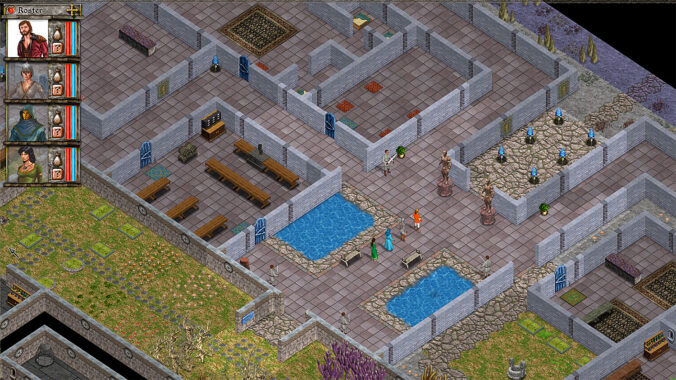
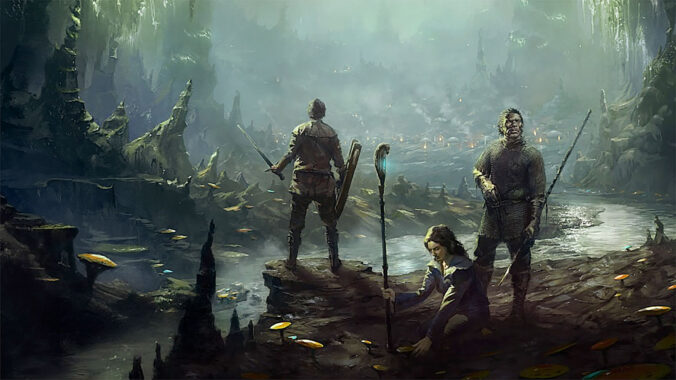
Next on my adventures into old CRPGs, I got into the Avernum Trilogy, by Spiderweb Software. I never played the original Exile series from the 1990s, but I did play the remake series, renamed Avernum, six games published from 2000 to 2009. However, those games no longer work on new computers. Fortunately, Jeff Vogel (owner of Spiderweb Software) has been launching new remakes of the series, and the first trilogy is already available. All these games are deeply rooted in traditional CRPG design, featuring turn-based combat, non-linear storytelling, and a vast, immersive underground world.

In Avernum: Escape from the Pit (2011), the player assumes the role of a group of prisoners exiled into the vast subterranean realm of Avernum, a cavernous world beneath the surface controlled by the tyrannical Empire. Unlike many CRPGs where the protagonist is a chosen hero, Escape from the Pit presents a world where survival is the first goal, and grander ambitions unfold naturally.

Thematically, the game explores oppression, resistance, and exile, drawing from dystopian fiction and the American frontier myth. The player’s choices (to merely survive, seek revenge, or escape) create a sense of agency, though the narrative structure remains relatively fixed. As expected from an independent game, the graphics are simple but very functional.

The game retains Spiderweb’s signature turn-based combat and isometric, grid-based exploration. It features deep tactical gameplay with a variety of abilities and skills. Character progression is robust, offering numerous build options. For this run, my group of four adventurers consisted of two dual-wielding fighters in the front and an archer and a priest/mage hybrid in the back. It was not the most efficient formation but it was fun to play. Magic users become very powerful around the middle of the game, so a group of mages and priests would have been a much stronger choice.

The underworld of Avernum is vast and interconnected, filled with hidden ruins, cities ruled by desperate exiles, and factions vying for dominance. The sense of discovery (finding lost vaults, encountering strange cave-dwelling races, or unearthing the history of Avernum) makes exploration very satisfying.

Avernum II: Crystal Souls (2015) was my favorite in the trilogy. It builds upon its predecessor by escalating the stakes and presenting a full-scale war between Avernum and the Empire, with the alien-like Vahnatai acting as an unpredictable third force. In the previous game we got hints of the existence of this ancient people, and meeting them here and learning about their culture deepens the world’s lore, bringing elements of lost civilizations and enigmatic magic into play.

Themes of war, diplomacy, and cultural misunderstanding drive the story. The presence of the Crystal Souls, ancient Vahnatai artifacts stolen by humans, introduces a compelling central conflict that asks whether peace is even possible or if mutual destruction is inevitable.

For this game, based on the previous experience, my group of four adventurers consisted of just one dual-wielding fighter, one priest, and two mages (who dealt an absurd amount of damage with their area of effect spells).

Avernum II: Crystal Souls is a step up from its predecessor in terms of complexity and scope. The story is stronger, the world more developed, and the choices feel more impactful. It stands as the most substantial narrative experience in the trilogy.

Avernum III: Ruined World (2018) tried to be more ambitious but didn’t fully succeed. It takes the series in a different direction by allowing players to go to the surface world for the first time, a land now devastated by an unknown menace. Instead of fighting for survival in the underworld, the game shifts to a post-apocalyptic tone, where players must navigate a collapsing Empire.

The problem was that, instead of the well developed and unique settlements we can visit in the previous games, what we find in the surface world are very generic towns with very generic inhabitants. For example, while we were used to named NPCs with their own back stories populating the towns, here we have the same merchants (blacksmith, weaver, etc) appearing in any town you go and having the same dialogue lines. It feels very repetitive, almost like the developers didn’t have enough time to properly populate the large number of settlements in the game.

The game’s central theme is civilization in decline. And if you take too long to solve the mysteries and complete your missions you will see towns destroyed, refugees fleeing, and the slow encroachment of a new alien threat. Unlike its predecessors, which are tightly structured, Ruined World is more open-ended, allowing players to shape the fate of the surface world through their actions. This new direction enhances player agency, but it also creates pacing issues. The urgency of the disaster can clash with the open-world exploration, making it easy to miss key story beats.

The party I used in Avernum II was so successful that I followed the same structure in Avernum III: one dual-wielding fighter, one priest, and two mages. And I advanced in the main quest as fast as I could, trying to prevent too much destruction to the surface world. Although this strategy worked well, it left me with the sensation that I didn’t explore the game world as well as I wished.

The shift to the surface is both a strength and a weakness. The devastated world is compelling, but lacks some of the uniqueness that made Avernum‘s underground setting so engaging. The world is more reactive than in previous games, but it can feel a bit overwhelming and unfocused compared to the tighter narrative of Crystal Souls.

I did enjoy replaying the Avernum trilogy. It excels in worldbuilding, tactical combat, and non-linear storytelling. While Escape from the Pit sets the stage with a strong survival narrative, Crystal Souls delivers the best story and character depth. Ruined World is the most mechanically ambitious, but its sprawling open-world design can dilute its storytelling.

Favorite 1970s Graphic Narrative

  • Lone Wolf and Cub (1970), by Kazuo Koike and Goseki Kojima
  • Yoko Tsuno (1970), by Roger Leloup
  • Métal Hurlant (1974), various authors
  • Arzach (1975), by Moebius
  • Paracuellos (1975), by Carlos Giménez
  • Le Garage Hermétique (1976), by Moebius
  • American Splendour (1976), by Harvey Pekar and several artists
  • The Extraordinary Adventures of Adele Blanc-Sec (1976), by Jacques Tardi
  • ElfQuest (1978), by Wendy and Richard Pini
  • X-Men: The Dark Phoenix Saga (1979), by Chris Claremont and John Byrne

In chronological order of first publication.

Dickens, Poe, and the Impressively Large Raven

In one of my weekend trips to Philadelphia, I went to the Parkway Central Library to visit Grip. If you are a reader of Charles Dickens or Edgar Allan Poe you may know a thing or two about him.

In 1941, Charles Dickens published the novel Barnaby Rudge, which had been serialized in the same year in his own weekly periodical Master Humphrey’s Clock. As a companion to the title character, Dickens added a large and talkative raven called Grip. His idea, expressed in a letter to a friend, was to make the bird “immeasurably more knowing” than the protagonist. Grip is often described in the book with almost human attributes, like when he is listening to a conversation “with a polite attention and a most extraordinary appearance of comprehending every word, to all they had said up to this point; turning his head from one to the other, as if his office were to judge between them, and it were of the very last importance that he should not lose a word”. One of my favorite bits offers an amusing account of his movements: “he fluttered to the floor, and went to Barnaby — not in a hop, or walk, or run, but in a pace like that of a very particular gentleman with exceedingly tight boots on, trying to walk fast over loose pebbles”.

Dickens explains in the preface to Barnaby Rudge that Grip was a composite of two ravens that he had owned. The first one lived in the stable and terrorized the dog, often stealing his dinner. Unfortunately, when the stable was being painted, he also decided to steal and eat the paint. He died of lead poisoning. Hearing of this sad loss, a friend sent another raven to Dickens, this one “older and more gifted”. The second bird also made the stable his home but habitually explored a larger area. “Once, I met him unexpectedly, about half-a-mile from my house, walking down the middle of a public street, attended by a pretty large crowd, and spontaneously exhibiting the whole of his accomplishments.” He died after three years or so, and since then Dickens was, to use his own word, ravenless.

Both ravens were called Grip, so it’s unclear which one Dickens decided to have stuffed and mounted in a somewhat grandiose display box. Saved for posterity in taxidermic splendor, Grip was auctioned after the author’s death and changed hands a few times before taking residence in Philadelphia.

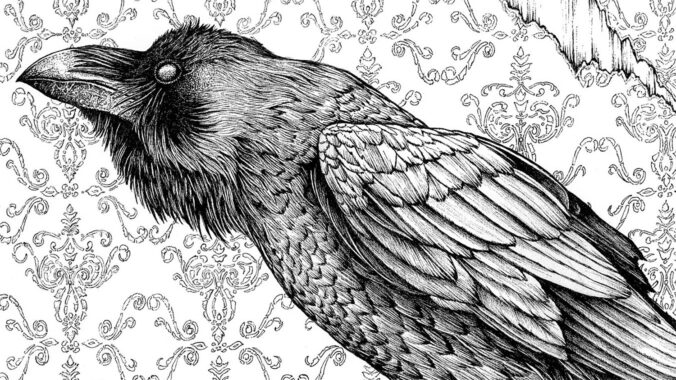
It was a cold Saturday morning when I took the elevator to the almost empty third floor of the Parkway Central Library. The security guard was getting ready to eat his breakfast burrito and ushered me in with a nod of this head. I traveled the L-shaped corridor of the Rare Books Department, surrounded by old volumes locked behind the glass doors and observed by a few solemn statues: two versions of Johannes Gutenberg, with and without his hat, and a magnificently bearded Charles Dickens at age fifty-seven. Around the corner, at the end of the hall, there he was, Grip, surprisingly large and ominously black. The bird is, indeed, impressive, and suggests, even in death, the imposing presence it may have had in life.

Grip is in an elaborate glass and wood box, which was placed inside another glass box. This arrangement creates a system of unwanted reflections, frustrating to casual photographers. The kind librarian who was on early duty that day saw me struggling to get a good angle and, unable to help me solve that particular problem, decided to offer me something else. She unlocked the Elkins Room and invited me to spend some time there.

William McIntire Elkins was a collector of rare books with a particular predilection for Dickens. He bequeathed his collection to the Free Library of Philadelphia, and when he died in 1947 his whole reading room, complete with books and shelves, tapestries and chandeliers, and even a fireplace, was moved to the Parkway Central Library. One of the most precious objects in this beautiful personal library is the writing table used by Charles Dickens from 1837 up to his death in 1870. There it was, small but elegant. On the worn surface, as if to leave no doubt who it had belonged to, the initials C.D. roughly chiseled by the author himself.

But back to Grip. I don’t think I have ever seen a raven that big, stuffed or not. It’s fun to imagine how meeting a live bird of that size, moving and talking, would have been an impressive experience. It captivated Dickens’s imagination and, via the printed page, reached another author on the other side of the ocean, Edgar Allan Poe.

Grip may not be the direct inspiration for The Raven, one of the most famous poems in the English language (and other languages as well, translated to French by Charles Baudelaire and by Stéphane Mallarmé, and to Portuguese by by Machado de Assis and by Fernando Pessoa, just to mention a few respected names) but it certainly had some influence over Edgar Allan Poe.

Poe was not only familiar with Barnaby Rudge but also wrote a full review of the book for Graham’s Magazine in 1842. “The raven, too, intensely amusing as it is, might have been made, more than we now see it, a portion of the conception of the fantastic Barnaby.” Apparently, Poe would have preferred a stronger connection between Grip and Barnaby. “Each might have differed remarkably from the other. Yet between them there might have been wrought an analogical resemblance, and, although each might have existed apart, they might have formed together a whole which would have been imperfect in the absence of either.” Poe’s The Raven was published in 1845.

At certain point in Barnaby Rudge, two characters are talking about the raven. One of them asks “What was that? Him tapping at the door?”, while the other responds “It was in the street, I think. Hark! Yes. There again! ‘Tis some one knocking softly at the shutter.” And in the first few verses of The Raven we can find “While I nodded, nearly napping, suddenly there came a tapping, / As of some one gently rapping, rapping at my chamber door. / ’Tis some visitor, I muttered, tapping at my chamber door— / Only this and nothing more.” Inspiration? Coincidence? Unrelated?

The Raven is one of the most celebrated literary pieces in history, and inspired all kinds of homages, from Freddie Mercury singing Nevermore to Bart Simpson transmuted into a raven in Treehouse of Horror, and not forgetting, of course, the Baltimore Ravens, Super Bowl champions of 2000 and 2012. One of my favorite weird connections is Paul Gauguin’s painting Nevermore, a reclined female nude with a raven in the background next to the word “nevermore”. For some obscure reason, Gauguin denied the obvious association with Poe’s poem and claimed he meant the raven to be just a symbol for the devil. Curiously, the first time Grip appears in Barnaby Rudge he seems to enjoy repeating “I’m a devil, I’m a devil, I’m a devil. Hurrah!”

Dickens fan, or Poe fan, or just curious to see an impressively large stuffed raven? Go to Philadelphia and visit Grip. He’s a devil.

Favorite 1960s Graphic Narrative

  • The Fantastic Four (1961), by Stan Lee and Jack Kirby
  • The Amazing Spider-Man (1963), by Stan Lee and Steve Ditko
  • Blueberry (1963), by Jean-Michel Charlier and Jean “Moebius” Giraud
  • Creepy (1964), various authors
  • Eerie (1966), various authors
  • Lone Sloane (1966), by Philippe Druillet
  • Corto Maltese (1967), by Hugo Pratt
  • 5 por Infinito (1967), by Esteban Maroto

In chronological order of first publication.

Playing Old CRPGs Again: Adjusting the Plan

My initial idea was to explore old CRPGs roughly chronologically, but I’ve encountered a couple of technical obstacles. First, obviously, I no longer own all those games I played a decade or two ago. Second, with the evolution of hardware and operating systems, some games no longer work on recent computers. Third, I currently only have access to a MacBook Pro, and many of the games on the list are only available for PC. 

After Darklands, I wanted to play Betrayal at Krondor (1993) or The Elder Scrolls: Arena (1994), but I only own the PC versions of these games. Same for Diablo (1996) and The Elder Scrolls II: Daggerfall (1996). Next on the list was the Baldur’s Gate series, which I would like to play in sequence: Baldur’s Gate (1998), Baldur’s Gate: Tales of the Sword Coast (1999), Baldur’s Gate: Siege of Dragonspear (2016), Baldur’s Gate II: Shadows of Amn (2000), Baldur’s Gate II: Throne of Bhaal (2001), and finally Baldur’s Gate 3 (2023). That, of course, will take a long time.

So before getting into the whole Baldur’s Gate series (again), I thought of playing the Spiderweb Software games. The first one I played in the past was Nethergate (1998), which I remember enjoying very much. It was loosely based on the Roman occupation of Britain, and you could choose to play as the Celts or the Romans. While I no longer have my original copy of Nethergate, I do have the revamped version Nethergate: Resurrection (2007), but it’s for PC. Next, there is the Avernum series, six games from 2000 to 2009, but the versions I own no longer work on newer Mac OS X systems. Fortunately, Jeff Vogel (owner of Spiderweb Software) periodically revamps his games, and there is a new version of the Avernum series from the 2000s (which itself is a new version of the Exile series from the 1990s). So this is what I will be (re)playing next: Avernum: Escape from the Pit (2011), Avernum 2: Crystal Souls (2015), and Avernum 3: Ruined World (2018). Do recently revamped versions of old games still count as old games?

Favorite pre-1960 Graphic Narrative

  • Little Nemo in Slumberland (1905), by Winsor McCay
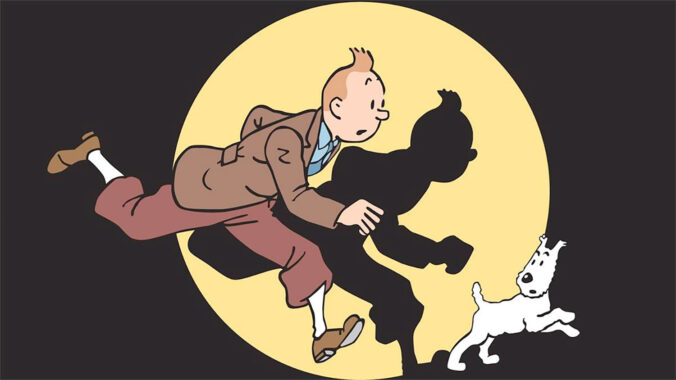
  • Les Aventures de Tintin (1929), by Hergé
  • Flash Gordon (1934), by Alex Raymond
  • Secret Agent X-9 (1934), by Dashiell Hammett and Alex Raymond
  • The Phantom (1936), by Lee Falk
  • Prince Valiant (1937), by Hal Foster
  • Blake & Mortimer (1946), by Edgar P. Jacobs
  • Lucky Luke (1946), by René Goscinny and Morris
  • The Adventures of Alix (1948), by Jacques Martin
  • Tex (1948), by Gian Luigi Bonelli and Aurelio Galleppini
  • El Eternauta (1957), by Héctor G. Oesterheld and Francisco Solano López
  • Asterix (1959), by René Goscinny and Albert Uderzo

In chronological order of first publication.

« Older posts Newer posts »

© 2026 Zander Dulac

Theme by Anders NorenUp ↑