Tag: books

Four Mutinies on the Bounty

Few sea stories have captured the public imagination like the Mutiny on the Bounty. In April 1789, a group of sailors on HMS Bounty, led by the young master’s mate Fletcher Christian, seized the ship from the irascible Lieutenant William Bligh and cast him and his loyalists adrift. The mutineers would scatter across the Pacific, hiding on Tahiti or disappearing into the isolation of Pitcairn Island, while Bligh undertook one of the most astonishing open-boat voyages in maritime history. Because the surviving accounts sharply contradict one another, the tale was destined to become a battleground of interpretation: a perfect canvas for novelists and filmmakers to project questions of leadership, justice, rebellion, and mythmaking.

Charles Nordhoff and James Norman Hall’s 1932 novel Mutiny on the Bounty (part one of their Bounty Trilogy) is the definitive popular version of the story. Written in the style of 19th-century nautical fiction, it features a fictional narrator (Roger Byam), partly inspired by the real midshipman Peter Heywood. The authors weave together Bligh’s official logs, court-martial transcripts, and the memoirs of Heywood and James Morrison, shaping them into a straightforward moral narrative: Bligh as a tyrant whose cruelty pushes decent men to revolt, and Christian as a tragic, reluctant rebel crushed by the consequences of his actions.

The novel is dramatically compelling, richly detailed, and hugely influential. But it is also selective. Nordhoff and Hall harmonize conflicting testimonies to create a coherent story, smoothing away ambiguity. Their Bligh is harsher than many historians now judge him to have been, and their Christian is more romantic, more tortured, and more heroic than the fragmentary historical record supports. As narrative art, the novel is excellent. As history, it is debatable.

Frank Lloyd’s 1935 movie adaptation, Mutiny on the Bounty, starring Clark Gable as Christian and Charles Laughton as Bligh, cemented the legend for generations. It takes Nordhoff and Hall’s interpretation and intensifies everything for cinematic effect. Bligh becomes a nearly cartoonish sadist, sneering, petty, and addicted to cruelty. Christian emerges as a dashing moral hero, a man driven to mutiny by compassion. The Tahitian interlude becomes a romantic Eden corrupted by Bligh’s tyranny.

It is gorgeously shot in black and white, dramatically rousing, and acted with enormous flair, but it veers the farthest from history. Bligh’s strictness, while real, is exaggerated into villainy. Christian’s internal struggle is rewritten into clean melodrama. Still, for classic Hollywood storytelling, it is a hit. The film’s cultural impact was such that, for decades, its version of events was the only version.

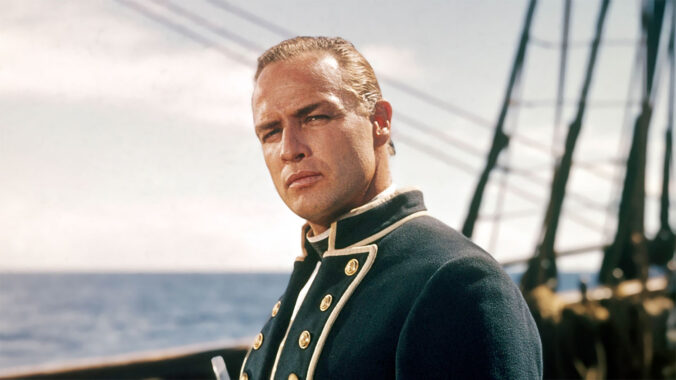
Lewis Milestone’s 1962 Mutiny on the Bounty remake, with Marlon Brando as Christian and Trevor Howard as Bligh, arrives with big CinemaScope prestige but a strangely diffused point of view. Brando’s Christian is whimsical, ironic, and detached, a proto-counterculture figure who seems less tortured than bored. Howard’s Bligh is more controlled than Laughton’s but still rigidly villainous, echoing the novel’s version more than historical analysis. The film leans heavily into Tahiti as an exotic paradise, extending the love story but weakening narrative momentum.

The result is handsome, intermittently fascinating, but tonally inconsistent. Brando’s eccentric performance, though engaging, sometimes pulls the story toward satire, while the script seeks to retain classic moral seriousness. It neither fully humanizes Bligh nor fully dramatizes the mutiny as a tragic inevitability. Historically, it remains in the same mythic register as the 1935 film, but without its sharp dramatic spine.

Roger Donaldson’s 1984 film, The Bounty, starring Mel Gibson as Christian and Anthony Hopkins as Bligh, marks the first major adaptation to challenge the established myth. Drawing on more recent scholarship and using Bligh’s own writings as inspiration, it reframes the mutiny as a clash of flawed personalities rather than a simple tale of tyranny.

Hopkins’s Bligh is not sadistic but disciplined, overbearing, ambitious, and socially insecure. He is capable of kindness but blind to how his rigidity alienates his crew. Gibson’s Christian is not a born revolutionary but an inexperienced young officer emotionally overwhelmed by conflict and guilt. The film foregrounds Bligh’s astonishing 3,600-mile open-boat journey with rare accuracy. Tahiti is portrayed not as Eden but as a complex society whose allure and cultural differences unsettle the crew’s discipline.

This version incorporates contradictions rather than ironing them out. It acknowledges that the mutineers gave wildly inconsistent explanations, that Bligh’s harshness was real but within the norms of the era, and that Christian’s motives remain opaque. As storytelling, it is more muted, less swashbuckling, but also far more psychologically credible. And, unfortunately, not as interesting.

The truth of the Mutiny on the Bounty lies somewhere between heroism and dysfunction, and between Bligh’s defensiveness and the mutineers’ self-justification. Modern historians tend to see the mutiny as the product of cumulative interpersonal friction, culture shock in Tahiti, Bligh’s abrasive management, and Christian’s psychological instability. This messy human drama resists clean moral binaries.

The saga of the Bounty endures precisely because it resists definitive interpretation. The 1932 novel shaped the mythic template: Bligh the tyrant, Christian the reluctant rebel. The 1935 film amplified this into an iconic melodrama. The 1962 film embellished it with Hollywood exoticism and Brando’s idiosyncrasies. The 1984 film challenged it with a more balanced, psychologically layered approach. Each version reflects the concerns of its era: authoritarian villains in the 1930s, romantic individualism in the 1960s, and distrust of simple moral narratives in the 1980s.

Favorite Horror Novels, 20th century

  • The Haunting of Hill House (1959), by Shirley Jackson
  • Something Wicked This Way Comes (1962), by Ray Bradbury
  • Rosemary’s Baby (1967), by Ira Levin
  • Hell House (1971), by Richard Matheson
  • The Mist (1980), by Stephen King
  • The Cellar (1980), by Richard Laymon

Favorite Horror Novels, 18th/19th century

  • History of the Caliph Vathek (1786), by William Beckford
  • The Monk (1796), by Matthew Gregory Lewis
  • Frankenstein (1818), by Mary Shelley
  • Melmoth the Wanderer (1820), by Charles Maturin
  • Varney, the Vampire (1847), by Thomas Prest
  • Carmilla (1872), by Sheridan Le Fanu
  • Strange Case of Dr Jekyll and Mr Hyde (1886), by Robert Louis Stevenson
  • The Picture of Dorian Gray (1890), by Oscar Wilde
  • Dracula (1897), by Bram Stoker
  • The Turn of the Screw (1898), by Henry James

Manchurian Candidates

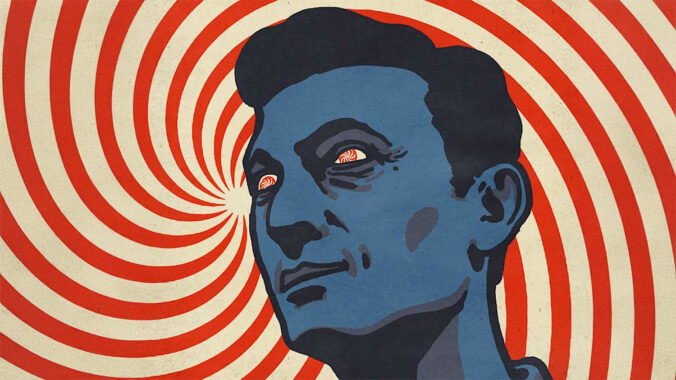
Richard Condon’s The Manchurian Candidate is one of the defining Cold War thrillers of American literature. Published in 1959, it captures a world of paranoia, espionage, and ideological extremism at the height of the Red Scare. The novel follows Sergeant Raymond Shaw, a decorated Korean War veteran who, unbeknownst to himself, has been brainwashed by Communist agents into becoming an unwitting assassin. The real tragedy (and brilliance) of Condon’s construction is that Shaw’s mother, Eleanor Iselin, is the true villain: an ambitious, ruthless woman who manipulates both her son and her husband, Senator John Iselin, a demagogic McCarthy caricature, to seize political power.

Condon’s prose is cynical and darkly humorous. His world is one where politics is theatre, patriotism a mask for greed, and psychological control the ultimate weapon. The book’s central concept, the creation of a sleeper assassin through brainwashing, tapped directly into Cold War fears about Communist mind control and the fragility of individual will. It is both satire and nightmare, a vision of America’s self-destruction through hysteria and manipulation. The novel’s mix of political cynicism, psychological horror, and sexual tension (especially the quasi-incestuous relationship between Shaw and his mother) gives it a lingering unease that transcends its pulp roots.

John Frankenheimer’s The Manchurian Candidate (1962), starring Frank Sinatra, Laurence Harvey, and Angela Lansbury, was the first screen adaptation of the novel, and is remarkably faithful in tone to Condon’s original, even as it alters several key details. The setting remains within the Cold War, with the Communist conspiracy intact, but Frankenheimer reshapes the story for cinematic clarity and impact.

The film drops much of Condon’s verbose narration and focuses on stark, paranoid visuals and taut performances. Laurence Harvey’s Raymond Shaw is a more tragic, wounded figure than in the book, while Angela Lansbury’s portrayal of Eleanor Iselin is chilling, a manipulative political matriarch who weaponizes maternal affection for control. Her relationship with Shaw remains disturbing, though Frankenheimer’s film makes it more symbolic than explicit.

The satire of McCarthyism is sharpened: Senator Iselin becomes an obvious buffoon, his hysteria exploited by his wife for her own Machiavellian ambitions. The eerie brainwashing sequences, shot with dreamlike cross-cutting between a genteel ladies’ tea and a Communist demonstration, remain some of the most haunting scenes in American cinema in the sixties. Frankenheimer’s film ends on a tragic note, with Shaw breaking free of his conditioning just long enough to stop the assassination but sacrificing himself in the process, a finale that feels more moral and cathartic than Condon’s more cynical ending. The movie is both a product and a critique of its time, when Americans feared both Communist infiltration and their own government’s capacity for manipulation.

Jonathan Demme’s 2004 remake reimagines The Manchurian Candidate for a post–Cold War, post–Gulf War world of corporate power and digital control. The Communist brainwashers are gone. In their place stands Manchurian Global, a multinational conglomerate symbolizing the new face of power: corporate, financial, and global rather than ideological.

Here, the soldiers were captured during the Gulf War, and the brainwashing is achieved not through crude psychological techniques but through biotechnology and microchip implants. The shift mirrors the new century’s fears: not of Communist ideology, but of corporate totalitarianism, surveillance, and technological control. Raymond Shaw (Liev Schreiber) is now a congressman and war hero groomed for the vice presidency, while Denzel Washington’s character (renamed Major Ben Marco) becomes the paranoid veteran uncovering the truth. Meryl Streep’s Eleanor Shaw is modeled less on McCarthy-era figures than on modern political dynasties, her mix of maternal warmth and icy calculation evokes Hillary Clinton as filtered through Lady Macbeth.

The 2004 version trades Cold War dread for corporate conspiracy and biotechnology anxiety. It is slickly directed and well-acted, but its atmosphere of dread feels more diffuse. The brainwashing, once shocking, now feels metaphorical: a commentary on media control, marketing, and mass manipulation. Yet it lacks the biting satire of the novel or the surreal power of Frankenheimer’s film. Its conclusion, in which the brainwashing plot is uncovered by the authorities but kept secret from the public, attempts some sort of closure but can feel naive at certain points, and never reaches the tragic resonance of 1962’s climax.

As a story, the novel remains the most conceptually rich and biting. It captures the spirit of Cold War cynicism with vicious humor and invention. But Frankenheimer’s 1962 adaptation is the most engaging and entertaining, a perfect marriage of paranoia, late noir aesthetics, and tragedy. Its sharp political satire and unforgettable performances give it enduring power.

Dickens, Poe, and the Impressively Large Raven

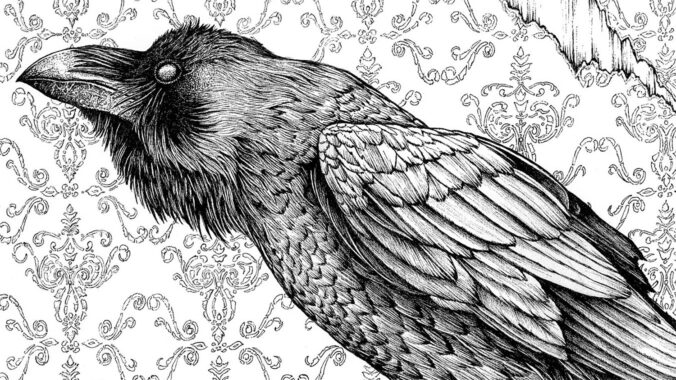
In one of my weekend trips to Philadelphia, I went to the Parkway Central Library to visit Grip. If you are a reader of Charles Dickens or Edgar Allan Poe you may know a thing or two about him.

In 1941, Charles Dickens published the novel Barnaby Rudge, which had been serialized in the same year in his own weekly periodical Master Humphrey’s Clock. As a companion to the title character, Dickens added a large and talkative raven called Grip. His idea, expressed in a letter to a friend, was to make the bird “immeasurably more knowing” than the protagonist. Grip is often described in the book with almost human attributes, like when he is listening to a conversation “with a polite attention and a most extraordinary appearance of comprehending every word, to all they had said up to this point; turning his head from one to the other, as if his office were to judge between them, and it were of the very last importance that he should not lose a word”. One of my favorite bits offers an amusing account of his movements: “he fluttered to the floor, and went to Barnaby — not in a hop, or walk, or run, but in a pace like that of a very particular gentleman with exceedingly tight boots on, trying to walk fast over loose pebbles”.

Dickens explains in the preface to Barnaby Rudge that Grip was a composite of two ravens that he had owned. The first one lived in the stable and terrorized the dog, often stealing his dinner. Unfortunately, when the stable was being painted, he also decided to steal and eat the paint. He died of lead poisoning. Hearing of this sad loss, a friend sent another raven to Dickens, this one “older and more gifted”. The second bird also made the stable his home but habitually explored a larger area. “Once, I met him unexpectedly, about half-a-mile from my house, walking down the middle of a public street, attended by a pretty large crowd, and spontaneously exhibiting the whole of his accomplishments.” He died after three years or so, and since then Dickens was, to use his own word, ravenless.

Both ravens were called Grip, so it’s unclear which one Dickens decided to have stuffed and mounted in a somewhat grandiose display box. Saved for posterity in taxidermic splendor, Grip was auctioned after the author’s death and changed hands a few times before taking residence in Philadelphia.

It was a cold Saturday morning when I took the elevator to the almost empty third floor of the Parkway Central Library. The security guard was getting ready to eat his breakfast burrito and ushered me in with a nod of this head. I traveled the L-shaped corridor of the Rare Books Department, surrounded by old volumes locked behind the glass doors and observed by a few solemn statues: two versions of Johannes Gutenberg, with and without his hat, and a magnificently bearded Charles Dickens at age fifty-seven. Around the corner, at the end of the hall, there he was, Grip, surprisingly large and ominously black. The bird is, indeed, impressive, and suggests, even in death, the imposing presence it may have had in life.

Grip is in an elaborate glass and wood box, which was placed inside another glass box. This arrangement creates a system of unwanted reflections, frustrating to casual photographers. The kind librarian who was on early duty that day saw me struggling to get a good angle and, unable to help me solve that particular problem, decided to offer me something else. She unlocked the Elkins Room and invited me to spend some time there.

William McIntire Elkins was a collector of rare books with a particular predilection for Dickens. He bequeathed his collection to the Free Library of Philadelphia, and when he died in 1947 his whole reading room, complete with books and shelves, tapestries and chandeliers, and even a fireplace, was moved to the Parkway Central Library. One of the most precious objects in this beautiful personal library is the writing table used by Charles Dickens from 1837 up to his death in 1870. There it was, small but elegant. On the worn surface, as if to leave no doubt who it had belonged to, the initials C.D. roughly chiseled by the author himself.

But back to Grip. I don’t think I have ever seen a raven that big, stuffed or not. It’s fun to imagine how meeting a live bird of that size, moving and talking, would have been an impressive experience. It captivated Dickens’s imagination and, via the printed page, reached another author on the other side of the ocean, Edgar Allan Poe.

Grip may not be the direct inspiration for The Raven, one of the most famous poems in the English language (and other languages as well, translated to French by Charles Baudelaire and by Stéphane Mallarmé, and to Portuguese by by Machado de Assis and by Fernando Pessoa, just to mention a few respected names) but it certainly had some influence over Edgar Allan Poe.

Poe was not only familiar with Barnaby Rudge but also wrote a full review of the book for Graham’s Magazine in 1842. “The raven, too, intensely amusing as it is, might have been made, more than we now see it, a portion of the conception of the fantastic Barnaby.” Apparently, Poe would have preferred a stronger connection between Grip and Barnaby. “Each might have differed remarkably from the other. Yet between them there might have been wrought an analogical resemblance, and, although each might have existed apart, they might have formed together a whole which would have been imperfect in the absence of either.” Poe’s The Raven was published in 1845.

At certain point in Barnaby Rudge, two characters are talking about the raven. One of them asks “What was that? Him tapping at the door?”, while the other responds “It was in the street, I think. Hark! Yes. There again! ‘Tis some one knocking softly at the shutter.” And in the first few verses of The Raven we can find “While I nodded, nearly napping, suddenly there came a tapping, / As of some one gently rapping, rapping at my chamber door. / ’Tis some visitor, I muttered, tapping at my chamber door— / Only this and nothing more.” Inspiration? Coincidence? Unrelated?

The Raven is one of the most celebrated literary pieces in history, and inspired all kinds of homages, from Freddie Mercury singing Nevermore to Bart Simpson transmuted into a raven in Treehouse of Horror, and not forgetting, of course, the Baltimore Ravens, Super Bowl champions of 2000 and 2012. One of my favorite weird connections is Paul Gauguin’s painting Nevermore, a reclined female nude with a raven in the background next to the word “nevermore”. For some obscure reason, Gauguin denied the obvious association with Poe’s poem and claimed he meant the raven to be just a symbol for the devil. Curiously, the first time Grip appears in Barnaby Rudge he seems to enjoy repeating “I’m a devil, I’m a devil, I’m a devil. Hurrah!”

Dickens fan, or Poe fan, or just curious to see an impressively large stuffed raven? Go to Philadelphia and visit Grip. He’s a devil.

Gilgamesh, Picard, and the Guy Who Killed Captain Marvel

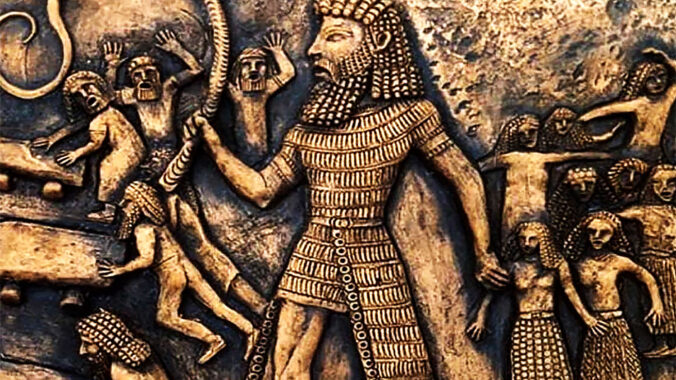
I hadn’t been intrigued about The Epic of Gilgamesh, the ancient epic poem from Mesopotamia, until the coincidence of seeing, only a few weeks apart, this story featured in both a Star Trek episode and a graphic novel by Jim Starlin.

In Darmok, the second episode of the fifth season of Star Trek: The Next Generation, first televised in 1991, Captain Picard (Patrick Stewart) gets stranded on a planet with Dathon (Paul Winfield), a Tamarian captain. They have trouble communicating with each other because the Tamarian language is based on references to their history and mythology in an allegorical format that could not be captured by the universal translator technology commonly used in similar situations. Picard realizes their communication needs to rely on mutual knowledge of legends and tries to understand Dathon’s storytelling and tell him stories from Earth’s mythology. And the tale he chooses to narrate is the one about Gilgamesh and Enkidu, first fighting against each other and later fighting together against a common enemy. It’s a good representation of the adventures of the two captains on that hostile planet, the same as Dathon’s story about Tamarian heroes Darmok and Jalad.

Darmok is the kind of episode that makes Star Trek: The Next Generation such a compelling television series. It’s about solving problems with your brain rather than your muscles, and it’s about the power of communication. As the good captain says, “In my experience, communication is a matter of patience and imagination. I would like to believe that these are qualities that we have in sufficient measure.” (Jean-Luc Picard is, of course, the best captain in the Star Trek universe. But that’s a story for another time.)

Gilgamesh II was published a couple of years before this episode of Star Trek, but I only found it in a bookstore a few weeks after watching Darmok. The author’s name immediately made me interested in the graphic novel. Among his many feats, Jim Starlin co-created Shang-Chi, aka the Master of Kung Fu, one of my favorite heroes as a kid, and authored a graphic novel that shook up the universe of superheroes in the early eighties, The Death of Captain Marvel. In the four 48-page issues of Gilgamesh II, Starlin reimagines the Mesopotamian story as a science-fiction tale, with the two heroes presented as extraterrestrials living in a future Earth.

Starlin doesn’t deviate much from the original plot and doesn’t add any deep reflections on the ancient tale. Instead, he offers a version of what the story of Gilgamesh could have been if created as a contemporary graphic novel. Or, more specifically, as a graphic novel from the eighties, infused with superhero lore (the arrival of Gilgamesh’s capsule on Earth is basically a retelling of Superman’s origin story) and complete with passages about sex and drugs (checking the box for “this is not your old childish comic book, this stuff is for adults”) and greedy corporations destroying the environment (checking the box for “hey, we have a political message too”).

With Gilgamesh references flying at me from both the tv screen and the pages of graphic novels, I decided it was time to read the real thing. Not the original clay tablets written in cuneiform from around 2000 BCE (that exist in several versions, from which the combined fragments form the version we have translated to contemporary languages), but as an English adaptation. For the record, the first time I read The Epic of Gilgamesh, a long time ago, it was in a translation by archeologist Nancy K. Sandars, and the second time, more recently, in the translation by Andrew George, professor of Babylonian at the University of London.

The Epic of Gilgamesh can be read just as a story of adventure. It has a larger-than-life hero (literally), monumental fights against monsters (with impressive names like Humbaba, the giant guardian of the Cedar Forest, and Gugalanna, the Great Bull of Heaven), death and distress, and a journey of self-discovery. But for me what makes it more engrossing is the abundance of themes that would later be reused, redeveloped and reimagined, again and again, in narratives from different cultures. In Gilgamesh, we can see hints of Achilles and Odysseus, and these heroes share several similar episodes. There are even homologous metaphors about a lion and its missing cubs used for grieving the deaths of Patroclus in the Iliad and Enkidu in The Epic of Gilgamesh. And, of course, multiple elements from The Epic of Gilgamesh reappear in the Bible, from Enkidu being created from clay by the goddess Aruru and living in the woods with the animals until seduced by a woman and taken away from there (which may seem somewhat similar to Adam’s origin story in the Book of Genesis) to the story of a great flood told to Gilgamesh by the immortal Utnapishti (which is so close to the biblical story of Noah’s ark that it’s unlikely it wasn’t its source of inspiration). And for someone willing to stretch the comparisons a bit more, we could even point to a bit of Hegelian dialectic in the story: Gilgamesh, the king of Uruk oppressing his people, stands as the thesis that gives rise to a reaction; Enkidu, the wild man sent by the gods to stop him, serves as the antithesis that opposes the thesis; and the battle between the two resolves the tension and generates the team of heroes as the synthesis.

At the end of his saga, Gilgamesh goes on a journey searching for immortality and learns that this is something he cannot have. But even though he didn’t get eternal life in the physical sense The Epic of Gilgamesh has kept his name alive for thousands of years, and his thematically rich adventures keep influencing our storytelling.

The Mystery Novels of L.F. Veríssimo

Crimes from pulp fiction books reenacted by a real murderer. A  locked-room mystery disrupting a conference about Edgar Allan Poe. Members of a gastronomy club being killed one by one right after having their favorite dishes. These are just a few of the plots from L.F. Veríssimo’s novels. But what really makes them interesting to me are their narrative structures and the cultural artifacts that fuel them.

Luis Fernando Veríssimo, one of the most celebrated and prolific Brazilian writers, is mostly known for his hundreds of humorous short stories and newspaper columns, collected in dozens of books starting in 1973. He is the creator of some unforgettably funny characters, like the Analyst from Bagé (O Analista de Bagé), a gaucho psychoanalyst who mixes Freud with the roughness of the macho cultural values of the Pampas, and the Old Lady from Taubaté (A Velhinha de Taubaté), the last person in the world who still believes what politicians say. Veríssimo also wrote and drew comic strips, and for a long time published daily columns on several Brazilian newspapers.

Veríssimo also wrote a few crime novels, and they stand apart in their little murder mystery microcosm. The humor is still present, but sparsely and in a much darker tone. As far as I know, three of Veríssimo’s novels have been translated to English. The other two you will have to read in Portuguese.

The first novel is O Jardim do Diabo (The Devil’s Garden), originally published in 1988, and revised and republished in 2005. Estevão is a pulp fiction writer who lost a foot (one of the mysteries of the story) and now doesn’t leave his small apartment. He is visited by a police inspector investigating a crime apparently inspired by one of Estevão’s books. The Devil’s Garden is probably the most complex of his novels in terms of structure, with the narrative blending together the narrator’s current reality, an episode of his past, the pulp novel he is currently writing, and a radio show played loudly by his cleaning lady.

O Clube dos Anjos (The Club of Angels, translated by Margaret Jull Costa for New Directions), originally published in 1998, is possibly Veríssimo’s best book. Daniel is a failed advertising man who still depends on his parents’ money to support his fine taste for food and wine. But now his club of gourmets (or, perhaps more appropriately, gourmands) is at risk of disappearing because the members are being murdered, one by one, after eating their favorite dishes. The whole story has a delicious air of decadence, both from the seemingly excessive importance given to the pleasures of the table and from the apparent willingness presented by the victims, as if they all felt guilty of something and accepted death as their punishment.

Borges e os Orangotangos Eternos (Borges and the Eternal Orangutans, translated by Margaret Jull Costa for New Directions), originally published in 2000, is one of my favorites. Vogelstein is an unimportant translator who goes to Buenos Aires for a conference about the work of Edgar Allan Poe, and gets involved in a locked-room murder mystery. Trying to solve the crime, he partners with none other than the great Jorge Luis Borges, with some help from a police detective appropriately called Cuervo (Raven). For fans of Borges, or Poe, or detective stories in general, the narrative is a delightful puzzle of references where all the pieces fit together and the surprises don’t stop until the last paragraph. There are also engaging conversations about literature, including this beautiful quote: “I always believed an experience at sea was essential to a great writer, and that’s why Conrad and Melville, and in a certain way also Stevenson, who ended his days in the South Seas, were better than all of us, Volgenstein. At sea a writer escapes from the minor demons and only faces the definitive demons.”

O Opositor (literally The Opponent but also, implied, The Opposable Thumb), originally published in 2004, is a story within a story. The narrator is a journalist visiting Manaus, the capital of the state of Amazonas, in Brazil, to write an article about hallucinogenic plants. But he ends up meeting Jósef Teodor, a foreigner who is always drunk and claims to be a former assassin for hire at the service of the Meierhoff Group, the most powerful secret society in the world. Teodor’s tale, told in fragments when he is both willing and not too drunk, forms the center of the book, while the questioning of its veracity and the hunting for clues to confirm it make for an interesting frame. To complicate things a bit, the journalist has been sampling the hallucinogenics he is supposed to be researching, and got romantically involved with a woman who may be the daughter of one of Teodor’s victims.

Os Espiões (The Spies, translated by Margaret Jull Costa for Quercus Publishing), originally published in 2009, is a story about the relationship between literature and reality, disguised as a story about amateur spies who fail badly at their self-assigned mission. A small publisher receives the first chapter of a manuscript and, interpreting it as a call for help, builds a rescue team to travel to the author’s little town and free her from the presumed danger. As the investigation progresses and more chapters arrive in the mail, the plot thickens. The Spies starts with a quote by Giorgio de Chirico (inscribed in Latin on the frame of one of his self-portraits): “And what shall I love if not the enigma?” The love for the enigma, however, is not enough to solve it, and the eager but unaware spies end up facing the results of their misreading of the manuscript and of the situation.

These five novels form a cohesive group, with many elements in common. For example, all the stories are told in the first person by a narrator-protagonist who is a writer of some sort. Estevão, from The Devil’s Garden, is a pulp fiction author. Daniel, from The Club of Angels, is a failed advertising copywriter and a scribbler of stories of dubious taste about conjoined twins. Vogelstein, from Borges and the Eternal Orangutans, is a translator and wannabe writer. The unnamed narrator of The Opponent is a journalist. The narrator of The Spies, also unnamed but sometimes using Agomar as a pseudonym, is an editor at a small publishing house and author of an unpublished espionage thriller.

The five books also make important use of cultural references (usually literature or visual arts), which in some cases are at the center of the plot. The Devil’s Garden uses pulp fiction stereotypes profusely, but also touches on Conrad, Melville, and other authors of sea stories. The Club of Angels has Shakespeare and King Lear metaphorically haunting the characters and literally being quoted by them. Borges and the Eternal Orangutans presents Borges as a character and offers an abundance of mentions to Poe, Lovecraft, Zangwill, and several other writers. The Opponent features the frescoes in the Orvieto Cathedral, painted by Fra Angelico and Luca Signorelli, as a significant plot point. And The Spies provides a cornucopia of literary references, from the Greek classics (the damsel in distress is called Ariadne and the plan to rescue her is named Operation Theseus) to contemporary spy novels (the narrator idolizes John le Carré) and even suspicious scholarly connections (one of the characters gives a lecture on “The Neoplatonism in Dostoyevsky and Machado de Assis”).

If none of the above made you want to read Veríssimo’s novels, he has another one that doesn’t deal with crime mysteries but may arouse your curiosity: A Décima Segunda Noite (The Twelfth Night) retells the homonymous Shakespearean comedy with the plot transposed to a contemporary hair salon in Paris and narrated by a perky pet parrot who can quote John Lennon and Soren Kierkegaard.

The Lost World: One Book, Six Movies

My latest movie marathon was all about The Lost World. First I read the original novel by Conan Doyle (yes, the same guy who created Sherlock Holmes) and then watched six adaptations for the screen.

At the end of the 19th century, Sir H. Rider Haggard was the king of stories about lost worlds, with books like The People of the Mist (about a lost tribe in Africa) and Heart of the World (about a lost Mayan city in Mexico). But the genre got it’s masterpiece in 1912, when Sir Arthur Conan Doyle unleashed The Lost World. Explorers venturing to mysterious, uncharted lands teeming with prehistoric creatures? That’s the stuff that launched a thousand jungle expeditions, both literal and fictional. But while the book was groundbreaking, it wasn’t without its wobbles, especially the racist overtones and imperialist assumptions. Still, it’s hard to overstate its impact. Without The Lost World, we might not have had Edgar Rice Burroughs’s The Land That Time Forgot, or King Kong, or even Michael Crichton’s Jurassic Park.

The first crack at bringing Doyle’s tale to the silver screen, The Lost World (Harry O. Hoyt, 1925), was a silent masterpiece – and “masterpiece’ isn’t an exaggeration. Faithfulness to the novel? Decent enough. Professor Challenger and his team head to South America, find a plateau full of dinosaurs, and bring one back to London. Sure, liberties were taken (like adding a romance subplot), but the spirit was intact. The cinematography was beautiful for the time (I watched the tinted version restored in 2016), but the real star was the stop-motion wizardry of Willis O’Brien. Those dinosaurs were revolutionary, decades before CGI. O’Brien’s work on The Lost World paved the way for King Kong in 1933, which was like this movie’s rebellious teen cousin. Plot holes and pacing issues aside, the 1925 version remains a classic, with Challenger (played by Wallace Beery) as a brash, bearded and mustachioed force of nature.

With The Lost World (Irwin Allen, 1960), we enter B-movie territory. This adaptation swaps out Doyle’s intelligent, scientifically minded tale for lizards with glued-on horns. Yes, instead of lovingly crafted stop-motion dinosaurs, we get iguanas and crocodiles dressed in drag to look vaguely prehistoric. It’s as ridiculous as it sounds. The plot diverges wildly too. Gone is the novel’s thought-provoking narrative about science versus nature. Instead, we get melodrama, generic villains, and some dubious jungle antics. On the upside, the cast is stacked: Michael Rennie (The Day the Earth Stood Still) as Lord Roxton, Claude Rains (Casablanca) as Professor Challenger, and Jill St. John (who would later be the Bond Girl in Diamonds Are Forever) adding some glamour. But the sheer campiness of the production makes this one for die-hard dinosaur completists only.

Another thirty years and we got not one but two new adaptations, The Lost World (Timothy Bond, 1992) and its sequel Return to the Lost World (Timothy Bond, 1992). This version took some odd liberties. Instead of Doyle’s South American plateau, we’re now in Africa. Why? Probably because someone found an African savanna more budget-friendly than a South American rainforest. Lord Roxton is swapped for a new female character, Jenny Nielson (Tamara Gorski), in what feels like a half-hearted attempt at modernization. The rest of the cast is not bad: John Rhys-Davies (from the Indiana Jones movies) as Professor Challenger, David Warner (Jack the Ripper in Time After Time) as Professor Summerlee, and Eric McCormack (before becoming famous for Will & Grace) as Edward Malone. The special effects? Quite weak, even for a tv production, and definitely nothing you’d brag about at a paleontology conference. The dinosaurs really look like puppets. While they tried to retain some of the novel’s spirit, both films felt more like Saturday matinee fillers than genuine adaptations.

The next version of The Lost World (Bob Keen, 1998) is even worse. Only loosely based on the original novel, the action now happens in Mongolia. And the story is so much changed that only two members of the expedition return to London. Patrick Bergin plays Professor Challenger, in what may be the worst movie of his career. Dinosaurs? Not many, and several years after Jurassic Park none of them look impressive. Characters? Forgettable. Is it worth watching? Only if you enjoy movies that feel like they were cobbled together over a long weekend to cash in on a trend.

A few years later we got a new tv adaptation, The Lost World (Stuart Orme, 2001), with the advantage of having 145 minutes to tell the story (it was first broadcast in two 75 minutes episodes). They followed the story fairly closely (and even returning to the original setting in South America), but added a few new elements. Besides the romantic subplot that every adaptation insisted in including, there was also a detour about a religious fanatic trying to keep the lost world a secret because it could support Darwin’s theory of evolution and weaken the creationist dogma. Bob Hoskins as Professor Challenger was a great choice, and James Fox as Professor Summerlee is also a good contribution. The CGI dinosaurs are fine, nothing to get very excited about but not embarrassingly bad. What this film lacks in spectacle, it tries to make up for in earnestness, and there’s something endearing about that.

Which adaptation reigns supreme? If we consider them in the context of their time, the 1925 silent film is the winner. It’s not just a great adaptation, it’s a landmark in cinematic history, with Willis O’Brien’s dinosaurs setting a high standard for generations. Best special effects dinosaurs? Again, the 1925 version. No iguana cosplay here, just pure artistry. Best Professor Challenger? Bob Hoskins in 2001 nails the character’s mix of gruffness and charm. Best Lord Roxton? Michael Rennie from the 1960 version is hard to beat, even if the movie itself is a dud. Edward Malone, however, is such a dull character that he is forgetabble in all versions.

All the adaptations, whether faithful or not, wrestle with the clash between humanity and nature. Doyle’s novel asks whether we have the right to dominate nature, and that question lingers in every adaptation (even the ones with the lizards-in-costume nonsense). Each version also grapples with adventure and exploration, though often in ways that reflect the era of their production: awe in the 1920s, kitsch in the 1960s, and commercialism in the 1990s. At its heart, The Lost World remains a tale about discovery, danger, and our never-ending fascination with dinosaurs. Some adaptations soar, others stumble. But like the dinosaurs themselves, the story endures — an ancient, lumbering giant that refuses to go extinct.

© 2026 Zander Dulac

Theme by Anders NorenUp ↑