Tag: crpg

Playing Old CRPGs Again: Wasteland 3

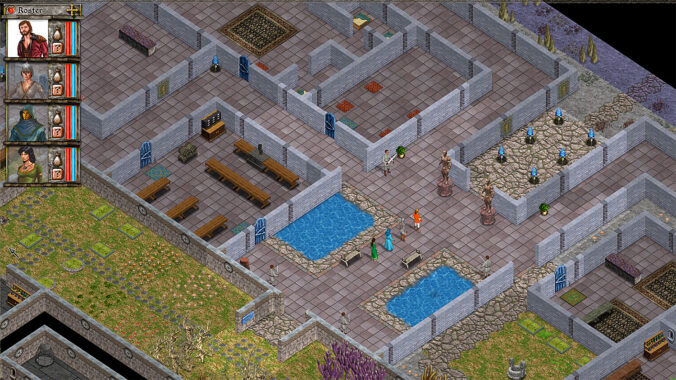
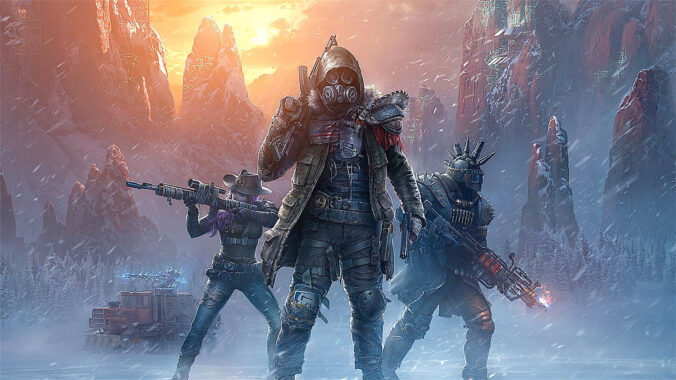
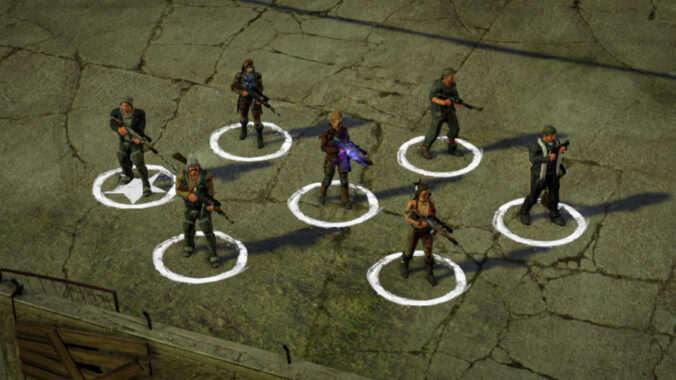
Well, Wasteland 3 is not exactly an old CRPG (it was launched in 2020), and I’m not actually replaying it (because I never had the opportunity to play it before), but after Wasteland 2 it was an obvious choice for this series anyway.

The Wasteland franchise has always carried the weight of history. The original Wasteland (1988) laid the groundwork for post-apocalyptic RPGs and directly inspired the Fallout series. Decades later, Wasteland 2 (2014) revived the series with a modernized isometric format, featuring heavy text and a branching narrative. Wasteland 3 (2020), developed by inXile Entertainment, continues that revival but shifts the setting from the deserts of Arizona to the frozen wastelands of Colorado. This new location gives the franchise fresh thematic ground: coldness, scarcity, and survival under a tyrant’s shadow, while still keeping the Rangers as the moral (or amoral) focal point.

The Rangers once again act as the thin line between order and chaos, but instead of rebuilding the Southwest, they’re drawn into the power struggles of Colorado. The Patriarch, a strongman leader, asks them to capture his rebel children and stabilize his rule in exchange for aid to Arizona. This premise ties naturally into the ongoing Wasteland storyline: Rangers as outsiders forced to broker deals between factions, never truly at home, never entirely in control. It continues the franchise’s tradition of examining the tension between idealism and pragmatism in post-nuclear America.

Compared to the previous title in the series, Wasteland 3 brings several improvements. The turn-based tactical system feels tighter, with clearer action-point management, improved cover mechanics, and more dynamic execution. Full voice acting elevates the narrative and adds personality to factions and NPCs, reducing the fatigue of reading walls of text. Inventory and squad management are far more intuitive than in Wasteland 2, making long play sessions smoother. It’s not revolutionary, but it feels more confident and accessible without losing complexity.

That said, Wasteland 3 is no stranger to technical hiccups. At launch, and even after multiple patches, players reported crashes, quest-breaking bugs, and odd AI behavior. While many of these issues were gradually addressed, some persist even years later (and I experienced a few of them). The game is undeniably playable and fun, but the lingering rough edges betray its mid-budget production and occasionally undermine immersion.

The main story is one of the game’s strengths. Choices ripple through the world: siding with or against factions, deciding the fate of the Patriarch’s family, and ultimately determining what kind of Colorado will emerge. These ramifications create multiple endings that feel meaningfully different, a hallmark of the franchise and a significant reason for replayability. I actually played it twice, once with the Rangers truthfully on the Patriarch’s side and then with the Rangers subtly scheming against him and taking him down in the end.

Some quests shine with moral depth, while others feel rushed or unbalanced. Example of a good quest: Call to Action. This mission epitomizes what Wasteland 3 can do well. You face a moral decision where either path is rewarding, though in different ways. Instead of punishing creativity or diplomacy, the quest recognizes multiple solutions, making the player feel that their role-play matters. Example of a bad quest: Disappeared. The setup, choosing between killing one group of people, killing the other, or negotiating peace, seems promising. Yet the peaceful solution yields no rewards at all, making it ironically the least attractive option. This undermines the spirit of choice-driven gameplay and encourages players to resort to violence, even when their character wouldn’t necessarily choose to do so.

The Refugees faction encapsulates the game’s ambivalence about moral versus mechanical incentives. In theory, Rangers are protectors of the downtrodden, so siding with refugees should feel natural. In practice, however, it’s punishing: helping them brings no material rewards, damages relationships with other factions, and can even result in the refugees attacking you in the end. While this may be thematically intentional, showing the cost of altruism in a broken world, it risks alienating players who feel their compassion is being punished without narrative justification.

The DLC The Battle of Steeltown is a solid addition. It expands the world organically, with new moral quandaries and a fresh industrial backdrop. Its themes of labor, oppression, and survival connect smoothly to the main plot, making it feel like a natural extension. But the DLC Cult of the Holy Detonation is much less successful. It’s disconnected from the main story and relies heavily on gimmicky mechanics, such as ever-spawning enemies. Instead of being more challenging, this design choice makes encounters tedious and repetitive, draining the fun rather than enhancing it.

Wasteland 3 is a worthy successor that strikes a balance between accessibility and depth. Its narrative ambition, colorful factions, and branching paths make it compelling, even if not every quest lives up to the promise. Bugs and some frustrating quest designs hold it back, and the uneven DLCs show both the highs and lows of inXile’s experimentation. Wasteland 3 may stumble at times, but it delivers a memorable, choice-rich RPG that keeps the franchise alive and thriving. It’s a flawed gem, but a gem nonetheless.
Playing Old CRPGs Again: Wasteland 2

Released in 2014 by inXile Entertainment, Wasteland 2 was a long-awaited revival of a cult classic. Funded through Kickstarter and helmed by Brian Fargo (the creator of the original Wasteland in 1988), it sought to deliver a true successor after decades of dormancy. While it succeeds in capturing the spirit of its predecessor and the roots of the franchise, it also shows both its indie origins and its design ambitions.

Within the Wasteland franchise, Wasteland 2 functions as both a sequel and a reinvention. Its narrative directly follows the original’s events: the Desert Rangers return, once again tasked with enforcing order in a chaotic, irradiated American Southwest. Unlike Fallout, which diverged into a new retro-futuristic aesthetic, Wasteland 2 stays grounded in its grittier, harsher world, more Mad Max than atomic-age satire. For longtime fans, this fidelity to tone and continuity was one of the game’s strongest selling points.

At its core, Wasteland 2 is a tactical, squad-based RPG with turn-based combat and heavy skill reliance. Players control a team of up to seven characters, balancing a wide range of abilities: lockpicking, demolitions, survival, animal whispering, and more. The depth here is both rewarding and punishing. Poor skill allocation can lock you out of entire story paths.

I created my team with a Leader (armed with assault rifles and focused on leadership, barter, and the three persuasion skills available), a Rogue (armed with assault rifles and focused on alarm disarming, demolitions, lockpicking, and safecracking), a Techie Medic (armed with energy weapons and focused on computer science, mechanical repair, field medic, and surgeon), and a Sniper (armed with sniper rifles and focused on outdoorsman, perception, and weaponsmithing). For the three extra companions you can pick along the way, I went with Vulture’s Cry (made her a second sniper and animal whispering expert), Scotchmo (who can resist a hobo with a shotgun?), and Neil Thomas (a second field medic and surgeon, armed with submachine guns).

The interface can feel dated and cumbersome at the beginning, but I got used to it. Inventory management is clunky, looting takes too many clicks, and sorting through your team’s gear becomes tedious. While later patches improved quality-of-life features, the overall user experience never fully reached the polish of contemporary RPGs.

One of Wasteland 2‘s defining traits is its bleak, irreverent humor. Corpses deliver punchlines. Death cults mock religion while embracing nukes as divine relics. Conversations spiral from solemnity into absurdity without warning. Among the best examples is the wandering tortoise, a seemingly insignificant animal that, if followed patiently across a desert, leads you to a buried treasure. It’s a perfectly Wasteland moment: equal parts frustrating, hilarious, and rewarding, capturing the unpredictability that defines the franchise’s tone.

A standout feature is the nuclear device displayed in the Ranger Citadel museum. Players who trigger it will instantly end their campaign. But the game offers a clever twist: you can start over in Ranger Veteran Mode, importing your old characters with their hard-earned stats (not their equipment, though). It’s a rare, gutsy design choice that turns failure into a strange kind of reward, blending narrative and meta-game progression in a way few RPGs attempt. I used that nuke and restarted my game with characters at level 10, which didn’t make them overpowered but gave me a little edge to avoid some frustration in the early game.

One area where Wasteland 2 falters is in loot design. Far too often, rewards feel underwhelming compared to the effort required. After clearing challenging encounters or navigating dangerous radiation zones, players are greeted with meager gear that’s quickly outclassed by shop inventory. In a game where scavenging is thematically central, this undermines the sense of post-apocalyptic scarcity the narrative tries to convey.

Despite multiple patches and a remastered Director’s Cut, a handful of persistent bugs remain. Radiation suits sometimes fail to register, forcing tedious workarounds. Certain quest triggers can break if objectives are completed out of order. While rarely game-breaking, these issues interrupt immersion and can be especially frustrating in a game that encourages nonlinear exploration.

Wasteland 2 builds to a climactic confrontation between rival factions competing to reshape the post-apocalyptic world. The player’s choices carry significant weight, influencing alliances, Ranger reputations, and the survival of entire settlements. While the branching paths give the finale replay value, some players may find the resolution abrupt: character arcs end suddenly, and not all plot threads feel entirely tied off.

However, the game earns credit for rejecting neat, happy endings. True to the franchise’s spirit, the wasteland remains dangerous and unstable no matter what you do. Victory comes at a cost, reinforcing the series’ recurring theme: survival isn’t triumph, it’s just endurance.

Playing Old CRPGs Again: A Tale of Two Post-Apocalypses

After playing the Avernum Trilogy again, I decided to go back to the old classic Wasteland and its official and unofficial sequels. It was a bit more complicated than I expected. But before getting into that, let me try to untangle the serpentine saga of these games.

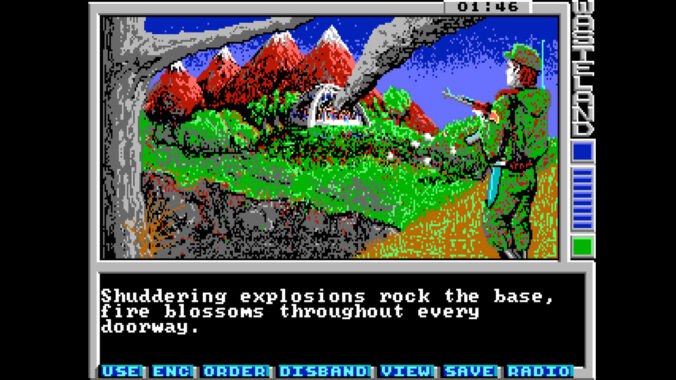
The history of the Wasteland and Fallout series is a tale of creative ambition, intellectual property disputes, and the persistence of a vision across decades and studios. It begins in 1988, in the twilight of the Cold War, when Interplay Productions released Wasteland, a groundbreaking post-nuclear role-playing game published by Electronic Arts. Set in a desolate American Southwest after a global thermonuclear conflict, Wasteland was one of the first CRPGs to offer a persistent world, moral complexity, and consequences for player choices. Its blend of bleak survivalism, dark humor, and open-ended gameplay laid the foundation for what would become a genre-defining legacy.

Despite its success and critical acclaim, Interplay found itself unable to produce an official sequel. Electronic Arts owned the Wasteland name, and negotiations between the two companies failed to secure a path forward. In response, Interplay attempted to carry the spirit of Wasteland forward under different guises. One such project was Fountain of Dreams (1990), a supposedly spiritual successor developed by EA without Interplay’s involvement. Set in a post-apocalyptic Florida, it was poorly received, criticized for its bugs, weak writing, and lack of polish. It was a pale shadow of its predecessor. Another would-be successor, called Meantime, was in development at Interplay and intended to use the Wasteland engine in a time-traveling storyline. However, the project was ultimately canceled, partially due to the declining commercial viability of the Apple II platform.

Unable to continue Wasteland in name, Interplay instead reimagined its thematic core. By the mid-1990s, the team led by producers like Tim Cain and designers including Leonard Boyarsky and Jason Anderson had harnessed the DNA of Wasteland into a new universe: Fallout. Released in 1997, Fallout: A Post Nuclear Role Playing Game was the spiritual successor in everything but name. It retained Wasteland‘s gritty atmosphere and irreverent tone, and added a distinctive retro-futuristic 1950s aesthetic, as well as a unique SPECIAL character system (an acronym for Strength, Perception, Endurance, Charisma, Intelligence, Agility, and Luck). The gamble paid off: Fallout launched a franchise that would span decades, including direct sequels (Fallout 2, Fallout: New Vegas), Bethesda’s rebooted entries (Fallout 3, Fallout 4, Fallout 76), and countless mods and spin-offs.

Meanwhile, Wasteland itself remained dormant for over two decades, until the rights finally reverted to Brian Fargo, the founder of Interplay and head of a new studio, inXile Entertainment. With crowdfunding on Kickstarter and a strong nostalgic following, Wasteland 2 was released in 2014, delivering a true sequel to the 1988 original. It combined old-school turn-based combat with modern design sensibilities, and despite its rough edges, it was warmly received. Its sequel, Wasteland 3, launched in 2020 with refined mechanics, voice acting, and a snowy Colorado setting that pushed the series further into narrative sophistication.

My plan to replay all these games hit some obstacles. I do own all the Fallout games, but they are all for Windows systems, and I currently only have a Mac laptop. The Fallout series will have to wait. Fortunately, my Wasteland series is for Apple computers. Unfortunately, the first game no longer works with more recent operating systems. So my post-apocalyptic adventures will have to start with Wastelands 2. I will write about it here but it will take a while, because it’s a big game.

Playing Old CRPGs Again: Avernum Trilogy

Next on my adventures into old CRPGs, I got into the Avernum Trilogy, by Spiderweb Software. I never played the original Exile series from the 1990s, but I did play the remake series, renamed Avernum, six games published from 2000 to 2009. However, those games no longer work on new computers. Fortunately, Jeff Vogel (owner of Spiderweb Software) has been launching new remakes of the series, and the first trilogy is already available. All these games are deeply rooted in traditional CRPG design, featuring turn-based combat, non-linear storytelling, and a vast, immersive underground world.

In Avernum: Escape from the Pit (2011), the player assumes the role of a group of prisoners exiled into the vast subterranean realm of Avernum, a cavernous world beneath the surface controlled by the tyrannical Empire. Unlike many CRPGs where the protagonist is a chosen hero, Escape from the Pit presents a world where survival is the first goal, and grander ambitions unfold naturally.

Thematically, the game explores oppression, resistance, and exile, drawing from dystopian fiction and the American frontier myth. The player’s choices (to merely survive, seek revenge, or escape) create a sense of agency, though the narrative structure remains relatively fixed. As expected from an independent game, the graphics are simple but very functional.

The game retains Spiderweb’s signature turn-based combat and isometric, grid-based exploration. It features deep tactical gameplay with a variety of abilities and skills. Character progression is robust, offering numerous build options. For this run, my group of four adventurers consisted of two dual-wielding fighters in the front and an archer and a priest/mage hybrid in the back. It was not the most efficient formation but it was fun to play. Magic users become very powerful around the middle of the game, so a group of mages and priests would have been a much stronger choice.

The underworld of Avernum is vast and interconnected, filled with hidden ruins, cities ruled by desperate exiles, and factions vying for dominance. The sense of discovery (finding lost vaults, encountering strange cave-dwelling races, or unearthing the history of Avernum) makes exploration very satisfying.

Avernum II: Crystal Souls (2015) was my favorite in the trilogy. It builds upon its predecessor by escalating the stakes and presenting a full-scale war between Avernum and the Empire, with the alien-like Vahnatai acting as an unpredictable third force. In the previous game we got hints of the existence of this ancient people, and meeting them here and learning about their culture deepens the world’s lore, bringing elements of lost civilizations and enigmatic magic into play.

Themes of war, diplomacy, and cultural misunderstanding drive the story. The presence of the Crystal Souls, ancient Vahnatai artifacts stolen by humans, introduces a compelling central conflict that asks whether peace is even possible or if mutual destruction is inevitable.

For this game, based on the previous experience, my group of four adventurers consisted of just one dual-wielding fighter, one priest, and two mages (who dealt an absurd amount of damage with their area of effect spells).

Avernum II: Crystal Souls is a step up from its predecessor in terms of complexity and scope. The story is stronger, the world more developed, and the choices feel more impactful. It stands as the most substantial narrative experience in the trilogy.

Avernum III: Ruined World (2018) tried to be more ambitious but didn’t fully succeed. It takes the series in a different direction by allowing players to go to the surface world for the first time, a land now devastated by an unknown menace. Instead of fighting for survival in the underworld, the game shifts to a post-apocalyptic tone, where players must navigate a collapsing Empire.

The problem was that, instead of the well developed and unique settlements we can visit in the previous games, what we find in the surface world are very generic towns with very generic inhabitants. For example, while we were used to named NPCs with their own back stories populating the towns, here we have the same merchants (blacksmith, weaver, etc) appearing in any town you go and having the same dialogue lines. It feels very repetitive, almost like the developers didn’t have enough time to properly populate the large number of settlements in the game.

The game’s central theme is civilization in decline. And if you take too long to solve the mysteries and complete your missions you will see towns destroyed, refugees fleeing, and the slow encroachment of a new alien threat. Unlike its predecessors, which are tightly structured, Ruined World is more open-ended, allowing players to shape the fate of the surface world through their actions. This new direction enhances player agency, but it also creates pacing issues. The urgency of the disaster can clash with the open-world exploration, making it easy to miss key story beats.

The party I used in Avernum II was so successful that I followed the same structure in Avernum III: one dual-wielding fighter, one priest, and two mages. And I advanced in the main quest as fast as I could, trying to prevent too much destruction to the surface world. Although this strategy worked well, it left me with the sensation that I didn’t explore the game world as well as I wished.

The shift to the surface is both a strength and a weakness. The devastated world is compelling, but lacks some of the uniqueness that made Avernum‘s underground setting so engaging. The world is more reactive than in previous games, but it can feel a bit overwhelming and unfocused compared to the tighter narrative of Crystal Souls.

I did enjoy replaying the Avernum trilogy. It excels in worldbuilding, tactical combat, and non-linear storytelling. While Escape from the Pit sets the stage with a strong survival narrative, Crystal Souls delivers the best story and character depth. Ruined World is the most mechanically ambitious, but its sprawling open-world design can dilute its storytelling.

Playing Old CRPGs Again: Adjusting the Plan

My initial idea was to explore old CRPGs roughly chronologically, but I’ve encountered a couple of technical obstacles. First, obviously, I no longer own all those games I played a decade or two ago. Second, with the evolution of hardware and operating systems, some games no longer work on recent computers. Third, I currently only have access to a MacBook Pro, and many of the games on the list are only available for PC. 

After Darklands, I wanted to play Betrayal at Krondor (1993) or The Elder Scrolls: Arena (1994), but I only own the PC versions of these games. Same for Diablo (1996) and The Elder Scrolls II: Daggerfall (1996). Next on the list was the Baldur’s Gate series, which I would like to play in sequence: Baldur’s Gate (1998), Baldur’s Gate: Tales of the Sword Coast (1999), Baldur’s Gate: Siege of Dragonspear (2016), Baldur’s Gate II: Shadows of Amn (2000), Baldur’s Gate II: Throne of Bhaal (2001), and finally Baldur’s Gate 3 (2023). That, of course, will take a long time.

So before getting into the whole Baldur’s Gate series (again), I thought of playing the Spiderweb Software games. The first one I played in the past was Nethergate (1998), which I remember enjoying very much. It was loosely based on the Roman occupation of Britain, and you could choose to play as the Celts or the Romans. While I no longer have my original copy of Nethergate, I do have the revamped version Nethergate: Resurrection (2007), but it’s for PC. Next, there is the Avernum series, six games from 2000 to 2009, but the versions I own no longer work on newer Mac OS X systems. Fortunately, Jeff Vogel (owner of Spiderweb Software) periodically revamps his games, and there is a new version of the Avernum series from the 2000s (which itself is a new version of the Exile series from the 1990s). So this is what I will be (re)playing next: Avernum: Escape from the Pit (2011), Avernum 2: Crystal Souls (2015), and Avernum 3: Ruined World (2018). Do recently revamped versions of old games still count as old games?

Playing Old CRPGs Again: Back into the Darklands

When Microprose launched Darklands in 1992, I became obsessed with the game. I played it hour after hour, day after day, week after week, always experimenting with new ways to explore the game world and vanquish the enemies. Replaying it now was still very satisfying, despite the dated graphic presentation.

Unlike the high-fantasy worlds inspired by Ultima or Dungeons & Dragons, Darklands is set in a historically grounded 15th-century Holy Roman Empire, where alchemy, saintly miracles, and medieval folklore are real. The game offers an open-ended experience where players can travel across Germany, engaging in political intrigue, mercenary work, or combating supernatural horrors like demons and witches. The dynamic world reacts to the player’s choices, and success relies on combat and diplomacy, alchemy, and knowledge of religious traditions. Though the interface and graphics are dated by modern standards, the sheer depth of the game makes it a rewarding experience.

Darklands, like many Microprose games of that time, comes with a comprehensive printed manual, a tome packed with historical references, gameplay mechanics, and world-building details. It was a rich companion that provided context for medieval German society, the role of saints, alchemical formulas, and the political landscape. It was as much an educational piece as a gameplay guide, encouraging players to immerse themselves in the setting rather than just skim for controls and shortcuts. In an era before easy internet guides, such manuals were crucial, and Darklands set a high standard with its depth and authenticity.

The character creation system is another remarkable aspect, resembling a mini-game in itself. Instead of simply selecting stats, players shape their characters’ past by choosing their upbringing, professions, and career paths, each choice influencing skills, attributes, and even aging. A character who has spent decades mastering alchemy will be formidable but will start with reduced vitality due to age. This approach forces players to balance youthful adaptability with the benefits of experience, making the process both strategic and deeply immersive.

Features like a detailed manual and an elaborate character creation system have largely vanished from modern gaming, replaced by quick in-game tutorials designed to get players into the action within minutes. The shift is likely due to evolving player expectations and a diminishing willingness to engage with slower, text-heavy introductions. Games today prioritize accessibility, which is not necessarily a bad thing. Still, it does mean that the sense of deep preparation and gradual mastery (once integral to RPGs) has been lost. Whether this reflects a decline in attention span or just a change in design philosophy is debatable, but it’s hard to deny that something valuable has been left behind.

One of the most fascinating elements of Darklands is its integration of medieval mythology, presenting a world where alchemical potions work, dragons haunt remote regions, and Christian saints can grant divine intervention (if one prays correctly). This blending of folklore with historical accuracy creates a unique atmosphere, reinforcing the idea that people in the Middle Ages truly believed in these forces. The inclusion of Christianity as a mythological system alongside pagan and occult elements is a subtle but intriguing move, especially for players with an atheistic perspective, as it places all supernatural elements on equal footing. Rather than preaching faith, Darklands treats belief as a mechanic, where devotion and knowledge of religious customs yield tangible results, mirroring the worldview of the era rather than modern sensibilities.

For my replay of Darklands, I went with an old strategy that I call the Blood, Sweat & Tears Plan. That is a jazz-rock band that started in the sixties and keeps playing under the same name but with none of the original musicians present. They were replaced gradually, but the band’s identity remains the same. In the game, the party accumulates fame and riches (money and equipment) that stay with the group even if individual members are replaced. So, I created a system for ending up with a strong group of adventurers reaching their peak based on previous party members’ blood, sweat, and tears.

I start with three fighters (with a past of recruit, soldier, and veteran, successively) and one healer (noble heir, student, physician). Their job is to accumulate fame and money, doing missions from fighting thugs in back alleys to defeating baron robbers in their castles. Once the healer is well trained in Read & Write, and the group is well equipped (including the coveted 37q plate armor from Nurnberg), I replace the fighters. This second party consists of one fighter who is marked to be expendable (recruit, soldier, veteran), one young fighter (recruit) with high perception, one young healer-alchemist (recruit) with high intelligence, and the old healer from the previous formation. These guys will advance deeper into the plot, going through the sabbat and the Monastery, and finally exploring the Citadel for the first time, where the expendable fighter is sacrificed (it’s an episode where you lose a team member, but with this revolving door strategy we can use this to our advantage). Meanwhile, the first young fighter is trained in artifice, and the healer-alchemist gets his healing and alchemy up to 60. In the Monastery, they can get 45q plate armor for everyone and +60 Latin. Time for the third party, which gets a second expendable fighter (recruit, soldier, veteran) to replace the first, a new young fighter (recruit) with high agility, a new healer-alchemist (recruit) with high intelligence, and keeps the high perception fighter from the previous formation. They basically repeat what the second party did, along the way training the healer-alchemist in healing and alchemy up to 60, collecting saint knowledge and alchemy formulas, and sacrificing the expendable fighter again. Then I get to my final party: the fighter with high perception, the fighter with high agility, a new young fighter (recruit) also with high agility, and the healer-alchemist with high intelligence. These guys have the fame, money, equipment, and loot accumulated by the previous formations. They are able to get all saint knowledge available and train everyone in religion up to 90, get the best equipment in the game, and finish all the quests, including killing dragons, clearing mines, and completing the cycle of Sabbat, Monastery, and Citadel. Very satisfying gameplay.

In many ways, Darklands was ahead of its time. While it never became a commercial success, its influence can still be seen in later RPGs that emphasize historical authenticity and player-driven narratives. It remains a cult classic, a relic of an era when games were sprawling, unapologetically complex, and designed for those willing to lose themselves in their depths.

Playing Old CRPGs Again: Exploring the Lands of Lore

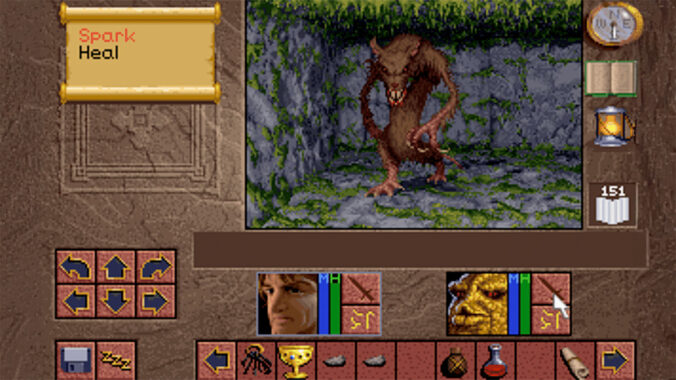
The next game in my revival series was Lands of Lore: The Throne of Chaos (Virgin Games, 1993), developed by Westwood Studios, the same guys who made the first two instalments of Eye of The Beholder. And this game has a very similar interface, with some clear improvements over the predecessors. Stepping away from the Dungeons & Dragons license, Lands of Lore brought its own mythology in what looks like a hybrid of RPG and adventure genres.

Set in the high-fantasy world of Gladstone, the game presents a classic struggle between good and evil. The story revolves around a powerful artifact, the Nether Mask, and the efforts of the kingdom to thwart its misuse by the malevolent sorceress Scotia. The player assumes the role of a chosen champion tasked by King Richard to prevent Scotia’s rise to power. The themes are quintessentially from medieval fantasy, with elements of heroism, betrayal, and mysticism.

You can’t create your own character and have to choose one of the available heroes to play. I went with Michael, a balanced choice with skills in both combat and magic. The party grows as the adventure progresses, with companions joining temporarily based on the plot. The challenges include the usual exploration and puzzle-solving, with combat against a diverse array of enemies. Resource management is crucial, as sometimes there’s a lack of food and potions (using magic to heal between battles will save the day), and your weapons don’t last forever. The puzzles are well-designed, often requiring good observation and a lot of experimentation.

It was quite pleasing playing Lands of Lore: The Throne of Chaos again. And I had the version released on CD, which came with great voice acting, including Patrick Stewart as King Richard.

Then I decided to play the sequel, Lands of Lore: Guardians of Destiny (Virgin Games, 1997). It marked a shift in tone and gameplay for the series. Developed by the same Westwood team, the game was designed during a period of significant technological change in gaming, including the rise of 3D graphics and free-roaming environments. As a result, it departed from the grid-based system of its predecessor, embracing a more dynamic and cinematic experience. Today it looks a bit primitive, and I prefer the traditional Eye of the Beholder style, but I can understand they wanted to try something innovative for the time. It just didn’t feel like it belonged to the same series.

The sequel takes place years after the events of The Throne of Chaos and follows Luther, a cursed young man caught in a struggle between opposing forces of light and dark. The story explores themes of duality, redemption, and destiny, with Luther’s transformations into beast and lizard forms playing a central role in both narrative and gameplay. It’s critical to learn when to use Luther’s beast form for combat and his lizard form for agility and puzzle-solving.

I never played Guardians of Destiny when it was launched, and playing it now wasn’t really a satisfying experience. Gameplay is a bit clunky and the game crashed constantly (I know, it wasn’t originally designed for a super fast computer made a quarter of a century later). So I gladly put it away and started looking for the next one.

Playing Old CRPGs Again: Eye of the Beholder Trilogy

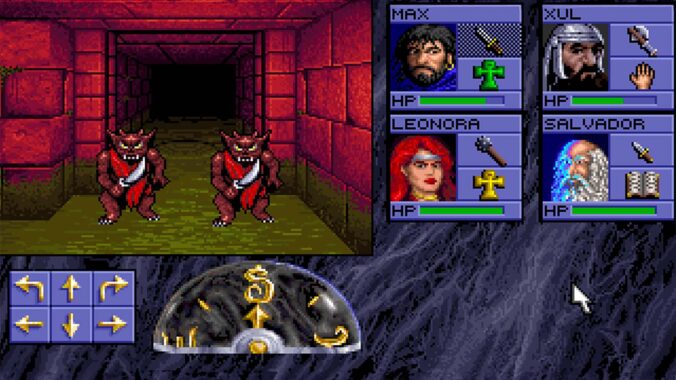
Eye of the Beholder (SSI, 1991) was the first computer game that I felt represented the spirit of the tabletop Dungeons & Dragons (which, at the time, was in its AD&D 2nd Edition). Another advantage for me was that the story happened beneath the city of Waterdeep, a famous location for fans of Dungeons & Dragons. Khelben Arunsun, one of the Lords of Waterdeep, tasks our group of adventurers to go investigate what’s wrong in the city sewers, and that’s just the beginning of a large dungeon expedition.

The game was somewhat similar to the first The Bard’s Tale but it looked much better. Objects in your inventory were represented by images rather than just text. Music and sounds were more realistic. Mouse support made it easier to play. And, although the continuous time combat was not as pleasing as the turn based mode of The Bard’s Tale, the whole experience was much more engrossing. Having recently played The Bard’s Tale, one single feature (or lack of it) by itself makes the game much more pleasurable in comparison: there is no need to carry torches or to spend mana points casting light, as the dungeons are naturally lit. In contrast, while in The Bard’s Tale food was not a consideration, in Eye of the Beholder you have to carry rations and make sure your characters don’t starve.

Mapping the dungeons on graph paper was part of the experience of playing a CRPG at the time. But trying to play that way in 2024, after decades of games with an automapping feature, was just too irksome. Fortunately, I found an application called The All-Seeing Eye, which adds automapping to the Eye of the Beholder series. It only works on Windows systems, but it was well worth temporarily switching from my new cool Mac to my crappy old PC just to enjoy the game with maps.

Eye of the Beholder is not as demanding as The Bard’s Tale can be, but it’s not an easy game. The mindflayers on level 11 are particularly nasty, because they can simply paralyze the whole party and then attack until everyone is dead. Fortunately, the Kenku level offers an opportunity for grinding, as the Kenkus will continually respawn, so you can reach the mindflayers with a robust party.

My team was formed by Max (human male paladin), Xul (dwarf male fighter/thief), Leonora (human female cleric), and Salvador (human male mage). The names are inspired by surrealist painters. They all start at level 3. Thanks to all the grinding in the Kenku level, and also by not accepting extra members to share the experience points, my party finished the game around level 8, more specifically Max at level 8, Xul at level 7/9, Leonora at level 8, and Salvador at level 8. Killing the beholder Xanathar, the last monster, required a lot of maneuvering and the use of a trap conveniently located nearby.

Eye of the Beholder II: The Legend of Darkmoon (SSI, 1991) uses basically the same engine from the previous game, with prettier art. After defeating Xanathar in the first adventure, our mission now is to investigate the Darkmoon temple and find the scout sent by Khelben Arunsun earlier. The threat is much worse this time. While the big boss in the first game was a beholder, the villain here is Dran Draggore, a dragon in human form who was using Xanathar as a pawn in his own plans and now has an army of many creatures, including several beholders.

Even with all the grinding in the previous game, my team didn’t seem overpowered at all. But the equipment they brought was good, even better than anything found in the first phases here. Fighting the multiple beholders in the Silver Tower can be quite annoying, because they have the ability to simply kill a party member with a single attack. Find two or three beholders together and you will be reloading your game. My party for the second game: Max (human male paladin, level 8, imported from EOB1), Xul (dwarf male fighter/thief, level 7/9, imported from EOB1), Leonora (human female cleric, level 8, imported from EOB1), Salvador (human male mage, level 8, imported from EOB1), San-Raal (elf male mage level 8, rescued from the catacombs), Calandra (human female fighter, level 9, rescued from the catacombs and tagging along just until the party finds her replacement), and Tanglor (half-elf male fighter/cleric, rescued from the Silver Tower and replacing Calandra because a second cleric is more useful than a third fighter).

There’s much more respawning in this game than in the previous one, so grinding for more experience is not a problem. With a bit of patience, I managed to win the final fight against Dran Draggore, who actually has to be defeated twice, first in his human form and then as a dragon. I had much fun playing these two games, and it was particularly nice to be able to import my characters from the first to the second game. It’s a feature that I learned to appreciate with Eye of the Beholder.

But then there was Eye of the Beholder III: Assault on Myth Drannor (SSI, 1993). Big disappointment. The storyline is generic and uninspired. The gameplay is monotonous and repetitive. Even the graphics are inferior in comparison with the previous two games. I’m not sure why they didn’t have Westwood Associates developing the game like they did with the first two, and instead used a new team to deliver this fiasco. I played it for a while but got too bored to continue. On to the next game…

Playing Old CRPGs Again: The Bard’s Tale Trilogy

Ah, how many hours I spent roaming the streets of Skara Brae with a party of underdeveloped and underequipped adventurers, just trying to get enough experience to be able to explore the catacombs under the city. The Bard’s Tale was the first computer game where I got the sense of playing an RPG, instead of just fighting against weak design and poor mechanics.

For this rerun, I got the remastered version launched by inXile Entertainment in 2018, The Bard’s Tale Remastered Trilogy, which is fantastic. It revamps the graphics without losing the flavor of the original, unifies the mechanics of the three games, and adds some precious features like automap or being able to save the game anywhere.

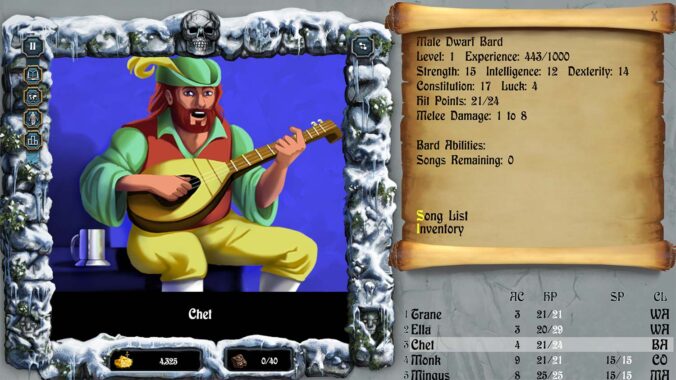
The first time I played this game, I only finished the first story, Tales of the Unknown: The Bard’s Tale (1985), and never had a chance to play The Bard’s Tale II: The Destiny Knight (1986) or The Bard’s Tale III: Thief of Fate (1988). My plan now was to go through all the three games with the same party of adventurers. My team was formed by Trane (male human paladin), Ella (female human paladin), Basie (male dwarf warrior, who was seriously underperforming and was replaced), Duke (male human paladin, who replaced Basie), Chet (male human bard), Monk (male elf conjurer/sorcerer/wizard/magician), Mingus (male elf conjurer/sorcerer/wizard/magician), and Billie (female elf magician/sorcerer/wizard/conjurer). The names are inspired by jazz musicians.

It is a hard game, generating a mix of frustration (from things like rooms that extinguish any light source and turn you around, or being frequently poisoned by spiders in the dungeon without having any cure other than running back to the city looking for a temple) and satisfaction (sometimes just surviving a tough fight in the dungeon and being able to return to the surface before everyone died of spider poisoning was celebrated like a big victory). Even with auto mapping (added in the remastered version), The Bard’s Tale does a very good job of confusing the player into getting lost. Some diabolical locations mix zones of darkness, spinners, teleporters to identical rooms, and other niceties. But, with much patience and much grinding, I managed to complete the first game.

I fought the last battle in Tales of the Unknown: The Bard’s Tale, against Mangar and his vampire lords and greater demons (which he continues to summon), at level 22 for Trane, Ella, and Chet, 20 for Duke (who joined the party later), and level 7/7/7/5 for Monk, Mingus, and Billie. After the experience gained in the last combat, Trane, Ella, and Chet jumped to level 26, Duke to 23, and Monk, Mingus, and Billie to 7/7/7/7 plus a stack of extra experience. They also had a bit over one million gold in the bank and some nice trinkets to be transferred to the next game.

The Bard’s Tale II: The Destiny Knight is even more brutal than the first Bard’s Tale, but if you import an experienced party from the previous game the beginning of the story is much more pleasant. The first dungeon we find in the starting city of Tangramayne hosts many of the tricks from the first game, plus a couple of new ones. As if the spinners, teleporters, and dark rooms weren’t annoying enough, there are two situations here where you can get stuck for a long time. There’s a chasm that cannot be traversed unless you have accepted a certain winged creature from a previous location into the party (and you are not given that information). If you are travelling with a full party of seven, it’s unlikely that you will replace one of your loyal adventurers with an unknown monster you found in a dungeon. But without the winged creature there is no way to progress. Then, after the chasm there is a door that will only open if your bard is playing a certain song. If you unwisely decided to have a party without a bard in a game called The Bard’s Tale, there is no way to pass through those doors. At least the rewards for this quest are amazing. Even with a veteran party like mine, the experience I got at the end was enough to jump three levels ahead.

The trickery gets much worse later in the game, but I think the worst case is found early at Fanskar’s Castle, where you have to choose one among three doors, and two of them will lead to rooms where the party is instakilled just by entering: “As you enter the room a fiery cavalcade assaults your mortal forms, destroying you instantly.” As if this wasn’t bad enough, you have to make your choice in the dark, without a compass, and the doors have spinners before them. That doesn’t only kill your characters, it also kills the fun.

And then there is the part that made me quit the game. It’s called Dargoth’s Tower, which can be accessed from the city of Philippi. After several levels full of spinners, anti-magic squares, darkness areas, and other traps, you finally get to the top level. Fighting Dargoth and his minions is not a problem. But to get the third piece of the MacGuffin you are looking for, the Destiny Wand, you have to go through a maze. It starts with a riddle that has an answer of eleven (!) words that have to be guessed from various vague hints found throughout the tower and then entered in a specific order. That done, you are teleported and given a warning about a timer (there is a beating heart sound in the background to indicate that time is running off). Then you have to go through a specific sequence of places fighting monsters and collecting the passwords they give. The whole area is full of spinners and it’s not possible to cast spells (so you have no compass). Halfway through this process, there is a corridor with a door on one side and a magic mouth on the other, seven squares apart. You need to collect six different sentences from the mouth, and to get each one requires you to exit the corridor and reenter. Between the door and the mouth there are two spinners and between the spinners a trap that drains hit points. To get in and out with one sentence, it takes a long time to deal with the spinners and some damage from the trap. To get all the sentences you have to go through that twelve times. Even if you manage to survive the damage from the trap, the timer runs out before you can complete the sequence of sentences and your party simply dies. It’s the most infuriating dungeon design I have ever encountered. This is not entertainment, it’s torture.

I was really looking forward to playing with the same party through all the three games. But after this annoying level design in the second game I lost the will to continue. You can only use the same party in the last game if you finish the previous one, so I just abandoned the whole thing. Very disappointing. On to the next game…

Playing Old CRPGs Again: the plan

One of my projects for 2024 (yes, I have many projects) is to play again (or, in some cases, for the first time) old computer role playing games (CRPGs). It’s something that gave pleasure for many years and I want to experience it again. I think I will be disappointed in some cases but rewarded in others.

I won’t start with games from the Ultima series (Origin Systems) or the Gold Box series (SSI) because I was never able to like them. It wasn’t because of the primitive graphics, I don’t mind that (I still enjoy playing the classic Rogue, which is just white letters and symbols over a black background). It was the clunkiness of the gameplay and in some cases the silliness of the story.

I was never a fan of the Ultima series. The whole mythology centered around the figure of Lord British (game creator Richard Garriott’s alter ego) was silly, and made even sillier by the pretentious use of Old English expressions like “thee” and “thy”. The worst part, however, was the gameplay. These games were never fun, just piling up one annoyance after another. Working on spreadsheets was more entertaining than playing these early Ultima games. The only game in the series that I had a sliver of fun playing was Ultima Underworld: The Stygian Abyss (1992). This was the first time we saw freedom of 360 degrees movement in a game. Even in that low resolution, it was impressive. The gameplay was still cumbersome, unfortunately. And the collision calculations were still primitive, making it hard to deal with enemies and obstacles. A fantastic advance in game technology but still not really an enjoyable experience to play it.

I had already played more advanced games before I got to Gold Box series (Pool of Radiance and its sequels). After that, those older graphics and interface felt primitive and cumbersome. Everything took forever, with an excess of keystrokes to accomplish even simple tasks like equipping a character. And the battles were long and tedious. There was no enjoyment. The only thing I remember appreciating in these games was that after killing many monsters in a battle the last ones would flee instead of staying to be slaughtered. I thought that was a nice touch.

So I will start my replaying of CRPGs with the first games that I really fully enjoyed: The Bard’s Tale (Interplay, 1985) and Eye of the Beholder (SSI, 1991). I won’t strictly follow a chronological order and may eventually jump to more recently titles and then jump back to the old classics. I don’t want to write a thesis about this, I just want to have some fun.

© 2026 Zander Dulac

Theme by Anders NorenUp ↑