One of the most persistent questions in aesthetics is whether it is possible to appreciate a work of art created by someone whose actions or beliefs we find morally reprehensible. The debate is hardly new, but in the age of social media and cancel culture it has acquired renewed urgency. Every few months, a novelist, filmmaker, musician, philosopher, or painter becomes the subject of public controversy, and the same question returns: should their work still be read, watched, heard, or admired?

The issue is often framed as a choice between two extremes. One side argues that art should be judged solely on its artistic merits, independently of the creator’s personal conduct. The other contends that moral considerations are inseparable from artistic evaluation and that celebrating the work of a bad person amounts to excusing or normalizing their behavior. Both positions contain some truth, but neither is sufficient on its own.

A useful starting point is the observation that many of the greatest figures in cultural history were, by modern standards, deeply flawed individuals.

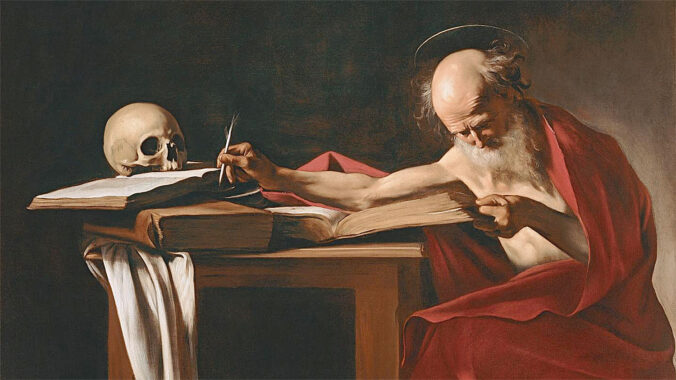
Consider the painter Caravaggio. Today he is regarded as one of the founders of Baroque painting, a revolutionary artist whose dramatic use of light and shadow transformed European art. Works such as The Calling of Saint Matthew and The Supper at Emmaus remain among the masterpieces of Western painting.

Yet Caravaggio also accumulated a remarkable criminal record. Court documents reveal repeated involvement in assaults, illegal weapon possession, vandalism, and public disturbances. In 1606 he killed a man, Ranuccio Tomassoni, during a violent confrontation and spent the rest of his life as a fugitive. Few would defend his conduct. Yet it is difficult to argue that knowledge of his crimes somehow alters the technical brilliance of his paintings. The paintings themselves do not advocate murder. Their artistic value does not depend on the moral character of their creator.

The same dilemma appears with Benvenuto Cellini, one of the great sculptors and goldsmiths of the Renaissance. His bronze statue Perseus with the Head of Medusa remains one of the landmarks of Florence. In his autobiography, however, Cellini openly boasted about killing several people. He treated violence almost as an extension of his artistic ego. Yet few visitors standing before Perseus in the Loggia dei Lanzi judge the sculpture according to the moral failings of its creator. They admire the sculpture because of its artistic achievement.

Another extreme example is the composer Carlo Gesualdo. Gesualdo murdered his wife and her lover after discovering their affair, a crime carried out with the assistance of his servants. The killings were notorious even in his own time. Nevertheless, centuries later he is remembered primarily for his astonishingly experimental madrigals, whose harmonic innovations anticipated musical developments that would not become common until much later. The horror of the crime does not erase the originality of the music.

These examples suggest that artistic achievement and moral character are not necessarily linked. A great artist may be a terrible human being. A virtuous human being may produce mediocre art. The qualities required for artistic excellence are not identical to those required for ethical excellence.

The problem becomes more complicated when we turn to modern figures because their victims, controversies, and consequences remain part of living memory.

The filmmaker Roman Polanski pleaded guilty in 1977 to unlawful sexual intercourse with a thirteen-year-old girl after providing her with alcohol and drugs. Many people regard this as sufficient reason to boycott his films. Others argue that films such as Chinatown, Tess, and Rosemary’s Baby remain important artistic works regardless of Polanski’s crimes.

The disagreement often stems from different understandings of what it means to watch a film. Some view it as a purely aesthetic experience. Others see it as an act that confers prestige, influence, and possibly financial support on the creator. The question is therefore partly aesthetic and partly political.

The philosopher Louis Althusser presents a different challenge. In 1980 he strangled his wife, Hélène Rytmann. Should that fact affect the evaluation of his theories about ideology, state power, or Marxism? Logically, the answer would seem to be no. A philosophical argument is either sound or unsound regardless of who makes it. If a mathematician commits murder, his theorem does not become false. Likewise, Althusser’s ideas must stand or fall on the strength of their reasoning. To reject a theory solely because of its author’s crimes is a version of the genetic fallacy: judging a proposition by its source rather than its content.

The case of Woody Allen is even more contentious because public opinion remains divided. Allen’s marriage to Soon-Yi Previn, the adopted daughter of his former partner Mia Farrow, generated widespread condemnation. For many observers the relationship itself was sufficient to permanently taint his reputation. Others distinguish between moral discomfort regarding his private life and artistic appreciation of films such as Annie Hall, Manhattan, or Crimes and Misdemeanors.

Again, the central question is whether the quality of the films changes because of what we know about the filmmaker. The films themselves remain exactly the same objects they were before the scandal became public.

Political controversies raise another set of questions. The poet Ezra Pound openly supported fascism and made antisemitic radio broadcasts on behalf of Mussolini’s regime during the Second World War. The novelist and essayist Mario Vargas Llosa supported Alberto Fujimori at one point in Peru’s political history before later becoming a critic. Jorge Luis Borges accepted an honorary degree from Pinochet’s government in Chile and made statements that many considered politically naïve or objectionable. The Brazilian novelist Rachel de Queiroz supported the military government that emerged after the 1964 coup.

Do these political positions diminish the literary value of their work? Many readers would answer no. Pound’s influence on modern poetry remains immense. Borges remains one of the most original writers of the twentieth century. Vargas Llosa’s novels continue to be admired for their narrative sophistication. Rachel de Queiroz remains a major figure in Brazilian literature. Their political judgments may have been mistaken, even profoundly mistaken, but literary quality is not determined by political correctness.

This leads to an important distinction: there is a difference between condemning an artist and condemning a work.

Suppose a novel explicitly advocates racial supremacy, political persecution, or sexual exploitation. In that case the objection is directed at the work itself. The ideas being criticized are embedded in the artistic object. The reader is not merely reacting to the author’s biography. The problematic content is present on the page.

The same would apply to a film that glorifies rape, a painting intended as propaganda for genocide, or a philosophical treatise defending slavery. Here aesthetic judgment and moral judgment become intertwined because the objectionable ideas form part of the work’s substance.

But many controversies involve works that are unrelated to the artist’s misconduct. Caravaggio’s paintings do not teach murder. Gesualdo’s madrigals do not defend adultery killings. Borges’s stories do not promote military dictatorship. Althusser’s theory of ideology does not depend on strangling one’s spouse.

In such cases, rejecting the work because of the creator’s behavior risks confusing two separate questions:

“Was this person morally admirable?”

and

“Is this work artistically, intellectually, or aesthetically valuable?”

The answer to the first may be no while the answer to the second remains yes.

This does not mean that audiences must ignore biography. Knowledge of an artist’s life can enrich interpretation. It can also create discomfort. A viewer who cannot enjoy Polanski’s films because of what Polanski did is not making an irrational choice. Moral emotions are part of human experience. Likewise, a reader may decide not to buy books by a living author whose views they find abhorrent. The mistake lies in assuming that personal revulsion automatically settles questions of artistic merit.

The strongest position may therefore be a middle one. We should neither excuse wrongdoing because someone produced great art nor pretend that great art ceases to be great when its creator proves morally deficient. Human beings are complicated. Artists are often worse than we would like them to be. Some are criminals. Some are political fools. Some are predators. Some are all three.

Yet if cultural history teaches anything, it is that artistic genius and moral virtue are independent variables. We may wish they coincided more often than they do. But they do not.

The challenge for modern audiences is to hold two ideas simultaneously: that certain actions deserve condemnation, and that certain works deserve admiration. The ability to maintain that distinction may be uncomfortable, but it is arguably essential for any serious engagement with art, literature, philosophy, and history.

An additional irony is that society routinely separates art from artist when enough time has passed. Millions admire Caravaggio without thinking about the man he killed. Visitors to Florence do not boycott Cellini’s sculptures because of his confessions of murder. Concertgoers rarely discuss Gesualdo’s crimes before listening to his music. Yet contemporary artists are often judged by different standards. Whether this reflects moral progress, media saturation, or simply the emotional proximity of recent scandals is debatable. What is clear is that time has a remarkable ability to transform criminals into historical figures and controversies into footnotes. The question, therefore, is not whether we separate art from artist, but when.