Tag: tv (Page 1 of 2)

The Innocents: essence of the fantastic

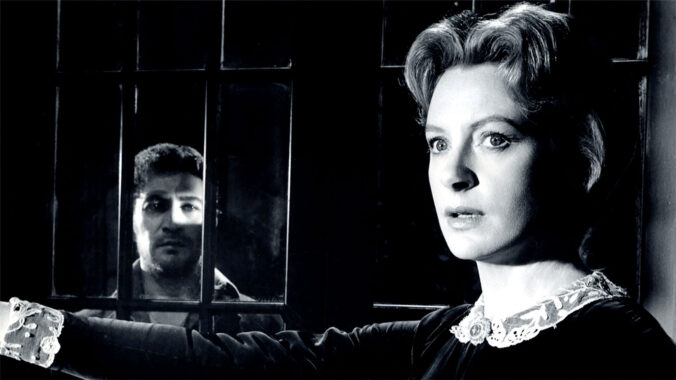
Henry James’s novella The Turn of the Screw is famous for being slippery. Are the ghosts real, or is the governess losing her mind? The 1961 film The Innocents keeps that same spirit of uncertainty, but instead of James’s careful prose, it uses images, sound, and atmosphere to create doubt. The story is essentially the same, but the movie sharpens the tension, leaning into the creepy sexuality and suppressed desire that James only hinted at. Where the book makes you question every line, the film makes you question every shot.

The script started with a stage adaptation, but Truman Capote was brought in to rewrite it. His influence is evident in the sharp, suggestive dialogue and in how the children’s eerie maturity is conveyed without feeling overdone. Capote gave the film its double edge: everything can be read two ways, as either a genuine haunting or as the governess projecting her fears and repressed desires. That balancing act is what makes the movie so unsettling.

Director Jack Clayton avoids cheap scares. Instead, he lets silence and stillness work on you until a sudden figure in a window or a whisper in the dark lands like a thunderclap. His staging is deliberate: characters are positioned like pieces on a board, with distance and movement telling you just as much as the dialogue. The effect is slow-burning dread that never quite gives you release.

The black-and-white photography by Freddie Francis is breathtaking. He plays with overexposed whites, deep shadows, and reflections so that even a bright garden feels uncanny. Ghostly shapes seem to appear naturally in the frame, with no special effects needed. Wide shots capture everything in sharp focus, forcing you to wonder if that shadow in the corner is real or just your imagination. This isn’t just pretty camerawork, it’s cinematography designed to make you doubt your own eyes.

Deborah Kerr is the movie’s anchor. She plays the governess with total conviction, which is scarier than if she’d gone for hysteria. You believe she cares for the children, but her intensity makes you worry she’s also dangerous. Kerr was older than the governess in the book, which works brilliantly, as she feels like someone who has kept her emotions bottled up for years, now cracking under the strain. The final scenes wouldn’t hit nearly as hard without her layered performance.

Literary critic Tzvetan Todorov defined the “fantastic” as that moment when you can’t decide if something is supernatural or just psychological, and you’re stuck in that hesitation. The Innocents is a textbook case. Every ghost sighting can be explained naturally, and every “rational” explanation leaves room for the uncanny. The film never tips its hand, and that’s why it lingers so powerfully.

The Turn of the Screw has been filmed many times, but most versions stumble by taking too firm a stance one way or the other. Some make it a straight ghost story, others a psychological breakdown. A few are handsome productions, but none capture the same knife-edge uncertainty. The 2020 film The Turning tried but felt contrived. Probably the closest spiritual successor isn’t even an adaptation: Alejandro Amenábar’s The Others (2001), which gets the atmosphere and ambiguity right (up until the final reveal).

The Nightcomers (Michael Winner, 1972), intended as a prequel, demonstrates precisely how to ruin this kind of story. By providing us with an explicit backstory about Quint and Miss Jessel (with Marlon Brando as Quint), it explains what James and Clayton wisely left ambiguous. Instead of mystery, we get tawdry melodrama. The children’s corruption is spelled out, and the air of dread collapses into cliché. In trying to “fill in the blanks”, the movie drains away all the power of the original.

Mike Flanagan’s Netflix miniseries The Haunting of Bly Manor combines James’s story with other works of his, reframing it as a tale of love, grief, and memory. It’s beautifully acted and emotionally satisfying, but it isn’t The Innocents. Where Clayton’s film keeps you trapped in doubt, Bly Manor builds a mythology of ghosts and explains how they work. It goes for catharsis instead of unease. As a result, it’s touching but far less haunting.

Final word: The Innocents remains the gold standard. Capote’s sly script, Clayton’s restrained direction, Francis’s brilliant visuals, and Kerr’s magnetic performance combine to make a film that never gives you an answer. It’s that refusal to resolve the mystery that makes it unforgettable.
Watching Anime: Space Battleship Yamato

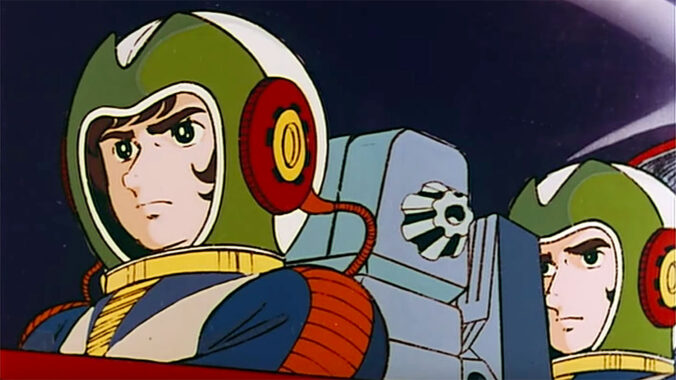
Space Battleship Yamato, created by Leiji Matsumoto and Yoshinobu Nishizaki, stands as one of the foundational works of Japanese science fiction anime. Airing from 1974 to 1975, with additional seasons and movies continuing into 1979 and beyond, it helped redefine anime as a serious storytelling medium capable of complex narratives, serialized plots, and themes of national trauma and redemption. It also influenced international sci-fi storytelling, particularly in the USA, where it was edited and rebranded as Star Blazers.

At its heart, Space Battleship Yamato is a classic odyssey: a perilous voyage across space to save Earth from environmental ruin caused by the alien Gamilas Empire. Earth has one year before extinction, and salvation lies in a distant galaxy, on the planet Iscandar. The Yamato, a resurrected WWII battleship, is fitted with alien technology and sent on this desperate mission. The narrative structure, a race against time, with continuous battles and moral dilemmas, mirrors both mythic quests and war epics, with themes like: the perseverance of humanity under dire threat; the cost of war, sacrifice, and redemption; and hope born from resilience, not domination.

The choice of the Yamato battleship as the narrative centerpiece is both startling and profound. The historical Yamato was the pride of the Imperial Japanese Navy, the largest battleship ever constructed. It was destroyed in 1945 in a suicide mission against overwhelming American forces, an act often framed in Japan as both heroic and tragic. Reimagining the Yamato as a spacefaring vessel sent to save humanity rather than destroy enemies offers several layers of significance.

The original Yamato represented imperial militarism and a doomed sense of honor-bound nationalism. By resurrecting the wreck of this ship from the seabed and launching it toward the stars, the anime transforms a symbol of war into one of peace and planetary survival. It represents an act of cultural reappropriation, taking a painful emblem and using it to imagine a better future.

The literal rising of the Yamato from beneath the sea is a metaphorical resurrection of Japan itself, still grappling in the 1970s with the legacy of its WWII defeat. Fitted with alien technology (a gesture toward international cooperation or the adoption of foreign innovation), the ship becomes an allegory for postwar Japan’s transformation into a technologically advanced but pacifist society.

For Japanese viewers, especially those born during or just after the war, the Yamato carried potent emotional weight. This emotional resonance lent the series a gravitas that extended beyond its space opera trappings. It turned the anime into a medium through which Japan could reflect on its past, imagine a redemptive future, and explore identity without jingoism.

The Earth in Space Battleship Yamato is scarred and dying, much like post-war Japan. The Gamilas’s radiation bombs turn Earth’s surface into a wasteland, echoing both Hiroshima and Nagasaki. The crew’s journey to Iscandar, a source of salvation, can be seen as a metaphor for Japan’s post-war economic and spiritual rebuilding. Additionally, the show often emphasizes the need to fight not for conquest, but to survive, making a clear distinction between aggression and defensive struggle. This aligns with Japan’s pacifist constitution and cultural introspection during the postwar years.

Leiji Matsumoto’s aesthetic design contributes significantly to the series’ emotional tone. The ship design evokes reverence, as if the Yamato were a cathedral in space. Scenes of space battles are cinematic, yet often tinged with melancholy rather than triumphalism. The musical score by Hiroshi Miyagawa, especially the iconic Yamato theme, reinforces the sense of operatic grandeur. It’s martial and uplifting, but often carries a somber undercurrent, mirroring the show’s fusion of hope and loss.

Space Battleship Yamato established long-form serialized storytelling in anime, paving the way for Mobile Suit Gundam, Evangelion, and others. It helped elevate anime’s cultural status, especially in Japan, by tackling serious themes. It contributed to a growing awareness among Western audiences of Japanese science fiction and anime aesthetics. And it influenced other space operas, including Battlestar Galactica, which shares several narrative similarities.

Space Battleship Yamato is far more than a space adventure. It is a deeply allegorical, emotionally resonant work born out of a specific cultural context. By turning a WWII symbol of defeat and militarism into a vessel for planetary salvation, the anime performs a kind of cultural catharsis. It neither glorifies war nor denies its consequences. Instead, it asks: how can we rise from the ashes of our own destruction and chart a new course for humanity? In doing so, Yamato became not just a battleship, but a vessel for memory, redemption, and hope.

Watching Anime: Speed Racer

As with many successful anime tv series, Speed Racer started on the printed page. Tatsuo Yoshida’s original manga Mach GoGoGo (serialized between 1966 and 1968) emerged during Japan’s rapid modernization and automotive fascination. A product of its time, it combined elements of heroic storytelling, spy thrillers, and science fiction, inspired by both James Bond and Japanese racing culture. It followed Go Mifune (translated as Speed Racer in English), a hotheaded but honorable young driver who dreams of becoming a world-class racer with his technologically advanced Mach 5 car. Yoshida’s art was clean, dynamic, and expressive, prioritizing kinetic energy and sharp contrasts to match the speed-driven plot. The manga was unabashedly aimed at boys, with themes of courage, family loyalty, and justice, but it also delved into espionage, sabotage, and betrayal. The mysterious Racer X, secretly Speed’s brother, exemplified the manga’s melodramatic and moral complexity.

The anime version of Mach GoGoGo, titled Speed Racer in English, was a cultural milestone in the USA when it aired in syndication starting in 1967. Translated and dubbed by Trans-Lux Television, it became one of the earliest anime series to achieve mass American exposure. Its recognizable theme song, stilted dialogue, and frenetic pacing helped engrain it in the American pop culture memory, albeit more as camp than drama. Though typical of its era, the animation was limited, with repeated sequences that would make the show appear cheap to modern audiences. It also had some sort of moral simplicity, with episodes ending with clear lessons about perseverance, courage, and loyalty.

One thing that it introduced to Western audiences was the team structure typical of many anime, a core group of characters representing specific archetypes. A main hero (young, idealistic protagonist), a father figure (mentor, leader, or actual parent), an older brother figure (rival, protector, or mysterious ally), a token female (often love interest, emotional anchor, or action girl), and a little kid and/or pet (comic relief, mascot, or symbolic innocence).

Despite technical shortcomings, the anime was groundbreaking for its influence on later Western perceptions of anime and created a dedicated fanbase that saw Speed as more than just a race car driver. He was a symbol of virtue and speed in a chaotic world. That was never recaptured by the reboots made decades later.

Speed Racer X (1993), produced by Tatsunoko and dubbed by Saban Entertainment, was mired in legal issues and aired only sporadically before being pulled. Tonally, it tried to modernize Speed while maintaining the campy flair. Unfortunately, it failed to resonate with either original fans, who saw it as inauthentic, or a new generation, who found it bland and formulaic.

Speed Racer: The Next Generation (2008), a CGI animated series produced by Nickelodeon, was meant to tie into the live-action film’s release. The concept, a futuristic school for racers run by an aged Spritle (that was Speed’s younger brother), was conceptually odd and tonally confused. It felt more like a marketing product than a genuine creative endeavor. Poor writing, stiff animation, and weak characterization ensured it was quickly forgotten.

And then we have the live-action film Speed Racer (Wachowskis, 2008), a colossal disaster. It was a surreal experiment that failed both commercially and critically. Its ambition was undeniable, attempting to create a hyperreal aesthetic that mimicked anime visual grammar through CGI. The film was loud, saturated with candy-colored visuals, and jam-packed with kinetic action sequences that seemed torn from a video game more than a racetrack.

Not often do so many things go wrong in a single movie. Let’s list just a few. Visual Overload: The film’s hypersaturated palette and constant digital movement overwhelmed viewers rather than immersing them. Narrative Incoherence: Despite a relatively simple story, the movie was weighed down by flashbacks, tonal shifts, and overwritten dialogue. Mismatched Casting and Tone: While some performances (notably John Goodman and Susan Sarandon) showed warmth, the film veered from childish slapstick (Spritle and Chim-Chim) to heavy-handed anti-corporate allegory, never settling on a target audience. Disregard for Realism: The film’s physics-defying races and rubbery CGI cars removed any stakes from the action. It bombed at the box office, grossing $93 million on a $120 million budget, and was swiftly labeled a misguided failure.

Instead of embracing the stripped-down emotional clarity and kinetic storytelling of Yoshida’s manga and anime, the Wachowskis imposed a convoluted mythology. They turned Speed Racer into an epic, when it had always been a serial. They also tried to blend Looney Tunes humor (chimpanzee antics) with dark critiques of corporate corruption and existential racing philosophy. This tonal split alienated both children and adults. And the hyper-CGI aesthetic made everything feel intangible. Speed’s struggles, victories, and relationships felt like simulations rather than real emotions playing out in a grounded world.

Speed Racer, as a property, has endured because of its iconic characters, archetypal storytelling, and unique place in the history of anime. But nearly every attempt to revive or reinvent it has stumbled, none more extravagantly than the Wachowskis’ 2008 film. That disaster, while visually innovative, serves as a cautionary tale about the dangers of over-intellectualizing simple source material. What Speed Racer needs isn’t another reinvention, it’s a return to the track: fast, fun, and fearless.

Watching Anime: The Many Faces of Astro Boy

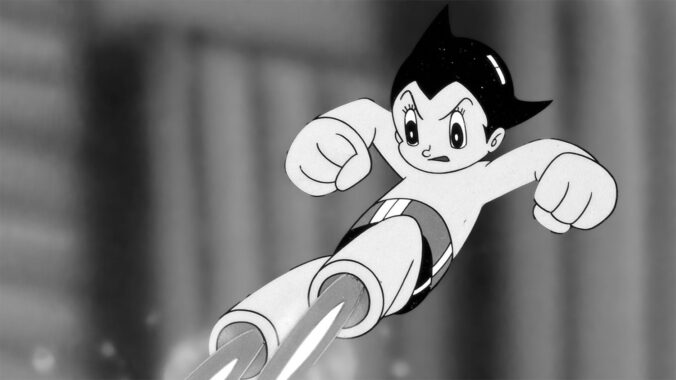
Astro Boy (Tetsuwan Atom) is more than just a cartoon character. He’s a cornerstone of modern Japanese pop culture and a foundational figure in global science fiction storytelling. Created by Osamu Tezuka, the so-called “God of Manga”, Astro Boy first appeared on the printed page in 1952, eventually becoming the star of Japan’s first major animated television series in 1963. Astro is instantly recognizable with his big round eyes (according to Tezuka, inspired by Disney’s Bambi), jet-powered limbs, and heart of gold. But behind his charming appearance lies one of fiction’s most poignant origin stories: a tale of loss, abandonment, identity, and artificial humanity.

Tezuka, a trained medical doctor turned artist, was deeply influenced by Western literature, animation, and post-war trauma. His work often combined fantastical science fiction with deep human concerns. With Astro Boy, he created a character who was simultaneously a child, a weapon, and a mirror for human fears and hopes in an age of rapid technological change.

Astro’s origin story (rebuilt and reimagined across manga, tv, and film) reveals not just changing artistic styles, but also evolving philosophies of life, death, and what it means to be human.

One of Tezuka’s clearest inspirations for Astro Boy was Carlo Collodi’s Pinocchio. Like Geppetto’s wooden puppet, Astro is a creation born of love and grief, a substitute for a lost or absent child. And like Pinocchio, Astro must embark on a journey of self-discovery, confronting internal doubt and external hostility to become “real” in an emotional, if not biological, sense.

However, whereas Pinocchio centers on the transformation of a puppet into a human boy, Astro Boy reverses the trajectory. Astro is built to resemble a real boy but gradually realizes he is not human and never will be. His tragedy lies not in wanting to become human per se but in wanting to be accepted as he is. The constant tension between how he is perceived (a machine, a tool, a weapon) and how he sees himself (a boy with emotions and conscience) makes Astro a far more tragic and modern figure than Pinocchio.

Tezuka’s Astro Boy manga (1952–1968) begins with the death of Dr. Tenma’s young son Tobio in a car accident. Unable to cope with the loss, Tenma creates a robotic duplicate in Tobio’s image, Astro. At first, he believes the robot can fill the void in his heart, but when Astro fails to grow like a real child, Tenma goes cold and eventually sells him to a circus. It is Professor Ochanomizu who later rescues Astro, recognizing his potential and giving him purpose.

This origin emphasizes emotional realism and moral ambiguity. Tenma is both a grieving father and a failed god, a man who tries to cheat death and ends up compounding his tragedy. The story subtly explores whether love for a child must depend on their humanity or whether even a robot can deserve compassion. Astro’s journey is as much internal as external: a search for dignity, acceptance, and autonomy.

The 1963 Astro Boy anime series marked the birth of Japanese tv anime. Targeted at children and produced with limited resources, this version simplifies the manga’s origin story. Tenma still creates Astro after losing his son but abandons him with far less cruelty. Astro quickly transitions into a noble superhero, fighting crime and injustice with a smile.

What’s lost in psychological complexity is gained in accessibility. This version frames Astro as a cheerful icon of modernity, reflecting the era’s post-war optimism. Technology is seen not as a danger but as a friend, something to be embraced. Astro becomes less of a tragic figure and more of a model child: brave, honest, and kind.

The 1980 Astro Boy reboot attempts to restore some of the manga’s emotional depth. Dr. Tenma’s grief is shown with greater gravity, and Astro’s feelings of rejection are more fully explored. The show gives more time to his struggle to understand human behavior, emotion, and his place in society.

This version straddles two audiences: children and nostalgic adults. It maintains the accessibility of the 1963 series but reintroduces key philosophical questions. Can a machine feel love? Should robots have rights? What is the soul? It pushes Astro toward a more mature role, not just as a hero but as a child grappling with adult truths.

Astro Boy‘s 2003 adaptation is the most mature and morally complex. Created for the franchise’s 40th anniversary, it leans into the tragedy of Astro’s origin. Dr. Tenma becomes an obsessed and ultimately villainous figure. After failing to recreate Tobio, he rejects Astro not just emotionally but violently, erasing his memories and casting him into the world alone. Astro only learns about his origin in episode seven.

This version uses Astro’s story to critique social prejudice, AI ethics, and systemic inequality. Robots in this world are oppressed, segregated, and often exploited, echoing real-world histories of racism and classism. Astro becomes a hero and a figure of compassion and forgiveness in a society that dehumanizes him. It reflects the anxieties of its time: fears of surveillance, terrorism, and technological dehumanization. Where earlier versions asked “can robots be human?”, the 2003 series asks “how should we treat the ‘other’, even if it’s not human?”

In the 2009 CG-animated feature, produced by Hong Kong-based Imagi Animation Studios, Astro Boy is given a slick redesign and a simplified origin. Dr. Tenma (voiced by Nicolas Cage) creates Astro after Tobio’s death, rejects him briefly, but is quickly forgiven and redeemed. The story turns into a standard “chosen one” narrative: Astro runs away, finds friendship among outcasts, and returns to save the city from a militaristic villain (voiced by Donald Sutherland). Absent is the thematic depth of earlier versions. Gone are the questions of identity, suffering, or systemic bias. Instead, we get a story of self-acceptance and family-friendly adventure, in line with Hollywood animation conventions. While visually polished, the film loses the existential core of Tezuka’s creation.

Among Astro’s many foes, Pluto stands apart. Created by another scientist to destroy the world’s strongest robots (including Astro), Pluto becomes a tragic figure. In the original manga, he is a tool of hatred who slowly develops a sense of conscience, eventually refusing to kill and sacrificing himself. Pluto’s role is critical: he is Astro’s dark mirror, a machine built for war who comes to yearn for peace. Their confrontation is not just a battle of strength but a clash of ethics. Tezuka uses Pluto to explore how even “evil” machines can change, and whether morality is hardwired or learned.

This relationship was so rich that it became the centerpiece of Naoki Urasawa’s critically acclaimed manga Pluto (2003–2009), a noir-style reimagining that reframes Astro and Pluto’s story for adults, pushing the themes of trauma, war, and identity even further.

One of the most haunting aspects of Astro’s character is that he can never grow up. Built to resemble a 9-year-old boy, he is physically frozen in time, despite gaining wisdom, experience, and pain. Unlike Pinocchio, he will never become a “real boy”. Unlike other child heroes, he cannot age into adulthood.

This places him in the lineage of figures like Peter Pan, the boy who never grows up, and Claudia from Interview with the Vampire, the child turned immortal, cursed to stay young while her mind matures. Like Claudia, Astro’s eternal youth becomes a prison, especially in versions like the manga and the 2003 anime, where his longing for identity and love is rejected because of what he is. His childlike body disarms those around him but also prevents him from being taken seriously. He is too young to be feared, too artificial to be loved, and too powerful to be ignored. A poignant paradox that gives him enduring pathos.

Favorite 2000s Animated TV Series

In chronological order.

  • X-Men: Evolution (2000–2003)
  • Justice League (2001–2004)
  • Samurai Jack (2001–2017)
  • Avatar: The Last Airbender (2005–2008)
  • Star Wars: The Clone Wars (2008–2020)
  • Wolverine and the X-Men (2008–2009)

Gilgamesh, Picard, and the Guy Who Killed Captain Marvel

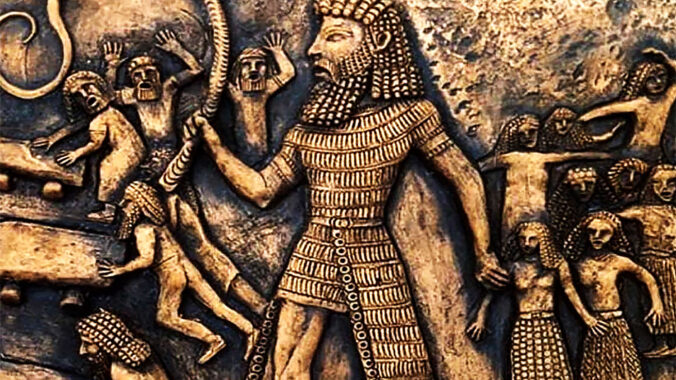
I hadn’t been intrigued about The Epic of Gilgamesh, the ancient epic poem from Mesopotamia, until the coincidence of seeing, only a few weeks apart, this story featured in both a Star Trek episode and a graphic novel by Jim Starlin.

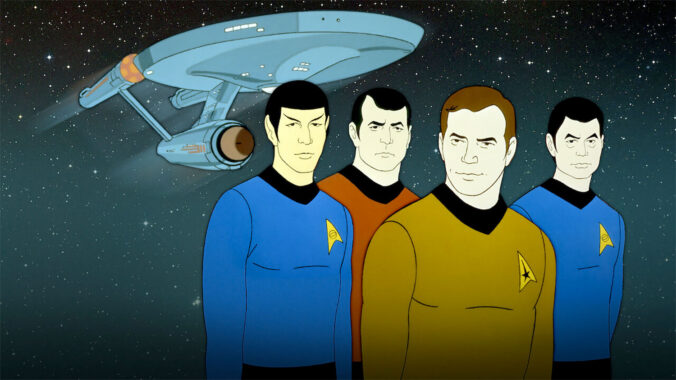
In Darmok, the second episode of the fifth season of Star Trek: The Next Generation, first televised in 1991, Captain Picard (Patrick Stewart) gets stranded on a planet with Dathon (Paul Winfield), a Tamarian captain. They have trouble communicating with each other because the Tamarian language is based on references to their history and mythology in an allegorical format that could not be captured by the universal translator technology commonly used in similar situations. Picard realizes their communication needs to rely on mutual knowledge of legends and tries to understand Dathon’s storytelling and tell him stories from Earth’s mythology. And the tale he chooses to narrate is the one about Gilgamesh and Enkidu, first fighting against each other and later fighting together against a common enemy. It’s a good representation of the adventures of the two captains on that hostile planet, the same as Dathon’s story about Tamarian heroes Darmok and Jalad.

Darmok is the kind of episode that makes Star Trek: The Next Generation such a compelling television series. It’s about solving problems with your brain rather than your muscles, and it’s about the power of communication. As the good captain says, “In my experience, communication is a matter of patience and imagination. I would like to believe that these are qualities that we have in sufficient measure.” (Jean-Luc Picard is, of course, the best captain in the Star Trek universe. But that’s a story for another time.)

Gilgamesh II was published a couple of years before this episode of Star Trek, but I only found it in a bookstore a few weeks after watching Darmok. The author’s name immediately made me interested in the graphic novel. Among his many feats, Jim Starlin co-created Shang-Chi, aka the Master of Kung Fu, one of my favorite heroes as a kid, and authored a graphic novel that shook up the universe of superheroes in the early eighties, The Death of Captain Marvel. In the four 48-page issues of Gilgamesh II, Starlin reimagines the Mesopotamian story as a science-fiction tale, with the two heroes presented as extraterrestrials living in a future Earth.

Starlin doesn’t deviate much from the original plot and doesn’t add any deep reflections on the ancient tale. Instead, he offers a version of what the story of Gilgamesh could have been if created as a contemporary graphic novel. Or, more specifically, as a graphic novel from the eighties, infused with superhero lore (the arrival of Gilgamesh’s capsule on Earth is basically a retelling of Superman’s origin story) and complete with passages about sex and drugs (checking the box for “this is not your old childish comic book, this stuff is for adults”) and greedy corporations destroying the environment (checking the box for “hey, we have a political message too”).

With Gilgamesh references flying at me from both the tv screen and the pages of graphic novels, I decided it was time to read the real thing. Not the original clay tablets written in cuneiform from around 2000 BCE (that exist in several versions, from which the combined fragments form the version we have translated to contemporary languages), but as an English adaptation. For the record, the first time I read The Epic of Gilgamesh, a long time ago, it was in a translation by archeologist Nancy K. Sandars, and the second time, more recently, in the translation by Andrew George, professor of Babylonian at the University of London.

The Epic of Gilgamesh can be read just as a story of adventure. It has a larger-than-life hero (literally), monumental fights against monsters (with impressive names like Humbaba, the giant guardian of the Cedar Forest, and Gugalanna, the Great Bull of Heaven), death and distress, and a journey of self-discovery. But for me what makes it more engrossing is the abundance of themes that would later be reused, redeveloped and reimagined, again and again, in narratives from different cultures. In Gilgamesh, we can see hints of Achilles and Odysseus, and these heroes share several similar episodes. There are even homologous metaphors about a lion and its missing cubs used for grieving the deaths of Patroclus in the Iliad and Enkidu in The Epic of Gilgamesh. And, of course, multiple elements from The Epic of Gilgamesh reappear in the Bible, from Enkidu being created from clay by the goddess Aruru and living in the woods with the animals until seduced by a woman and taken away from there (which may seem somewhat similar to Adam’s origin story in the Book of Genesis) to the story of a great flood told to Gilgamesh by the immortal Utnapishti (which is so close to the biblical story of Noah’s ark that it’s unlikely it wasn’t its source of inspiration). And for someone willing to stretch the comparisons a bit more, we could even point to a bit of Hegelian dialectic in the story: Gilgamesh, the king of Uruk oppressing his people, stands as the thesis that gives rise to a reaction; Enkidu, the wild man sent by the gods to stop him, serves as the antithesis that opposes the thesis; and the battle between the two resolves the tension and generates the team of heroes as the synthesis.

At the end of his saga, Gilgamesh goes on a journey searching for immortality and learns that this is something he cannot have. But even though he didn’t get eternal life in the physical sense The Epic of Gilgamesh has kept his name alive for thousands of years, and his thematically rich adventures keep influencing our storytelling.

« Older posts

© 2026 Zander Dulac

Theme by Anders NorenUp ↑