Page 3 of 9

Playing Old CRPGs Again: Wasteland 2

Released in 2014 by inXile Entertainment, Wasteland 2 was a long-awaited revival of a cult classic. Funded through Kickstarter and helmed by Brian Fargo (the creator of the original Wasteland in 1988), it sought to deliver a true successor after decades of dormancy. While it succeeds in capturing the spirit of its predecessor and the roots of the franchise, it also shows both its indie origins and its design ambitions.

Within the Wasteland franchise, Wasteland 2 functions as both a sequel and a reinvention. Its narrative directly follows the original’s events: the Desert Rangers return, once again tasked with enforcing order in a chaotic, irradiated American Southwest. Unlike Fallout, which diverged into a new retro-futuristic aesthetic, Wasteland 2 stays grounded in its grittier, harsher world, more Mad Max than atomic-age satire. For longtime fans, this fidelity to tone and continuity was one of the game’s strongest selling points.

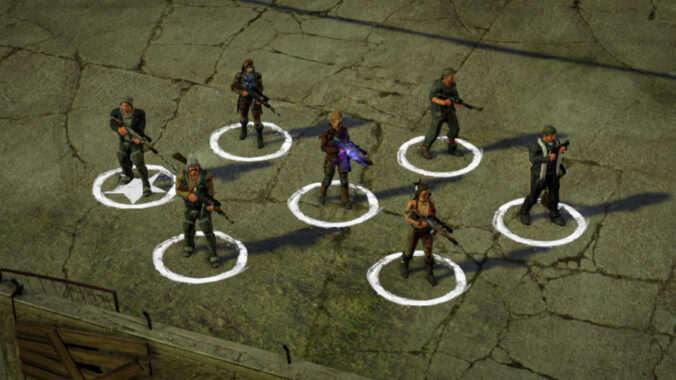
At its core, Wasteland 2 is a tactical, squad-based RPG with turn-based combat and heavy skill reliance. Players control a team of up to seven characters, balancing a wide range of abilities: lockpicking, demolitions, survival, animal whispering, and more. The depth here is both rewarding and punishing. Poor skill allocation can lock you out of entire story paths.

I created my team with a Leader (armed with assault rifles and focused on leadership, barter, and the three persuasion skills available), a Rogue (armed with assault rifles and focused on alarm disarming, demolitions, lockpicking, and safecracking), a Techie Medic (armed with energy weapons and focused on computer science, mechanical repair, field medic, and surgeon), and a Sniper (armed with sniper rifles and focused on outdoorsman, perception, and weaponsmithing). For the three extra companions you can pick along the way, I went with Vulture’s Cry (made her a second sniper and animal whispering expert), Scotchmo (who can resist a hobo with a shotgun?), and Neil Thomas (a second field medic and surgeon, armed with submachine guns).

The interface can feel dated and cumbersome at the beginning, but I got used to it. Inventory management is clunky, looting takes too many clicks, and sorting through your team’s gear becomes tedious. While later patches improved quality-of-life features, the overall user experience never fully reached the polish of contemporary RPGs.

One of Wasteland 2‘s defining traits is its bleak, irreverent humor. Corpses deliver punchlines. Death cults mock religion while embracing nukes as divine relics. Conversations spiral from solemnity into absurdity without warning. Among the best examples is the wandering tortoise, a seemingly insignificant animal that, if followed patiently across a desert, leads you to a buried treasure. It’s a perfectly Wasteland moment: equal parts frustrating, hilarious, and rewarding, capturing the unpredictability that defines the franchise’s tone.

A standout feature is the nuclear device displayed in the Ranger Citadel museum. Players who trigger it will instantly end their campaign. But the game offers a clever twist: you can start over in Ranger Veteran Mode, importing your old characters with their hard-earned stats (not their equipment, though). It’s a rare, gutsy design choice that turns failure into a strange kind of reward, blending narrative and meta-game progression in a way few RPGs attempt. I used that nuke and restarted my game with characters at level 10, which didn’t make them overpowered but gave me a little edge to avoid some frustration in the early game.

One area where Wasteland 2 falters is in loot design. Far too often, rewards feel underwhelming compared to the effort required. After clearing challenging encounters or navigating dangerous radiation zones, players are greeted with meager gear that’s quickly outclassed by shop inventory. In a game where scavenging is thematically central, this undermines the sense of post-apocalyptic scarcity the narrative tries to convey.

Despite multiple patches and a remastered Director’s Cut, a handful of persistent bugs remain. Radiation suits sometimes fail to register, forcing tedious workarounds. Certain quest triggers can break if objectives are completed out of order. While rarely game-breaking, these issues interrupt immersion and can be especially frustrating in a game that encourages nonlinear exploration.

Wasteland 2 builds to a climactic confrontation between rival factions competing to reshape the post-apocalyptic world. The player’s choices carry significant weight, influencing alliances, Ranger reputations, and the survival of entire settlements. While the branching paths give the finale replay value, some players may find the resolution abrupt: character arcs end suddenly, and not all plot threads feel entirely tied off.

However, the game earns credit for rejecting neat, happy endings. True to the franchise’s spirit, the wasteland remains dangerous and unstable no matter what you do. Victory comes at a cost, reinforcing the series’ recurring theme: survival isn’t triumph, it’s just endurance.

Favorite 18th Century Visual Art

  • Rialto Bridge from the North, Canaletto, 1726
  • Portrait of Duval de l’Épinoy, Maurice-Quentin de La Tour, 1745
  • The Nightmare, Henry Fuseli, 1781
  • Self-Portrait in a Straw Hat, Élisabeth Vigée Le Brun, 1782
  • The Death of Socrates, Jacques-Louis David, 1787

In chronological order.

Watching Anime: Space Battleship Yamato

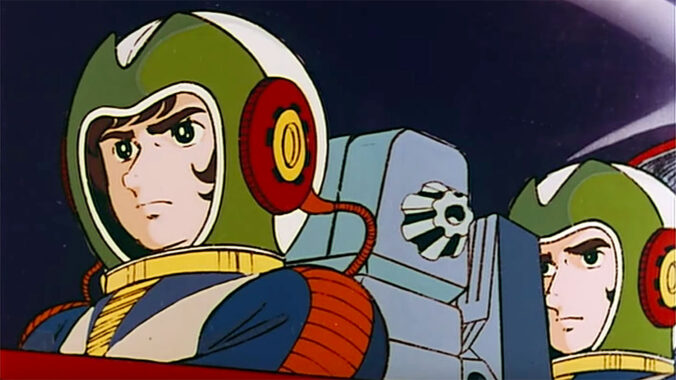
Space Battleship Yamato, created by Leiji Matsumoto and Yoshinobu Nishizaki, stands as one of the foundational works of Japanese science fiction anime. Airing from 1974 to 1975, with additional seasons and movies continuing into 1979 and beyond, it helped redefine anime as a serious storytelling medium capable of complex narratives, serialized plots, and themes of national trauma and redemption. It also influenced international sci-fi storytelling, particularly in the USA, where it was edited and rebranded as Star Blazers.

At its heart, Space Battleship Yamato is a classic odyssey: a perilous voyage across space to save Earth from environmental ruin caused by the alien Gamilas Empire. Earth has one year before extinction, and salvation lies in a distant galaxy, on the planet Iscandar. The Yamato, a resurrected WWII battleship, is fitted with alien technology and sent on this desperate mission. The narrative structure, a race against time, with continuous battles and moral dilemmas, mirrors both mythic quests and war epics, with themes like: the perseverance of humanity under dire threat; the cost of war, sacrifice, and redemption; and hope born from resilience, not domination.

The choice of the Yamato battleship as the narrative centerpiece is both startling and profound. The historical Yamato was the pride of the Imperial Japanese Navy, the largest battleship ever constructed. It was destroyed in 1945 in a suicide mission against overwhelming American forces, an act often framed in Japan as both heroic and tragic. Reimagining the Yamato as a spacefaring vessel sent to save humanity rather than destroy enemies offers several layers of significance.

The original Yamato represented imperial militarism and a doomed sense of honor-bound nationalism. By resurrecting the wreck of this ship from the seabed and launching it toward the stars, the anime transforms a symbol of war into one of peace and planetary survival. It represents an act of cultural reappropriation, taking a painful emblem and using it to imagine a better future.

The literal rising of the Yamato from beneath the sea is a metaphorical resurrection of Japan itself, still grappling in the 1970s with the legacy of its WWII defeat. Fitted with alien technology (a gesture toward international cooperation or the adoption of foreign innovation), the ship becomes an allegory for postwar Japan’s transformation into a technologically advanced but pacifist society.

For Japanese viewers, especially those born during or just after the war, the Yamato carried potent emotional weight. This emotional resonance lent the series a gravitas that extended beyond its space opera trappings. It turned the anime into a medium through which Japan could reflect on its past, imagine a redemptive future, and explore identity without jingoism.

The Earth in Space Battleship Yamato is scarred and dying, much like post-war Japan. The Gamilas’s radiation bombs turn Earth’s surface into a wasteland, echoing both Hiroshima and Nagasaki. The crew’s journey to Iscandar, a source of salvation, can be seen as a metaphor for Japan’s post-war economic and spiritual rebuilding. Additionally, the show often emphasizes the need to fight not for conquest, but to survive, making a clear distinction between aggression and defensive struggle. This aligns with Japan’s pacifist constitution and cultural introspection during the postwar years.

Leiji Matsumoto’s aesthetic design contributes significantly to the series’ emotional tone. The ship design evokes reverence, as if the Yamato were a cathedral in space. Scenes of space battles are cinematic, yet often tinged with melancholy rather than triumphalism. The musical score by Hiroshi Miyagawa, especially the iconic Yamato theme, reinforces the sense of operatic grandeur. It’s martial and uplifting, but often carries a somber undercurrent, mirroring the show’s fusion of hope and loss.

Space Battleship Yamato established long-form serialized storytelling in anime, paving the way for Mobile Suit Gundam, Evangelion, and others. It helped elevate anime’s cultural status, especially in Japan, by tackling serious themes. It contributed to a growing awareness among Western audiences of Japanese science fiction and anime aesthetics. And it influenced other space operas, including Battlestar Galactica, which shares several narrative similarities.

Space Battleship Yamato is far more than a space adventure. It is a deeply allegorical, emotionally resonant work born out of a specific cultural context. By turning a WWII symbol of defeat and militarism into a vessel for planetary salvation, the anime performs a kind of cultural catharsis. It neither glorifies war nor denies its consequences. Instead, it asks: how can we rise from the ashes of our own destruction and chart a new course for humanity? In doing so, Yamato became not just a battleship, but a vessel for memory, redemption, and hope.

Favorite 17th Century Visual Art

  • The Fall of Phaeton, Peter Paul Rubens, 1604
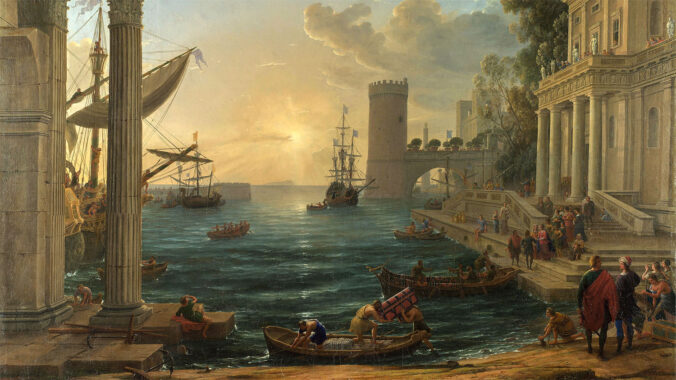
  • The Embarkation of the Queen of Sheba, Claude Lorrain, 1648
  • Las Meninas, Diego Velázquez, 1656
  • Self-Portrait with Beret and Turned-Up Collar, Rembrandt, 1659
  • The Art of Painting, Johannes Vermeer, 1668

In chronological order.

Watching Anime: Speed Racer

As with many successful anime tv series, Speed Racer started on the printed page. Tatsuo Yoshida’s original manga Mach GoGoGo (serialized between 1966 and 1968) emerged during Japan’s rapid modernization and automotive fascination. A product of its time, it combined elements of heroic storytelling, spy thrillers, and science fiction, inspired by both James Bond and Japanese racing culture. It followed Go Mifune (translated as Speed Racer in English), a hotheaded but honorable young driver who dreams of becoming a world-class racer with his technologically advanced Mach 5 car. Yoshida’s art was clean, dynamic, and expressive, prioritizing kinetic energy and sharp contrasts to match the speed-driven plot. The manga was unabashedly aimed at boys, with themes of courage, family loyalty, and justice, but it also delved into espionage, sabotage, and betrayal. The mysterious Racer X, secretly Speed’s brother, exemplified the manga’s melodramatic and moral complexity.

The anime version of Mach GoGoGo, titled Speed Racer in English, was a cultural milestone in the USA when it aired in syndication starting in 1967. Translated and dubbed by Trans-Lux Television, it became one of the earliest anime series to achieve mass American exposure. Its recognizable theme song, stilted dialogue, and frenetic pacing helped engrain it in the American pop culture memory, albeit more as camp than drama. Though typical of its era, the animation was limited, with repeated sequences that would make the show appear cheap to modern audiences. It also had some sort of moral simplicity, with episodes ending with clear lessons about perseverance, courage, and loyalty.

One thing that it introduced to Western audiences was the team structure typical of many anime, a core group of characters representing specific archetypes. A main hero (young, idealistic protagonist), a father figure (mentor, leader, or actual parent), an older brother figure (rival, protector, or mysterious ally), a token female (often love interest, emotional anchor, or action girl), and a little kid and/or pet (comic relief, mascot, or symbolic innocence).

Despite technical shortcomings, the anime was groundbreaking for its influence on later Western perceptions of anime and created a dedicated fanbase that saw Speed as more than just a race car driver. He was a symbol of virtue and speed in a chaotic world. That was never recaptured by the reboots made decades later.

Speed Racer X (1993), produced by Tatsunoko and dubbed by Saban Entertainment, was mired in legal issues and aired only sporadically before being pulled. Tonally, it tried to modernize Speed while maintaining the campy flair. Unfortunately, it failed to resonate with either original fans, who saw it as inauthentic, or a new generation, who found it bland and formulaic.

Speed Racer: The Next Generation (2008), a CGI animated series produced by Nickelodeon, was meant to tie into the live-action film’s release. The concept, a futuristic school for racers run by an aged Spritle (that was Speed’s younger brother), was conceptually odd and tonally confused. It felt more like a marketing product than a genuine creative endeavor. Poor writing, stiff animation, and weak characterization ensured it was quickly forgotten.

And then we have the live-action film Speed Racer (Wachowskis, 2008), a colossal disaster. It was a surreal experiment that failed both commercially and critically. Its ambition was undeniable, attempting to create a hyperreal aesthetic that mimicked anime visual grammar through CGI. The film was loud, saturated with candy-colored visuals, and jam-packed with kinetic action sequences that seemed torn from a video game more than a racetrack.

Not often do so many things go wrong in a single movie. Let’s list just a few. Visual Overload: The film’s hypersaturated palette and constant digital movement overwhelmed viewers rather than immersing them. Narrative Incoherence: Despite a relatively simple story, the movie was weighed down by flashbacks, tonal shifts, and overwritten dialogue. Mismatched Casting and Tone: While some performances (notably John Goodman and Susan Sarandon) showed warmth, the film veered from childish slapstick (Spritle and Chim-Chim) to heavy-handed anti-corporate allegory, never settling on a target audience. Disregard for Realism: The film’s physics-defying races and rubbery CGI cars removed any stakes from the action. It bombed at the box office, grossing $93 million on a $120 million budget, and was swiftly labeled a misguided failure.

Instead of embracing the stripped-down emotional clarity and kinetic storytelling of Yoshida’s manga and anime, the Wachowskis imposed a convoluted mythology. They turned Speed Racer into an epic, when it had always been a serial. They also tried to blend Looney Tunes humor (chimpanzee antics) with dark critiques of corporate corruption and existential racing philosophy. This tonal split alienated both children and adults. And the hyper-CGI aesthetic made everything feel intangible. Speed’s struggles, victories, and relationships felt like simulations rather than real emotions playing out in a grounded world.

Speed Racer, as a property, has endured because of its iconic characters, archetypal storytelling, and unique place in the history of anime. But nearly every attempt to revive or reinvent it has stumbled, none more extravagantly than the Wachowskis’ 2008 film. That disaster, while visually innovative, serves as a cautionary tale about the dangers of over-intellectualizing simple source material. What Speed Racer needs isn’t another reinvention, it’s a return to the track: fast, fun, and fearless.

Favorite 16th Century Visual Art

  • The Garden of Earthly Delights, Hieronymus Bosch, 1510
  • The School of Athens, Raphael, 1511
  • Venus of Urbino, Tiziano Vecellio, 1534
  • The Tower of Babel, Bruegel, 1563
  • The Burial of the Count of Orgaz, El Greco, 1586
  • Pine Trees, Hasegawa Tōhaku, 1595
  • Medusa, Caravaggio, 1597

In chronological order.

Playing Old CRPGs Again: A Tale of Two Post-Apocalypses

After playing the Avernum Trilogy again, I decided to go back to the old classic Wasteland and its official and unofficial sequels. It was a bit more complicated than I expected. But before getting into that, let me try to untangle the serpentine saga of these games.

The history of the Wasteland and Fallout series is a tale of creative ambition, intellectual property disputes, and the persistence of a vision across decades and studios. It begins in 1988, in the twilight of the Cold War, when Interplay Productions released Wasteland, a groundbreaking post-nuclear role-playing game published by Electronic Arts. Set in a desolate American Southwest after a global thermonuclear conflict, Wasteland was one of the first CRPGs to offer a persistent world, moral complexity, and consequences for player choices. Its blend of bleak survivalism, dark humor, and open-ended gameplay laid the foundation for what would become a genre-defining legacy.

Despite its success and critical acclaim, Interplay found itself unable to produce an official sequel. Electronic Arts owned the Wasteland name, and negotiations between the two companies failed to secure a path forward. In response, Interplay attempted to carry the spirit of Wasteland forward under different guises. One such project was Fountain of Dreams (1990), a supposedly spiritual successor developed by EA without Interplay’s involvement. Set in a post-apocalyptic Florida, it was poorly received, criticized for its bugs, weak writing, and lack of polish. It was a pale shadow of its predecessor. Another would-be successor, called Meantime, was in development at Interplay and intended to use the Wasteland engine in a time-traveling storyline. However, the project was ultimately canceled, partially due to the declining commercial viability of the Apple II platform.

Unable to continue Wasteland in name, Interplay instead reimagined its thematic core. By the mid-1990s, the team led by producers like Tim Cain and designers including Leonard Boyarsky and Jason Anderson had harnessed the DNA of Wasteland into a new universe: Fallout. Released in 1997, Fallout: A Post Nuclear Role Playing Game was the spiritual successor in everything but name. It retained Wasteland‘s gritty atmosphere and irreverent tone, and added a distinctive retro-futuristic 1950s aesthetic, as well as a unique SPECIAL character system (an acronym for Strength, Perception, Endurance, Charisma, Intelligence, Agility, and Luck). The gamble paid off: Fallout launched a franchise that would span decades, including direct sequels (Fallout 2, Fallout: New Vegas), Bethesda’s rebooted entries (Fallout 3, Fallout 4, Fallout 76), and countless mods and spin-offs.

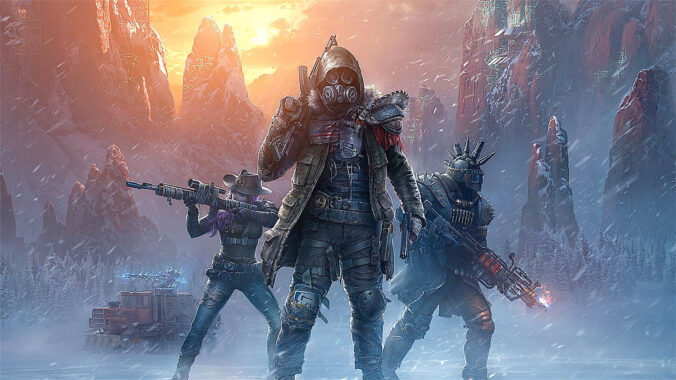
Meanwhile, Wasteland itself remained dormant for over two decades, until the rights finally reverted to Brian Fargo, the founder of Interplay and head of a new studio, inXile Entertainment. With crowdfunding on Kickstarter and a strong nostalgic following, Wasteland 2 was released in 2014, delivering a true sequel to the 1988 original. It combined old-school turn-based combat with modern design sensibilities, and despite its rough edges, it was warmly received. Its sequel, Wasteland 3, launched in 2020 with refined mechanics, voice acting, and a snowy Colorado setting that pushed the series further into narrative sophistication.

My plan to replay all these games hit some obstacles. I do own all the Fallout games, but they are all for Windows systems, and I currently only have a Mac laptop. The Fallout series will have to wait. Fortunately, my Wasteland series is for Apple computers. Unfortunately, the first game no longer works with more recent operating systems. So my post-apocalyptic adventures will have to start with Wastelands 2. I will write about it here but it will take a while, because it’s a big game.

Favorite 15th Century Visual Art

  • The Arnolfini Portrait, Jan van Eyck, 1434
  • Portrait of the Duke of Urbino and the Duchess of Urbino, Piero della Francesca, 1466
  • Ginevra de’ Benci, Leonardo da Vinci, 1478
  • The Birth of Venus, Sandro Botticelli, 1486
  • Self-Portrait at the Age of Twenty Six, Albrecht Dürer, 1498

In chronological order.

Rating National Flags

I complain so often about the design of national flags that my friends dared me to explain my reasons. So here it is, my list of the world’s worst flags, following an elimination process.

A national flag should be a clear identifier of the country. If the flag gets confused with another flag, it fails miserably in its mission. Flags that are too similar to other flags are the first to be eliminated.

Indonesia and Monaco basically have the same flag, with just a slight difference in the shade of red. Poland is the Indonesia flag upside down. All three are nixed.

Romania and Chad also have the same flag. Now replace the blue stripe with a green stripe and you get a big mess of African flags. Guinea has red, yellow, and green stripes. Mali has green, yellow, and red stripes. Cameroon is just the Mali flag with a yellow star in the center. And Senegal is the same flag but the star is green. Embarrassing. All six nixed.

India and Niger also have almost the same flag. Another two bite the dust.

The Luxemburg flag is just the Netherlands flag with the colors faded. The Ivory Coast flag is just the Ireland flag flipped horizontally. El Salvador and Honduras also have almost the same flag, only the central emblem is different. El Salvador also gets penalized for displaying a coat of arms, but we will talk about that later. Another six get nixed.

New Zealand and Australia should be ashamed that their flags are nearly identical. Both feature the Union Jack and stars. New Zealand has four red stars with white borders, while Australia has six white stars. They also get penalized for the Union Jack, but we will talk about that later. Both get nixed.

Any of the flags in this next group would be a good flag if they were unique. However, someone decided that all these countries should have the same flag with different colors. Denmark, Finland, Iceland, Norway, and Sweden are all nixed.

Palestine and Sudan are in the same situation, with flags that are too similar. And then there are the Balkan countries with variations on the same theme that are not dissimilar enough: Croatia, Serbia, Slovakia, and Slovenia. Another seven nixed.

Just on the issue of uniqueness, we have eliminated thirty flags. On to the next problems.

It’s a universal standard that national flags are rectangular. Not a square, not a triangle, not other fancy shapes. You can vary the ratio of the rectangle, but it has to be a rectangle. That nixes the flags of Nepal, Switzerland (it would have been a good flag if it was rectangular), and the Vatican.

A country can have a flag, a coat of arms, and a map. But don’t mix them. Don’t put your map or your coat of arms on the flag. Also, don’t put the name of the country on the flag. It’s a flag, not a label. So let’s nix the following offenders: Afghanistan, Andorra, Belize, Bolivia, Brunei, Costa Rica, Dominican Republic, Ecuador, El Salvador, Equatorial Guinea, Fiji, Guatemala, Haiti, Mexico, Moldova, Montenegro, Paraguay, Peru, Portugal, San Marino, Serbia, Spain, and Venezuela. And Cyprus, the only country to put a map on the flag. That was a lot of flags. Let’s add a few more. It’s not only the name of the country, just don’t write anything on the flag. It’s supposed to be a visual representation, not a placard with slogans. I’m talking to you, Brazil, Iraq, and Saudi Arabia.

Next on the list, don’t put a flag inside your flag. It’s usually the Union Jack that gets used this way. Look at Australia, New Zealand, Fiji, and Tuvalu. And don’t blatantly copy the idea from other flags. Liberia and Malaysia attempted to emulate the United States of America but ended up with an inferior version of a flag that is not even particularly good.

Did I eliminate all flags already? Not even close. There are many left, although some of them are just plain ugly for different reasons: too many conflicting and/or repeating colors (like Central African Republic, Comoros, Seychelles, Uganda, and Zimbabwe), unpleasant angles (like Eritrea, Guyana, and Marshall Islands), unnecessary frames (like Grenada and Maldives), and funny mascots (like Dominica and, again, Uganda).

Yes, I’m picky, and this is all a matter of personal taste. So, you may ask, what are the flags that I find pleasing? Well, usually the minimalist ones. For example, Albania, Barbados, Canada, and Palau all have just two colors and one symbol. Among the ones with stripes, I like Greece (just two colors and an interesting geometric arrangement), Chile (it reminds me of Mondrian), Cuba (good contrasting colors and shapes), and Ukraine (just two stripes with well-chosen colors).

But to me the very best are the most minimalistic ones (again, just two colors and one symbol): Japan and Vietnam.

Favorite Comic Strips

  • Calvin and Hobbes (Bill Watterson)
  • Dilbert (Scott Adams)
  • Doonesbury (Garry Trudeau)
  • Li’l Abner (Al Capp)
  • FoxTrot (Bill Amend)
  • Mafalda (Quino)
  • Pearls Before Swine (Stephan Pastis)
  • Piratas do Tietê (Laerte)
  • Pogo (Walt Kelly)
  • xkcd (Randall Munroe)

In alphabetical order.

« Older posts Newer posts »

© 2026 Zander Dulac

Theme by Anders NorenUp ↑