Page 6 of 9

Learning to play chess: taking a break

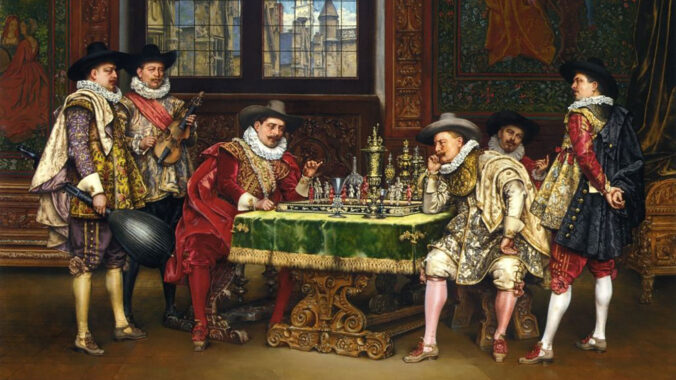
After exactly 6,000 rapid games on chess.com, I’ve decided to take a break. What this means is still to be determined, but I got some interesting insights from this first burst into the game of chess.

As expected, after a fairly quick climb in my rating I reached what feels like an unmovable wall. That’s how it’s supposed to work: you keep winning against progressively better opponents until you find opponents that are better than you, and then you start losing. That’s how your rating gets determined. Mine found its plateau between 1300 and 1350, with eventual drops into the upper 1200s and one heroic jump beyond 1400 (which only lasted for a couple of games).

I’ve been playing many games and learning a few things, but if I want to really evolve I need to study (especially openings). And studying chess, at least for me, is not as fun as playing chess. It requires time and patience, and it comes with the knowledge that no matter how much I study my progress is going to be minimal in the great scheme of things. I’m too old and probably not sufficiently talented to learn enough to be competitive at any serious level. That doesn’t make me sad, it just doesn’t give me much incentive to put serious time into studying chess. A rating of 1300 is already beyond my initial expectations and I’m happy with that.

Another thing worth mentioning is the emotional aspect of playing chess. I was extremely surprised with the exhilarating highs and crushing lows that it elicits.

When you win, you get a profound sense of accomplishment. When a well-thought-out strategy unfolds as planned, and every move you make outmaneuvers your opponent, the satisfaction is immense. The thrill of predicting your opponent’s moves and laying traps that lead to victory can be incredibly rewarding. The sheer intellectual challenge of chess, combined with the rush of outsmarting an opponent, makes it one of the most exhilarating experiences a player can have. 

When you lose, the sense of frustration is overpowering. The game demands intense concentration, patience, and foresight. A single misstep can unravel an entire strategy, leading to a swift and often unforgiving defeat. The disappointment of realizing that a mistake has cost you the game, especially after investing significant mental energy, can be overwhelming. This feeling is compounded by the fact that in chess, there are no elements of luck, only skill and decision-making. This means that when things go wrong, the responsibility lies squarely on the player’s shoulders.

Adding to the vexation, when you are playing online, there is the suspicion that sometimes your opponent may be cheating. The obvious cheaters are not a problem: they play so perfectly that the system clearly recognizes that they are being assisted by a computer, and they are soon banned. However, I have encountered too many people who play poorly at the beginning of the game, finding themselves at a clear and overwhelming disadvantage in the middle game, and then start playing like machines, every move perfect, with amazing tactical combinations several moves deep. Either they called a grand master to finish the game they started so ineptly or they decided to use computer help once they saw they couldn’t win the game by themselves. And because of the bad decisions they make at the beginning, the average precision for the whole game is not high enough to raise suspicion from the anti-cheating system. It’s very irritating.

I still highly enjoy playing chess. But I have decided to take a break for now. Will I study openings and come back toughened up and ready for a challenge? I don’t know yet. Will I not study and still return to the game, content with my current rating, and just be glad to play for fun without expecting any meaningful advancement? I don’t know yet. Will I never play chess again? I don’t think that’s a possibility.

Several trucks full of nitroglycerin

I’m fascinated by how different moviemakers adapt the same book to the screen. Recently, I was able to watch four versions of the same story. It’s a French novel I read many years ago in Spanish during a Costa Brava vacation: Le Salaire de la Peur (my translated version was called El Salario del Miedo), by Georges Arnaud, originally published in 1950. Comparing the 1953, 1958, 1977, and 2024 adaptations offers insights into how different filmmakers have approached the same material, reflecting their eras, styles, and societal concerns.

Le Salaire de la Peur (Henri-Georges Clouzot, 1953) is often hailed as a masterclass in tension and atmosphere, capturing the grim existential dread that runs through Arnaud’s novel. The story follows four desperate men hired to drive two trucks filled with nitroglycerin across treacherous terrain in a Latin American country, with their lives hanging by a thread.

The strength of this adaptation lies in its stark realism and relentless pacing. Clouzot builds tension slowly, using the dangerous journey as a metaphor for the fragile nature of life, particularly in the post-war world. The film’s social commentary focuses on the exploitation of the working class by capitalist forces, emphasizing how these men are expendable tools in the face of profit. It’s also a deeply cynical film, with its tone of despair resonating with the nihilism of European cinema in the early 1950s. The black-and-white cinematography intensifies the desolation of both the physical landscape and the men’s mental state.

Clouzot’s version is known for its long takes and focus on the physicality of danger, often using silence and stillness to create unbearable suspense. The characters are morally ambiguous, with no real heroes, which further emphasizes the sense of human vulnerability and futility. This adaptation remains the most faithful to the novel’s bleak and pessimistic vision of humanity. If you are going to watch only one of these movies, choose Le Salaire de la Peur.

Violent Road (Howard W. Koch, 1958) is an Americanized version of the novel, and while it retains the general premise, it makes significant changes to the tone and focus. Set in the USA, the film shifts from the existential and social commentary of Clouzot’s version to a more straightforward action narrative. The drivers now transport volatile chemicals for a rocket base, tying into Cold War anxieties and America’s space race rather than the geopolitical complexities of Latin America.

This version downplays the existential angst of the original, opting instead for an adventure-oriented narrative that tries to focus on suspenseful set pieces (not always successfully). While the characters are still desperate men, their motivations and personalities are much simplified, offering less moral ambiguity. The film feels less critical of capitalism, framing the mission as a heroic endeavor rather than one born of exploitation. In this sense, Violent Road leans more into traditional Hollywood storytelling, where the characters have clearer arcs and are less morally complex.

While Violent Road lacks the artistry and depth of Clouzot’s adaptation, it still provides a somewhat tense, albeit more conventional, thriller. The change of setting and its focus on Cold War-era concerns reflect mid-century American anxieties, making it a culturally relevant interpretation for its time, though less enduring.

Sorcerer (William Friedkin, 1977) is arguably the most ambitious and controversial adaptation. Released in the same year as Star Wars, it was overshadowed at the box office but has since gained a cult following. Friedkin transports the story to Central America, drawing on the same grim atmosphere as Clouzot, but with a grittier, more modern aesthetic. Like Clouzot’s version, Sorcerer emphasizes existential dread and moral ambiguity, but Friedkin injects a deep sense of modern paranoia and disillusionment into the narrative.

The film is characterized by its unflinching portrayal of human desperation and the randomness of fate. Friedkin’s use of color, sound, and music (especially the electronic score by Tangerine Dream) adds to the film’s dreamlike yet nightmarish quality. The physical journey in Sorcerer is more harrowing than ever, with Friedkin pushing the boundaries of what audiences could endure in terms of suspense and psychological tension.

In contrast to Le Salaire de la Peur, Sorcerer delves deeper into the individual backstories of the protagonists, making their emotional journeys as important as the physical one. The film reflects the pessimism and disillusionment of the 1970s, particularly post-Vietnam and post-Watergate, where trust in institutions had eroded, and the pursuit of money or escape from one’s past felt as futile as it was dangerous. The film was a commercial failure upon release, but its gritty realism and philosophical depth have made it a favorite among cinephiles.

Le Salaire de la Peur (Julien Leclercq, 2024) is the most recent take on Arnaud’s novel and, while it returns to the original French title, it strays from the original tale about antiheroes and fully embraces the traditional hero with a past to atone for. Despite the visually immersive style, it’s closer to the shalowness of Violent Road and very far from the social realism of Clouzot’s Le Salaire de la Peur and the existential anxiety of Friedkin’s Sorcerer.

Set in a near-future dystopia, Leclercq uses the transportation of volatile cargo as a metaphor for the precariousness of human life in a world ravaged by climate change and economic inequality. The setting, though undefined, evokes a globalized environment where borders blur and human desperation transcends geography. Leclercq, much like Friedkin, explores the backstories of the characters in depth, adding layers of psychological complexity and emphasizing themes of guilt, redemption, and survival.

Visually, the film is stunning, with Leclercq’s use of large-scale landscapes and minimalist, meditative cinematography. The film balances moments of quiet introspection with heart-pounding tension, maintaining the essence of the original narrative while infusing it with contemporary relevance.

Leclercq’s The Wages of Fear is less bleak than the 1953 and 1977 versions, offering moments of human connection and solidarity amidst the chaos, though it retains the essential theme of survival at all costs. The film’s exploration of modern anxieties (technological, environmental, and moral) can be seen particularly timely by viewers trained to enjoy Hollywood tales, but the tone and the intention are so far from the original story that it almost feels like a betrayal.

Each adaptation of Le Salaire de la Peur reflects the concerns and aesthetics of its time. Clouzot’s Le Salaire de la Peur (1953) is a bleak, existential study of desperation and exploitation, while Violent Road (1958) trades depth for Cold War-era thrills. Friedkin’s Sorcerer (1977) heightens the intensity and philosophical despair, crafting a modern fable about the randomness of fate. Finally, Leclercq’s Le Salaire de la Peur (2024) reimagines the story for a globalized, dystopian world, merging existential tension with modern political and environmental anxieties.

The Mystery Novels of L.F. Veríssimo

Crimes from pulp fiction books reenacted by a real murderer. A  locked-room mystery disrupting a conference about Edgar Allan Poe. Members of a gastronomy club being killed one by one right after having their favorite dishes. These are just a few of the plots from L.F. Veríssimo’s novels. But what really makes them interesting to me are their narrative structures and the cultural artifacts that fuel them.

Luis Fernando Veríssimo, one of the most celebrated and prolific Brazilian writers, is mostly known for his hundreds of humorous short stories and newspaper columns, collected in dozens of books starting in 1973. He is the creator of some unforgettably funny characters, like the Analyst from Bagé (O Analista de Bagé), a gaucho psychoanalyst who mixes Freud with the roughness of the macho cultural values of the Pampas, and the Old Lady from Taubaté (A Velhinha de Taubaté), the last person in the world who still believes what politicians say. Veríssimo also wrote and drew comic strips, and for a long time published daily columns on several Brazilian newspapers.

Veríssimo also wrote a few crime novels, and they stand apart in their little murder mystery microcosm. The humor is still present, but sparsely and in a much darker tone. As far as I know, three of Veríssimo’s novels have been translated to English. The other two you will have to read in Portuguese.

The first novel is O Jardim do Diabo (The Devil’s Garden), originally published in 1988, and revised and republished in 2005. Estevão is a pulp fiction writer who lost a foot (one of the mysteries of the story) and now doesn’t leave his small apartment. He is visited by a police inspector investigating a crime apparently inspired by one of Estevão’s books. The Devil’s Garden is probably the most complex of his novels in terms of structure, with the narrative blending together the narrator’s current reality, an episode of his past, the pulp novel he is currently writing, and a radio show played loudly by his cleaning lady.

O Clube dos Anjos (The Club of Angels, translated by Margaret Jull Costa for New Directions), originally published in 1998, is possibly Veríssimo’s best book. Daniel is a failed advertising man who still depends on his parents’ money to support his fine taste for food and wine. But now his club of gourmets (or, perhaps more appropriately, gourmands) is at risk of disappearing because the members are being murdered, one by one, after eating their favorite dishes. The whole story has a delicious air of decadence, both from the seemingly excessive importance given to the pleasures of the table and from the apparent willingness presented by the victims, as if they all felt guilty of something and accepted death as their punishment.

Borges e os Orangotangos Eternos (Borges and the Eternal Orangutans, translated by Margaret Jull Costa for New Directions), originally published in 2000, is one of my favorites. Vogelstein is an unimportant translator who goes to Buenos Aires for a conference about the work of Edgar Allan Poe, and gets involved in a locked-room murder mystery. Trying to solve the crime, he partners with none other than the great Jorge Luis Borges, with some help from a police detective appropriately called Cuervo (Raven). For fans of Borges, or Poe, or detective stories in general, the narrative is a delightful puzzle of references where all the pieces fit together and the surprises don’t stop until the last paragraph. There are also engaging conversations about literature, including this beautiful quote: “I always believed an experience at sea was essential to a great writer, and that’s why Conrad and Melville, and in a certain way also Stevenson, who ended his days in the South Seas, were better than all of us, Volgenstein. At sea a writer escapes from the minor demons and only faces the definitive demons.”

O Opositor (literally The Opponent but also, implied, The Opposable Thumb), originally published in 2004, is a story within a story. The narrator is a journalist visiting Manaus, the capital of the state of Amazonas, in Brazil, to write an article about hallucinogenic plants. But he ends up meeting Jósef Teodor, a foreigner who is always drunk and claims to be a former assassin for hire at the service of the Meierhoff Group, the most powerful secret society in the world. Teodor’s tale, told in fragments when he is both willing and not too drunk, forms the center of the book, while the questioning of its veracity and the hunting for clues to confirm it make for an interesting frame. To complicate things a bit, the journalist has been sampling the hallucinogenics he is supposed to be researching, and got romantically involved with a woman who may be the daughter of one of Teodor’s victims.

Os Espiões (The Spies, translated by Margaret Jull Costa for Quercus Publishing), originally published in 2009, is a story about the relationship between literature and reality, disguised as a story about amateur spies who fail badly at their self-assigned mission. A small publisher receives the first chapter of a manuscript and, interpreting it as a call for help, builds a rescue team to travel to the author’s little town and free her from the presumed danger. As the investigation progresses and more chapters arrive in the mail, the plot thickens. The Spies starts with a quote by Giorgio de Chirico (inscribed in Latin on the frame of one of his self-portraits): “And what shall I love if not the enigma?” The love for the enigma, however, is not enough to solve it, and the eager but unaware spies end up facing the results of their misreading of the manuscript and of the situation.

These five novels form a cohesive group, with many elements in common. For example, all the stories are told in the first person by a narrator-protagonist who is a writer of some sort. Estevão, from The Devil’s Garden, is a pulp fiction author. Daniel, from The Club of Angels, is a failed advertising copywriter and a scribbler of stories of dubious taste about conjoined twins. Vogelstein, from Borges and the Eternal Orangutans, is a translator and wannabe writer. The unnamed narrator of The Opponent is a journalist. The narrator of The Spies, also unnamed but sometimes using Agomar as a pseudonym, is an editor at a small publishing house and author of an unpublished espionage thriller.

The five books also make important use of cultural references (usually literature or visual arts), which in some cases are at the center of the plot. The Devil’s Garden uses pulp fiction stereotypes profusely, but also touches on Conrad, Melville, and other authors of sea stories. The Club of Angels has Shakespeare and King Lear metaphorically haunting the characters and literally being quoted by them. Borges and the Eternal Orangutans presents Borges as a character and offers an abundance of mentions to Poe, Lovecraft, Zangwill, and several other writers. The Opponent features the frescoes in the Orvieto Cathedral, painted by Fra Angelico and Luca Signorelli, as a significant plot point. And The Spies provides a cornucopia of literary references, from the Greek classics (the damsel in distress is called Ariadne and the plan to rescue her is named Operation Theseus) to contemporary spy novels (the narrator idolizes John le Carré) and even suspicious scholarly connections (one of the characters gives a lecture on “The Neoplatonism in Dostoyevsky and Machado de Assis”).

If none of the above made you want to read Veríssimo’s novels, he has another one that doesn’t deal with crime mysteries but may arouse your curiosity: A Décima Segunda Noite (The Twelfth Night) retells the homonymous Shakespearean comedy with the plot transposed to a contemporary hair salon in Paris and narrated by a perky pet parrot who can quote John Lennon and Soren Kierkegaard.

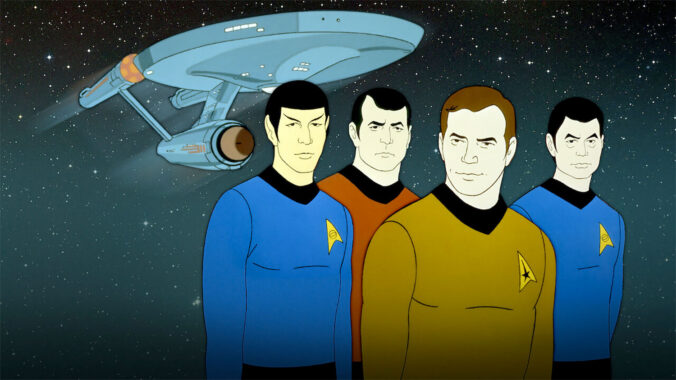
Favorite 1960s Animated TV Series

In chronological order.

  • The Flintstones (1960-1966)
  • Top Cat (1961-1962)
  • The Jetsons (1962-1963)
  • Jonny Quest (1964-1965)
  • Speed Racer (1966-1968)
  • Space Ghost (1966-1967)
  • The Impossibles (1966-1967)
  • Journey to the Center of the Earth (1967-1969)
  • The Herculoids (1967-1969)
  • Wacky Races (1968-1969)

The Lost World: One Book, Six Movies

My latest movie marathon was all about The Lost World. First I read the original novel by Conan Doyle (yes, the same guy who created Sherlock Holmes) and then watched six adaptations for the screen.

At the end of the 19th century, Sir H. Rider Haggard was the king of stories about lost worlds, with books like The People of the Mist (about a lost tribe in Africa) and Heart of the World (about a lost Mayan city in Mexico). But the genre got it’s masterpiece in 1912, when Sir Arthur Conan Doyle unleashed The Lost World. Explorers venturing to mysterious, uncharted lands teeming with prehistoric creatures? That’s the stuff that launched a thousand jungle expeditions, both literal and fictional. But while the book was groundbreaking, it wasn’t without its wobbles, especially the racist overtones and imperialist assumptions. Still, it’s hard to overstate its impact. Without The Lost World, we might not have had Edgar Rice Burroughs’s The Land That Time Forgot, or King Kong, or even Michael Crichton’s Jurassic Park.

The first crack at bringing Doyle’s tale to the silver screen, The Lost World (Harry O. Hoyt, 1925), was a silent masterpiece – and “masterpiece’ isn’t an exaggeration. Faithfulness to the novel? Decent enough. Professor Challenger and his team head to South America, find a plateau full of dinosaurs, and bring one back to London. Sure, liberties were taken (like adding a romance subplot), but the spirit was intact. The cinematography was beautiful for the time (I watched the tinted version restored in 2016), but the real star was the stop-motion wizardry of Willis O’Brien. Those dinosaurs were revolutionary, decades before CGI. O’Brien’s work on The Lost World paved the way for King Kong in 1933, which was like this movie’s rebellious teen cousin. Plot holes and pacing issues aside, the 1925 version remains a classic, with Challenger (played by Wallace Beery) as a brash, bearded and mustachioed force of nature.

With The Lost World (Irwin Allen, 1960), we enter B-movie territory. This adaptation swaps out Doyle’s intelligent, scientifically minded tale for lizards with glued-on horns. Yes, instead of lovingly crafted stop-motion dinosaurs, we get iguanas and crocodiles dressed in drag to look vaguely prehistoric. It’s as ridiculous as it sounds. The plot diverges wildly too. Gone is the novel’s thought-provoking narrative about science versus nature. Instead, we get melodrama, generic villains, and some dubious jungle antics. On the upside, the cast is stacked: Michael Rennie (The Day the Earth Stood Still) as Lord Roxton, Claude Rains (Casablanca) as Professor Challenger, and Jill St. John (who would later be the Bond Girl in Diamonds Are Forever) adding some glamour. But the sheer campiness of the production makes this one for die-hard dinosaur completists only.

Another thirty years and we got not one but two new adaptations, The Lost World (Timothy Bond, 1992) and its sequel Return to the Lost World (Timothy Bond, 1992). This version took some odd liberties. Instead of Doyle’s South American plateau, we’re now in Africa. Why? Probably because someone found an African savanna more budget-friendly than a South American rainforest. Lord Roxton is swapped for a new female character, Jenny Nielson (Tamara Gorski), in what feels like a half-hearted attempt at modernization. The rest of the cast is not bad: John Rhys-Davies (from the Indiana Jones movies) as Professor Challenger, David Warner (Jack the Ripper in Time After Time) as Professor Summerlee, and Eric McCormack (before becoming famous for Will & Grace) as Edward Malone. The special effects? Quite weak, even for a tv production, and definitely nothing you’d brag about at a paleontology conference. The dinosaurs really look like puppets. While they tried to retain some of the novel’s spirit, both films felt more like Saturday matinee fillers than genuine adaptations.

The next version of The Lost World (Bob Keen, 1998) is even worse. Only loosely based on the original novel, the action now happens in Mongolia. And the story is so much changed that only two members of the expedition return to London. Patrick Bergin plays Professor Challenger, in what may be the worst movie of his career. Dinosaurs? Not many, and several years after Jurassic Park none of them look impressive. Characters? Forgettable. Is it worth watching? Only if you enjoy movies that feel like they were cobbled together over a long weekend to cash in on a trend.

A few years later we got a new tv adaptation, The Lost World (Stuart Orme, 2001), with the advantage of having 145 minutes to tell the story (it was first broadcast in two 75 minutes episodes). They followed the story fairly closely (and even returning to the original setting in South America), but added a few new elements. Besides the romantic subplot that every adaptation insisted in including, there was also a detour about a religious fanatic trying to keep the lost world a secret because it could support Darwin’s theory of evolution and weaken the creationist dogma. Bob Hoskins as Professor Challenger was a great choice, and James Fox as Professor Summerlee is also a good contribution. The CGI dinosaurs are fine, nothing to get very excited about but not embarrassingly bad. What this film lacks in spectacle, it tries to make up for in earnestness, and there’s something endearing about that.

Which adaptation reigns supreme? If we consider them in the context of their time, the 1925 silent film is the winner. It’s not just a great adaptation, it’s a landmark in cinematic history, with Willis O’Brien’s dinosaurs setting a high standard for generations. Best special effects dinosaurs? Again, the 1925 version. No iguana cosplay here, just pure artistry. Best Professor Challenger? Bob Hoskins in 2001 nails the character’s mix of gruffness and charm. Best Lord Roxton? Michael Rennie from the 1960 version is hard to beat, even if the movie itself is a dud. Edward Malone, however, is such a dull character that he is forgetabble in all versions.

All the adaptations, whether faithful or not, wrestle with the clash between humanity and nature. Doyle’s novel asks whether we have the right to dominate nature, and that question lingers in every adaptation (even the ones with the lizards-in-costume nonsense). Each version also grapples with adventure and exploration, though often in ways that reflect the era of their production: awe in the 1920s, kitsch in the 1960s, and commercialism in the 1990s. At its heart, The Lost World remains a tale about discovery, danger, and our never-ending fascination with dinosaurs. Some adaptations soar, others stumble. But like the dinosaurs themselves, the story endures — an ancient, lumbering giant that refuses to go extinct.

Favorite 2010s Live Action TV Series

  • Sherlock (2010–2017)
  • The Walking Dead (2010–2022)
  • Treme (2010–2013)
  • Black Mirror (2011-2016)
  • Game of Thrones (2011–2019)
  • The Newsroom (2012-2014)
  • House of Cards (2013–2018)
  • Orphan Black (2013–2017)
  • Better Call Saul (2015–2022)
  • Stranger Things (2016–2025)
  • The Good Place (2016–2020)
  • Succession (2018–2023)

Playing Old CRPGs Again: Exploring the Lands of Lore

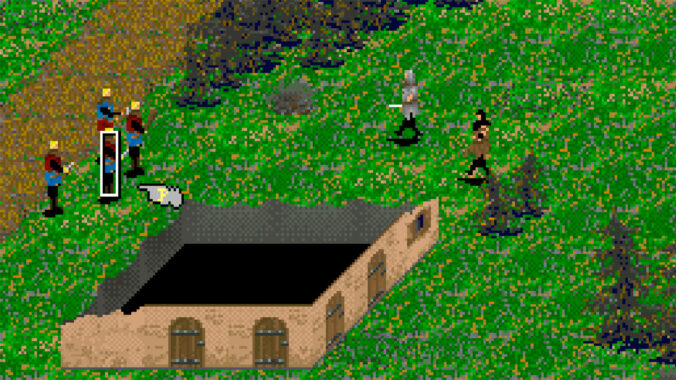
The next game in my revival series was Lands of Lore: The Throne of Chaos (Virgin Games, 1993), developed by Westwood Studios, the same guys who made the first two instalments of Eye of The Beholder. And this game has a very similar interface, with some clear improvements over the predecessors. Stepping away from the Dungeons & Dragons license, Lands of Lore brought its own mythology in what looks like a hybrid of RPG and adventure genres.

Set in the high-fantasy world of Gladstone, the game presents a classic struggle between good and evil. The story revolves around a powerful artifact, the Nether Mask, and the efforts of the kingdom to thwart its misuse by the malevolent sorceress Scotia. The player assumes the role of a chosen champion tasked by King Richard to prevent Scotia’s rise to power. The themes are quintessentially from medieval fantasy, with elements of heroism, betrayal, and mysticism.

You can’t create your own character and have to choose one of the available heroes to play. I went with Michael, a balanced choice with skills in both combat and magic. The party grows as the adventure progresses, with companions joining temporarily based on the plot. The challenges include the usual exploration and puzzle-solving, with combat against a diverse array of enemies. Resource management is crucial, as sometimes there’s a lack of food and potions (using magic to heal between battles will save the day), and your weapons don’t last forever. The puzzles are well-designed, often requiring good observation and a lot of experimentation.

It was quite pleasing playing Lands of Lore: The Throne of Chaos again. And I had the version released on CD, which came with great voice acting, including Patrick Stewart as King Richard.

Then I decided to play the sequel, Lands of Lore: Guardians of Destiny (Virgin Games, 1997). It marked a shift in tone and gameplay for the series. Developed by the same Westwood team, the game was designed during a period of significant technological change in gaming, including the rise of 3D graphics and free-roaming environments. As a result, it departed from the grid-based system of its predecessor, embracing a more dynamic and cinematic experience. Today it looks a bit primitive, and I prefer the traditional Eye of the Beholder style, but I can understand they wanted to try something innovative for the time. It just didn’t feel like it belonged to the same series.

The sequel takes place years after the events of The Throne of Chaos and follows Luther, a cursed young man caught in a struggle between opposing forces of light and dark. The story explores themes of duality, redemption, and destiny, with Luther’s transformations into beast and lizard forms playing a central role in both narrative and gameplay. It’s critical to learn when to use Luther’s beast form for combat and his lizard form for agility and puzzle-solving.

I never played Guardians of Destiny when it was launched, and playing it now wasn’t really a satisfying experience. Gameplay is a bit clunky and the game crashed constantly (I know, it wasn’t originally designed for a super fast computer made a quarter of a century later). So I gladly put it away and started looking for the next one.

Favorite 2000s Live Action TV Series

  • The West Wing (1999–2006)
  • The Sopranos (1999–2007)
  • Alias (2001-2006)
  • The Wire (2002-2008)
  • Firefly (2002–2003)
  • House (2004–2012)
  • How I Met Your Mother (2005-2014)
  • Dexter (2006–2013)
  • Mad Men (2007-2015)
  • Breaking Bad (2008-2013)
  • Fringe (2008–2013)
  • True Blood (2008–2014)

« Older posts Newer posts »

© 2026 Zander Dulac

Theme by Anders NorenUp ↑