Tag: books (Page 3 of 3)

The Mystery Novels of L.F. Veríssimo

Crimes from pulp fiction books reenacted by a real murderer. A  locked-room mystery disrupting a conference about Edgar Allan Poe. Members of a gastronomy club being killed one by one right after having their favorite dishes. These are just a few of the plots from L.F. Veríssimo’s novels. But what really makes them interesting to me are their narrative structures and the cultural artifacts that fuel them.

Luis Fernando Veríssimo, one of the most celebrated and prolific Brazilian writers, is mostly known for his hundreds of humorous short stories and newspaper columns, collected in dozens of books starting in 1973. He is the creator of some unforgettably funny characters, like the Analyst from Bagé (O Analista de Bagé), a gaucho psychoanalyst who mixes Freud with the roughness of the macho cultural values of the Pampas, and the Old Lady from Taubaté (A Velhinha de Taubaté), the last person in the world who still believes what politicians say. Veríssimo also wrote and drew comic strips, and for a long time published daily columns on several Brazilian newspapers.

Veríssimo also wrote a few crime novels, and they stand apart in their little murder mystery microcosm. The humor is still present, but sparsely and in a much darker tone. As far as I know, three of Veríssimo’s novels have been translated to English. The other two you will have to read in Portuguese.

The first novel is O Jardim do Diabo (The Devil’s Garden), originally published in 1988, and revised and republished in 2005. Estevão is a pulp fiction writer who lost a foot (one of the mysteries of the story) and now doesn’t leave his small apartment. He is visited by a police inspector investigating a crime apparently inspired by one of Estevão’s books. The Devil’s Garden is probably the most complex of his novels in terms of structure, with the narrative blending together the narrator’s current reality, an episode of his past, the pulp novel he is currently writing, and a radio show played loudly by his cleaning lady.

O Clube dos Anjos (The Club of Angels, translated by Margaret Jull Costa for New Directions), originally published in 1998, is possibly Veríssimo’s best book. Daniel is a failed advertising man who still depends on his parents’ money to support his fine taste for food and wine. But now his club of gourmets (or, perhaps more appropriately, gourmands) is at risk of disappearing because the members are being murdered, one by one, after eating their favorite dishes. The whole story has a delicious air of decadence, both from the seemingly excessive importance given to the pleasures of the table and from the apparent willingness presented by the victims, as if they all felt guilty of something and accepted death as their punishment.

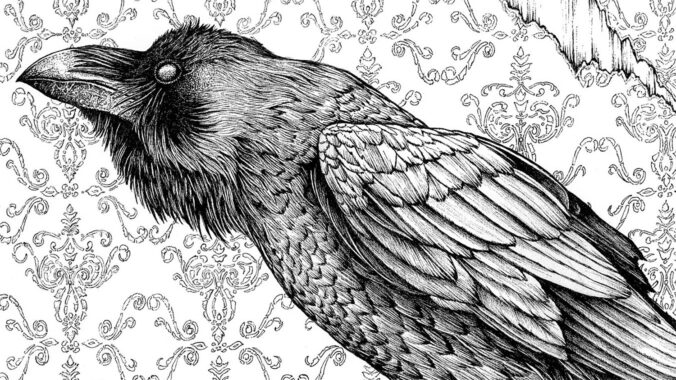
Borges e os Orangotangos Eternos (Borges and the Eternal Orangutans, translated by Margaret Jull Costa for New Directions), originally published in 2000, is one of my favorites. Vogelstein is an unimportant translator who goes to Buenos Aires for a conference about the work of Edgar Allan Poe, and gets involved in a locked-room murder mystery. Trying to solve the crime, he partners with none other than the great Jorge Luis Borges, with some help from a police detective appropriately called Cuervo (Raven). For fans of Borges, or Poe, or detective stories in general, the narrative is a delightful puzzle of references where all the pieces fit together and the surprises don’t stop until the last paragraph. There are also engaging conversations about literature, including this beautiful quote: “I always believed an experience at sea was essential to a great writer, and that’s why Conrad and Melville, and in a certain way also Stevenson, who ended his days in the South Seas, were better than all of us, Volgenstein. At sea a writer escapes from the minor demons and only faces the definitive demons.”

O Opositor (literally The Opponent but also, implied, The Opposable Thumb), originally published in 2004, is a story within a story. The narrator is a journalist visiting Manaus, the capital of the state of Amazonas, in Brazil, to write an article about hallucinogenic plants. But he ends up meeting Jósef Teodor, a foreigner who is always drunk and claims to be a former assassin for hire at the service of the Meierhoff Group, the most powerful secret society in the world. Teodor’s tale, told in fragments when he is both willing and not too drunk, forms the center of the book, while the questioning of its veracity and the hunting for clues to confirm it make for an interesting frame. To complicate things a bit, the journalist has been sampling the hallucinogenics he is supposed to be researching, and got romantically involved with a woman who may be the daughter of one of Teodor’s victims.

Os Espiões (The Spies, translated by Margaret Jull Costa for Quercus Publishing), originally published in 2009, is a story about the relationship between literature and reality, disguised as a story about amateur spies who fail badly at their self-assigned mission. A small publisher receives the first chapter of a manuscript and, interpreting it as a call for help, builds a rescue team to travel to the author’s little town and free her from the presumed danger. As the investigation progresses and more chapters arrive in the mail, the plot thickens. The Spies starts with a quote by Giorgio de Chirico (inscribed in Latin on the frame of one of his self-portraits): “And what shall I love if not the enigma?” The love for the enigma, however, is not enough to solve it, and the eager but unaware spies end up facing the results of their misreading of the manuscript and of the situation.

These five novels form a cohesive group, with many elements in common. For example, all the stories are told in the first person by a narrator-protagonist who is a writer of some sort. Estevão, from The Devil’s Garden, is a pulp fiction author. Daniel, from The Club of Angels, is a failed advertising copywriter and a scribbler of stories of dubious taste about conjoined twins. Vogelstein, from Borges and the Eternal Orangutans, is a translator and wannabe writer. The unnamed narrator of The Opponent is a journalist. The narrator of The Spies, also unnamed but sometimes using Agomar as a pseudonym, is an editor at a small publishing house and author of an unpublished espionage thriller.

The five books also make important use of cultural references (usually literature or visual arts), which in some cases are at the center of the plot. The Devil’s Garden uses pulp fiction stereotypes profusely, but also touches on Conrad, Melville, and other authors of sea stories. The Club of Angels has Shakespeare and King Lear metaphorically haunting the characters and literally being quoted by them. Borges and the Eternal Orangutans presents Borges as a character and offers an abundance of mentions to Poe, Lovecraft, Zangwill, and several other writers. The Opponent features the frescoes in the Orvieto Cathedral, painted by Fra Angelico and Luca Signorelli, as a significant plot point. And The Spies provides a cornucopia of literary references, from the Greek classics (the damsel in distress is called Ariadne and the plan to rescue her is named Operation Theseus) to contemporary spy novels (the narrator idolizes John le Carré) and even suspicious scholarly connections (one of the characters gives a lecture on “The Neoplatonism in Dostoyevsky and Machado de Assis”).

If none of the above made you want to read Veríssimo’s novels, he has another one that doesn’t deal with crime mysteries but may arouse your curiosity: A Décima Segunda Noite (The Twelfth Night) retells the homonymous Shakespearean comedy with the plot transposed to a contemporary hair salon in Paris and narrated by a perky pet parrot who can quote John Lennon and Soren Kierkegaard.

The Lost World: One Book, Six Movies

My latest movie marathon was all about The Lost World. First I read the original novel by Conan Doyle (yes, the same guy who created Sherlock Holmes) and then watched six adaptations for the screen.

At the end of the 19th century, Sir H. Rider Haggard was the king of stories about lost worlds, with books like The People of the Mist (about a lost tribe in Africa) and Heart of the World (about a lost Mayan city in Mexico). But the genre got it’s masterpiece in 1912, when Sir Arthur Conan Doyle unleashed The Lost World. Explorers venturing to mysterious, uncharted lands teeming with prehistoric creatures? That’s the stuff that launched a thousand jungle expeditions, both literal and fictional. But while the book was groundbreaking, it wasn’t without its wobbles, especially the racist overtones and imperialist assumptions. Still, it’s hard to overstate its impact. Without The Lost World, we might not have had Edgar Rice Burroughs’s The Land That Time Forgot, or King Kong, or even Michael Crichton’s Jurassic Park.

The first crack at bringing Doyle’s tale to the silver screen, The Lost World (Harry O. Hoyt, 1925), was a silent masterpiece – and “masterpiece’ isn’t an exaggeration. Faithfulness to the novel? Decent enough. Professor Challenger and his team head to South America, find a plateau full of dinosaurs, and bring one back to London. Sure, liberties were taken (like adding a romance subplot), but the spirit was intact. The cinematography was beautiful for the time (I watched the tinted version restored in 2016), but the real star was the stop-motion wizardry of Willis O’Brien. Those dinosaurs were revolutionary, decades before CGI. O’Brien’s work on The Lost World paved the way for King Kong in 1933, which was like this movie’s rebellious teen cousin. Plot holes and pacing issues aside, the 1925 version remains a classic, with Challenger (played by Wallace Beery) as a brash, bearded and mustachioed force of nature.

With The Lost World (Irwin Allen, 1960), we enter B-movie territory. This adaptation swaps out Doyle’s intelligent, scientifically minded tale for lizards with glued-on horns. Yes, instead of lovingly crafted stop-motion dinosaurs, we get iguanas and crocodiles dressed in drag to look vaguely prehistoric. It’s as ridiculous as it sounds. The plot diverges wildly too. Gone is the novel’s thought-provoking narrative about science versus nature. Instead, we get melodrama, generic villains, and some dubious jungle antics. On the upside, the cast is stacked: Michael Rennie (The Day the Earth Stood Still) as Lord Roxton, Claude Rains (Casablanca) as Professor Challenger, and Jill St. John (who would later be the Bond Girl in Diamonds Are Forever) adding some glamour. But the sheer campiness of the production makes this one for die-hard dinosaur completists only.

Another thirty years and we got not one but two new adaptations, The Lost World (Timothy Bond, 1992) and its sequel Return to the Lost World (Timothy Bond, 1992). This version took some odd liberties. Instead of Doyle’s South American plateau, we’re now in Africa. Why? Probably because someone found an African savanna more budget-friendly than a South American rainforest. Lord Roxton is swapped for a new female character, Jenny Nielson (Tamara Gorski), in what feels like a half-hearted attempt at modernization. The rest of the cast is not bad: John Rhys-Davies (from the Indiana Jones movies) as Professor Challenger, David Warner (Jack the Ripper in Time After Time) as Professor Summerlee, and Eric McCormack (before becoming famous for Will & Grace) as Edward Malone. The special effects? Quite weak, even for a tv production, and definitely nothing you’d brag about at a paleontology conference. The dinosaurs really look like puppets. While they tried to retain some of the novel’s spirit, both films felt more like Saturday matinee fillers than genuine adaptations.

The next version of The Lost World (Bob Keen, 1998) is even worse. Only loosely based on the original novel, the action now happens in Mongolia. And the story is so much changed that only two members of the expedition return to London. Patrick Bergin plays Professor Challenger, in what may be the worst movie of his career. Dinosaurs? Not many, and several years after Jurassic Park none of them look impressive. Characters? Forgettable. Is it worth watching? Only if you enjoy movies that feel like they were cobbled together over a long weekend to cash in on a trend.

A few years later we got a new tv adaptation, The Lost World (Stuart Orme, 2001), with the advantage of having 145 minutes to tell the story (it was first broadcast in two 75 minutes episodes). They followed the story fairly closely (and even returning to the original setting in South America), but added a few new elements. Besides the romantic subplot that every adaptation insisted in including, there was also a detour about a religious fanatic trying to keep the lost world a secret because it could support Darwin’s theory of evolution and weaken the creationist dogma. Bob Hoskins as Professor Challenger was a great choice, and James Fox as Professor Summerlee is also a good contribution. The CGI dinosaurs are fine, nothing to get very excited about but not embarrassingly bad. What this film lacks in spectacle, it tries to make up for in earnestness, and there’s something endearing about that.

Which adaptation reigns supreme? If we consider them in the context of their time, the 1925 silent film is the winner. It’s not just a great adaptation, it’s a landmark in cinematic history, with Willis O’Brien’s dinosaurs setting a high standard for generations. Best special effects dinosaurs? Again, the 1925 version. No iguana cosplay here, just pure artistry. Best Professor Challenger? Bob Hoskins in 2001 nails the character’s mix of gruffness and charm. Best Lord Roxton? Michael Rennie from the 1960 version is hard to beat, even if the movie itself is a dud. Edward Malone, however, is such a dull character that he is forgetabble in all versions.

All the adaptations, whether faithful or not, wrestle with the clash between humanity and nature. Doyle’s novel asks whether we have the right to dominate nature, and that question lingers in every adaptation (even the ones with the lizards-in-costume nonsense). Each version also grapples with adventure and exploration, though often in ways that reflect the era of their production: awe in the 1920s, kitsch in the 1960s, and commercialism in the 1990s. At its heart, The Lost World remains a tale about discovery, danger, and our never-ending fascination with dinosaurs. Some adaptations soar, others stumble. But like the dinosaurs themselves, the story endures — an ancient, lumbering giant that refuses to go extinct.

Newer posts »

© 2026 Zander Dulac

Theme by Anders NorenUp ↑