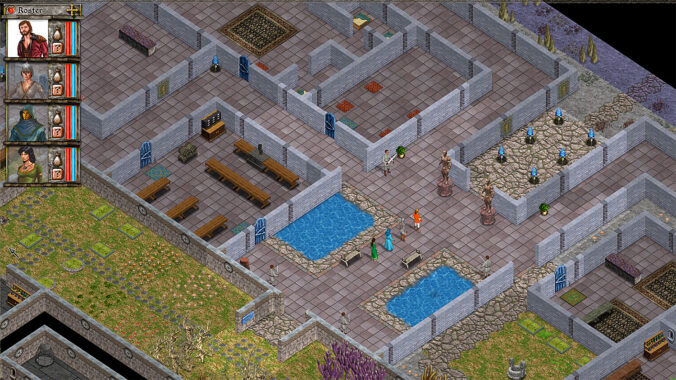
Next on my adventures into old CRPGs, I got into the Avernum Trilogy, by Spiderweb Software. I never played the original Exile series from the 1990s, but I did play the remake series, renamed Avernum, six games published from 2000 to 2009. However, those games no longer work on new computers. Fortunately, Jeff Vogel (owner of Spiderweb Software) has been launching new remakes of the series, and the first trilogy is already available. All these games are deeply rooted in traditional CRPG design, featuring turn-based combat, non-linear storytelling, and a vast, immersive underground world. In Avernum: Escape from the Pit (2011), the player assumes the role of a group of prisoners
Tag: games (Page 2 of 3)
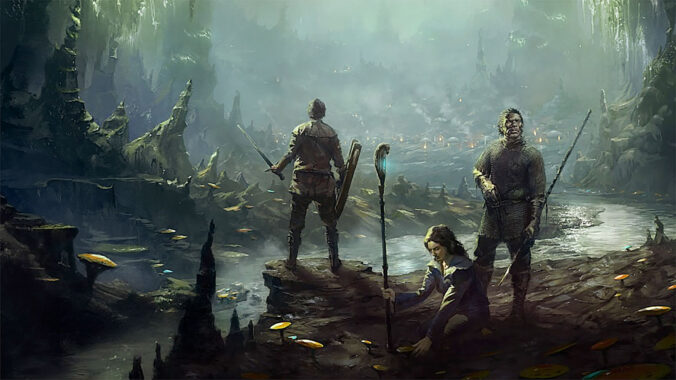
My initial idea was to explore old CRPGs roughly chronologically, but I’ve encountered a couple of technical obstacles. First, obviously, I no longer own all those games I played a decade or two ago. Second, with the evolution of hardware and operating systems, some games no longer work on recent computers. Third, I currently only have access to a MacBook Pro, and many of the games on the list are only available for PC. After Darklands, I wanted to play Betrayal at Krondor (1993) or The Elder Scrolls: Arena (1994), but I only own the PC versions of these games.
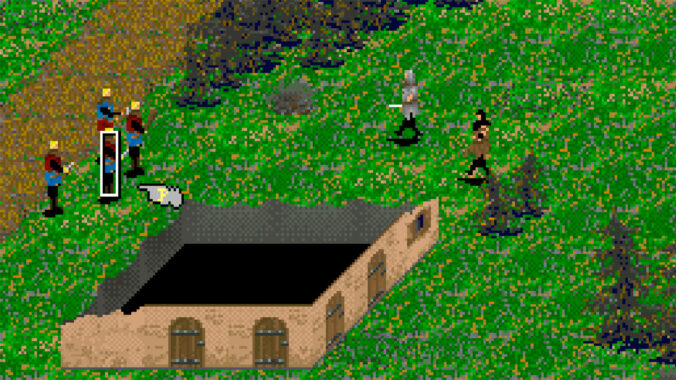
When Microprose launched Darklands in 1992, I became obsessed with the game. I played it hour after hour, day after day, week after week, always experimenting with new ways to explore the game world and vanquish the enemies. Replaying it now was still very satisfying, despite the dated graphic presentation. Unlike the high-fantasy worlds inspired by Ultima or Dungeons & Dragons, Darklands is set in a historically grounded 15th-century Holy Roman Empire, where alchemy, saintly miracles, and medieval folklore are real. The game offers an open-ended experience where players can travel across Germany, engaging in political intrigue, mercenary work, or
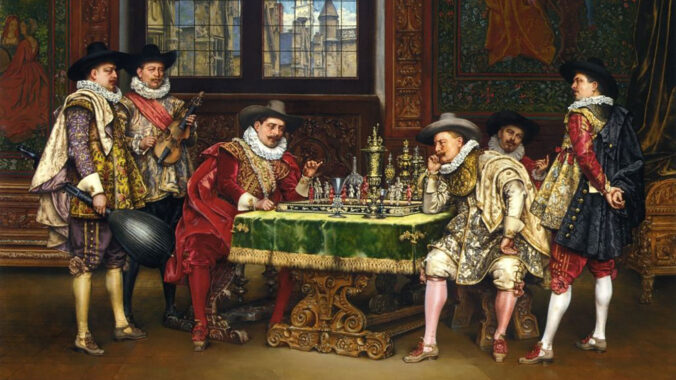
After exactly 6,000 rapid games on chess.com, I’ve decided to take a break. What this means is still to be determined, but I got some interesting insights from this first burst into the game of chess. As expected, after a fairly quick climb in my rating I reached what feels like an unmovable wall. That’s how it’s supposed to work: you keep winning against progressively better opponents until you find opponents that are better than you, and then you start losing. That’s how your rating gets determined. Mine found its plateau between 1300 and 1350, with eventual drops into the
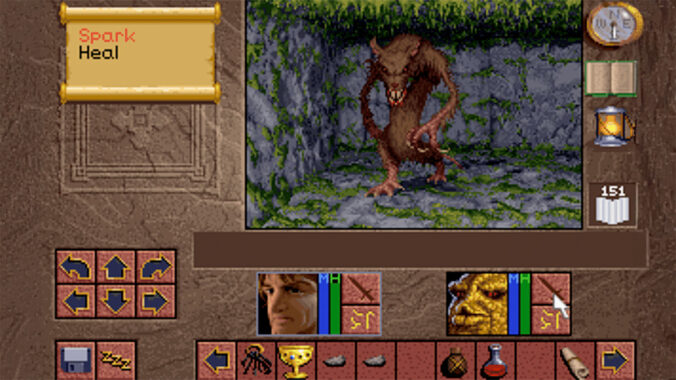
The next game in my revival series was Lands of Lore: The Throne of Chaos (Virgin Games, 1993), developed by Westwood Studios, the same guys who made the first two instalments of Eye of The Beholder. And this game has a very similar interface, with some clear improvements over the predecessors. Stepping away from the Dungeons & Dragons license, Lands of Lore brought its own mythology in what looks like a hybrid of RPG and adventure genres. Set in the high-fantasy world of Gladstone, the game presents a classic struggle between good and evil. The story revolves around a powerful
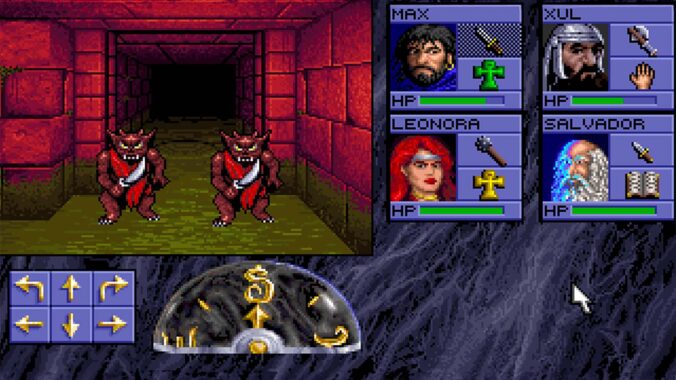
Eye of the Beholder (SSI, 1991) was the first computer game that I felt represented the spirit of the tabletop Dungeons & Dragons (which, at the time, was in its AD&D 2nd Edition). Another advantage for me was that the story happened beneath the city of Waterdeep, a famous location for fans of Dungeons & Dragons. Khelben Arunsun, one of the Lords of Waterdeep, tasks our group of adventurers to go investigate what’s wrong in the city sewers, and that’s just the beginning of a large dungeon expedition. The game was somewhat similar to the first The Bard’s Tale but
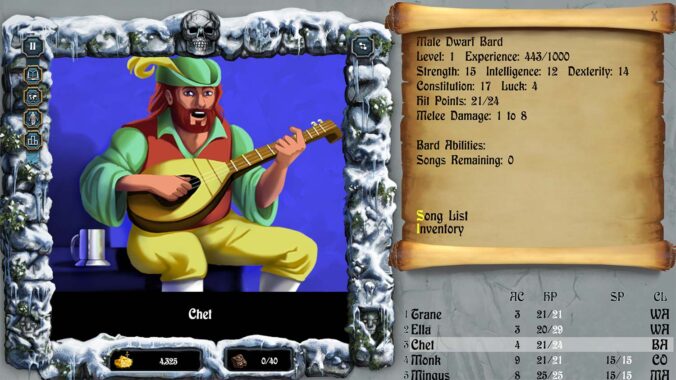
Ah, how many hours I spent roaming the streets of Skara Brae with a party of underdeveloped and underequipped adventurers, just trying to get enough experience to be able to explore the catacombs under the city. The Bard’s Tale was the first computer game where I got the sense of playing an RPG, instead of just fighting against weak design and poor mechanics. For this rerun, I got the remastered version launched by inXile Entertainment in 2018, The Bard’s Tale Remastered Trilogy, which is fantastic. It revamps the graphics without losing the flavor of the original, unifies the mechanics of
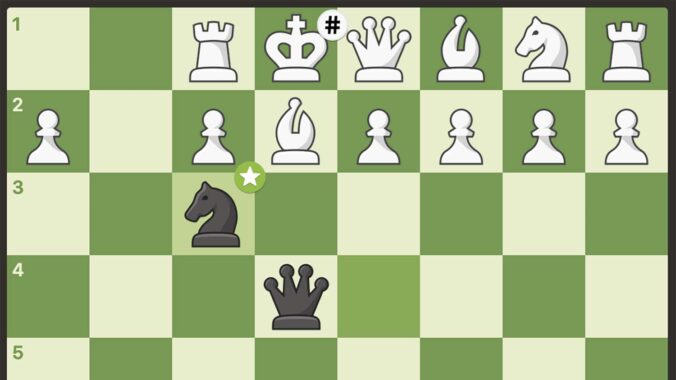
Well, it didn’t take long. The first five games necessary for getting my rating on chess.com, all victories. The sixth game, a defeat. I was rated 1264 and got paired against a 1313 player. That’s what I expected from the beginning, advancing to a rating that reflected my abilities and then being held there by being paired against stronger opponents. So after fifty games my rating is not much different than after five games. I managed to cross the 1300 barrier, but was sent back down by a few defeats. I am now at rating 1276, with 27 games won
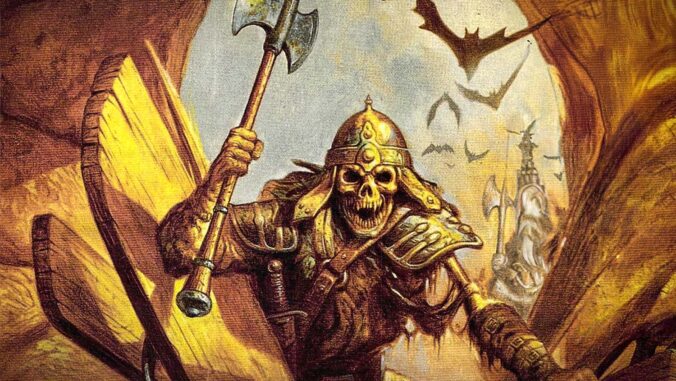
One of my projects for 2024 (yes, I have many projects) is to play again (or, in some cases, for the first time) old computer role playing games (CRPGs). It’s something that gave pleasure for many years and I want to experience it again. I think I will be disappointed in some cases but rewarded in others. I won’t start with games from the Ultima series (Origin Systems) or the Gold Box series (SSI) because I was never able to like them. It wasn’t because of the primitive graphics, I don’t mind that (I still enjoy playing the classic Rogue,
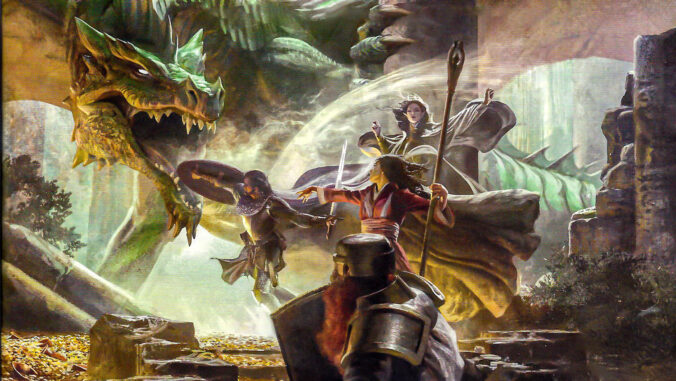
I have enjoyed an uncountable number of hours playing Dungeons & Dragons (D&D), and many of them being the Game Master (GM). I particularly find pleasure in being the GM for a group of people who are playing D&D for the very first time. Guiding new players into the game, helping them create and grow the characters, sharing with them the magic of discovering new worlds, all this is a reward in itself. I often use the official starting adventures published by Wizards of the Coast, Lost Mine of Phandelver (from the the 5th Edition Starter Set) and Dragon of