Tag: graphic novels (Page 1 of 2)

Dungeons & Dragons Superheroes

I recently played in a short Dungeons & Dragons campaign in which all the characters had to be inspired by classic superheroes, adapted to the medieval fantasy world of Faerûn. I liked the idea so much that I ended up creating a whole list of characters, and having much fun with it. Here are a few of them. The best part is that, if you don’t like my versions of these super-adventurers, you can just create your own.

Spider-Man
Race: Wood Elf
Class: Monk (Open Hand) with a 1–3 level dip in Rogue (Scout)

  • Wood elves have the agility, speed, and keen senses that parallel Spider-Man’s reflexes.
  • Monk gives him Quickened Movement, Unarmored Defense, and high mobility, perfect for wall-running, leaping, tumbling through enemies.
  • Open Hand techniques mimic web-trip, push, and stun effects.
  • Rogue (Scout) represents his urban acrobatics, ambush instincts, and mobility in the alleyways of a fantasy city.
  • His webbing becomes Ki-infused silk ropes produced by magical spiders he once saved in an elven ruin.
  • Signature ability: Silk Line Step – spend 1 Ki to lash a spectral silk line onto a surface and pull yourself as if casting Misty Step.

Wolverine
Race: Mountain Dwarf
Class: Barbarian (Zealot)

  • Dwarves are hardy, stubborn, and famously difficult to kill, perfect for Wolverine.
  • Zealot’s damage resistance and “nearly impossible to kill” nature works like a healing factor.
  • His claws become black-iron dwarven claw bracers, forged as a hereditary weapon.
  • Berserker rage mimics Wolverine’s ferocity.
  • Signature ability: Blackclaw Frenzy – rage activates his ancestral magic, causing the claws to extend and glow with runic fire.

Captain America
Race: Variant Human
Class: Paladin (Devotion)

  • Devotion Paladins embody justice, righteousness, courage.
  • Shield mastery parallels Cap’s iconic combat style.
  • His shield is a blessed relic of a bygone holy order, magically returning to his hand once per round.
  • The super soldier serum is replaced with a divine ritual granting enhanced physical ability.
  • Signature ability: Aegis Throw – throw the shield as a ranged spell attack that ricochets between enemies via divine light.

Iron Man
Race: Rock Gnome
Class: Artificer (Armorer)

  • Artificers literally build magical suits of armor, exactly like Tony Stark but medieval.
  • Rock gnomes have tinkering instincts and a talent for small, intricate mechanisms.
  • His arc reactor becomes a bound elemental shard powering the armor.
  • The suit can switch between Guardian (tank) and Infiltrator (ranged) modes.
  • Signature ability: Elemental Heart Beam – a lightning spell cast through the suit’s chest-crystal.

Hulk
Race: Goliath
Class: Barbarian (Berserker) with 1–2 Druid levels

  • The Hulk is a rage-fueled transformation, and Barbarians already do that.
  • Goliaths are huge, muscular, and tied to elemental/giant heritage.
  • The Druid twist: his rage is a giant-spirit possession, not radiation.
  • His Hulk form is simply his rage pushing him into magically-enhanced size and strength (like Enlarge).
  • Signature ability: Fury of the Mountain King – while raging, he grows a size category and deals extra bludgeoning damage.

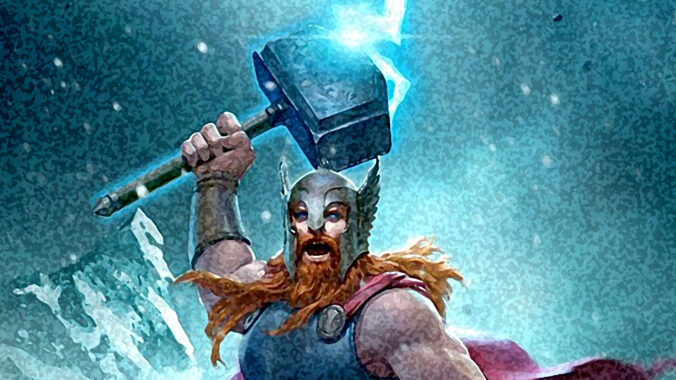
Thor
Race: Protector Aasimar
Class: Cleric (Tempest)

  • Tempest Clerics literally channel thunder, lightning, and divine storms.
  • Aasimar fits the demigod archetype.
  • His hammer is a sentient storm-spirit weapon, not a piece of technology.
  • Divine retribution mimics Mjolnir’s lightning strikes.
  • Signature ability: Stormcaller’s Leap – teleport short distances in a burst of lightning (mechanically: Thunder Step).

Doctor Strange
Race: Human
Class: Wizard (Order of Scribes)

  • Strange is a scholar-mage first and foremost.
  • Scribes Wizards manipulate spellbooks, alter spells on the fly, and conjure spectral script, very Strange-like.
  • His Eye of Agamotto becomes an Ancient Glyph Key, a relic from an extinct wizard order that bends time and space.
  • Signature ability: Many-Gated Mirror – cast Misty Step, Dimension Door, or Arcane Gate through floating runic portals.

I hope you enjoy these medieval superheroes (perhaps even play some of them). I may publish more characters later.

Three Dredds

I’ve recently had the chance to see two movies I had never seen, Judge Dredd (Danny Cannon, 1995) and Dredd (Pete Travis, 2012). They are both adaptations of the comic strip Judge Dredd, but they differ significantly from each other.

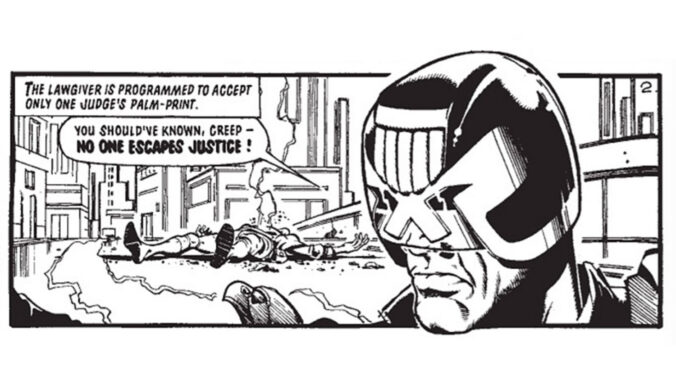
Judge Dredd first appeared in 1977 in 2000 AD, a British weekly anthology comic, created by writer John Wagner and artist Carlos Ezquerra. The strip was a reaction against both American superhero excess and the bleak prospects of late-20th-century urban life. The setting, Mega-City One, was a sprawling dystopian metropolis stretching along the American eastern seaboard, plagued by crime, unemployment, and social decay.

Dredd himself was conceived as the ultimate law enforcer: judge, jury, and executioner rolled into one. He wore a militaristic uniform with oversized pauldrons, hid his face behind a helmet, and spoke in terse, authoritarian commands. The character was never meant to be a hero in the traditional sense. Instead, the comics satirized authoritarianism, policing, and state power. The world of Judge Dredd is one in which the law is absolute but also absurd, reflecting anxieties about fascism, militarization, and the erosion of civil liberties.

A key point is that Wagner and Ezquerra didn’t present Dredd as purely admirable or purely villainous. He was both protector and oppressor, embodying the contradictions of a society that sacrifices freedom for security. This ambivalence made the strip unique: readers could cheer for Dredd’s brutal efficiency one moment and recoil at his inhumanity the next.

The first significant attempt to bring the character to the screen was the 1995 film, Judge Dredd, directed by Danny Cannon and starring Sylvester Stallone. Hollywood, however, took significant liberties, as it often does. The movie largely abandoned the satirical edge of the comics in favor of a more conventional action hero flick.

Two controversial choices defined this adaptation. First, Stallone removed the helmet for much of the film, undermining one of the character’s essential traits. In the comics, Dredd’s facelessness symbolizes his role as an impersonal instrument of the law. By showing his face, the movie personalized him, trying to turn him into a sympathetic action hero. And then there’s the tone shift. Instead of a biting critique of authoritarian justice, the film leaned on big explosions and campy humor. Rob Schneider’s annoying comic-relief sidekick, created just for the movie, epitomized this tonal mismatch.

The socio-political undertones were diluted. The movie glossed over issues like corruption and cloning, instead favoring an individualistic narrative where Stallone’s Dredd proves his innocence and defeats his evil twin. Rather than questioning the legitimacy of a justice system where one man can sentence citizens on the spot, the film framed Dredd as a misunderstood hero whose authoritarian streak was simply misapplied by others.

This 1995 version attempted to graft the DNA of Judge Dredd onto the template of a mid-90s blockbuster, featuring big sets, one-liners, and uncritical thinking. The satire and ambiguity of the source material were sacrificed in favor of marketable heroics.

Seventeen years later, Pete Travis’s Dredd, with Karl Urban in the title role, corrected many of its predecessor’s missteps. Urban kept the helmet on throughout, preserving the character’s anonymity and symbolism. The tone was stripped down, brutal, and unflinching, definitely closer to the original grim satire.

The film centers on a single day in Mega-City One, with Dredd and rookie Judge Anderson (this character exists in the comics, but is far from being a rookie) trapped in a mega-block under siege by a drug lord, Ma-Ma. The plot is minimalist, almost claustrophobic, but it highlights key elements of the Dredd mythos.

It’s about the system, not the man. Dredd is not a maverick but an avatar of institutional justice. He doesn’t question the system, he enforces it ruthlessly. His humanity is glimpsed only in subtle ways, primarily through his mentorship of Anderson.

Violence is part of the routine. The film portrays violence with a grim realism. The saturation of slow-motion drug sequences contrasts with Dredd’s mechanical efficiency, underscoring the dehumanizing effects of both crime and policing.

There’s always socio-political commentary. While not overtly satirical, the film critiques a society where entire populations are warehoused in high-rise blocks, policed by authoritarian judges. Anderson’s psychic empathy provides a faint counterweight, reminding viewers that the Judges’ system is ultimately inhuman.

Unlike the 1995 movie, Dredd doesn’t try to make its protagonist lovable. He is the law, nothing more, nothing less. The world here is bleak but consistent: when society collapses, authoritarianism fills the vacuum, but at the cost of individuality and compassion.

I found it interesting to compare specific details in the two adaptations, such as Dredd’s uniform and the depictions of Mega-City One. Stalone wears what appears to be a spandex or Lycra bodysuit, which is remarkably close to what we see in the comics. However, on screen, the costumes look theatrical, flashy, and even campy. Instead of intimidating authoritarian uniforms, they read like superhero cosplay. Urban wears leather and Kevlar-style armor, designed to resemble real-world riot gear combined with tactical SWAT outfits. They kept the helmet, badge, shoulder armor, and overall silhouette, but toned down the bright colors and cartoon exaggerations. Boots and gloves are black, the eagle is muted bronze instead of blaring gold, and the armor looks worn and functional. Not comic-accurate in color or extravagance, but they’re far more convincing in a live-action dystopia. We see the same contrast with the environment. The 1995 Mega-City One is highly futuristic, neon-lit, vertical, like Blade Runner on steroids. Numerous CGI cityscapes, flying vehicles, and giant billboards. It looks like an over-designed movie set rather than a chaotic, lived-in society. The 2012 Mega-City One is a grittier, more grounded interpretation. From afar, it appears as a sprawl of crumbling modern cities, with mega-blocks rising like concrete fortresses amid a sea of urban decay. On the ground, it resembles Detroit or Baltimore with added dystopian rot: graffiti, gang-ruled projects, bleak streets. This nails the tone of Mega-City One as a decayed, crime-ridden society on the brink of collapse.

In conclusion, the 1995 movie incorporates some authentic details (clone origin, Rico, Fargo, Mega-City One, Cursed Earth), but reshapes them into a Hollywood-friendly narrative: the wrongly accused hero, the evil twin, the wise mentor, and the comic-relief sidekick. The comics were far more satirical, cynical, and episodic, whereas the movie attempted to mold Dredd into the conventional blockbuster protagonist. The 2012 Dredd doesn’t try to adapt any single classic storyline, instead it condenses the world’s essence into a tight, brutal scenario. It’s more faithful in spirit than the 1995 film because it retains the helmet, the authoritarian tone, and the oppressive city, but it strips away the comic’s satirical absurdity in favor of realism.
Favorite Comic Strips

  • Calvin and Hobbes (Bill Watterson)
  • Dilbert (Scott Adams)
  • Doonesbury (Garry Trudeau)
  • Li’l Abner (Al Capp)
  • FoxTrot (Bill Amend)
  • Mafalda (Quino)
  • Pearls Before Swine (Stephan Pastis)
  • Piratas do Tietê (Laerte)
  • Pogo (Walt Kelly)
  • xkcd (Randall Munroe)

In alphabetical order.

Favorite 2010s Graphic Narrative

  • Daytripper (2010), by Fábio Moon and Gabriel Bá
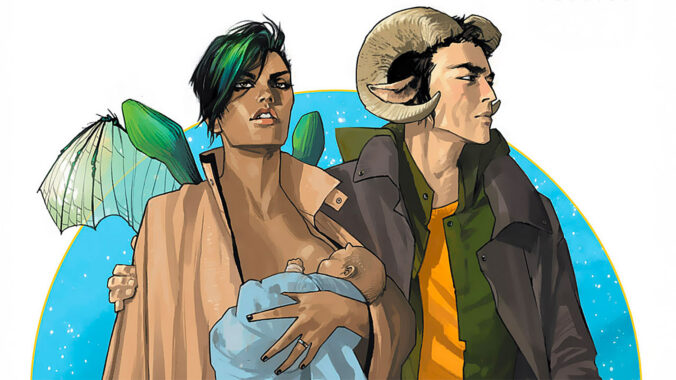
  • Saga (2012), by Brian K. Vaughan and Fiona Staples
  • Black Science (2013), by Rick Remender and Matteo Scalera
  • East of West (2013), by Jonathan Hickman and Nick Dragotta
  • Bodies (2014), by Si Spencer and several artists
  • Manifest Destiny (2014), by Chris Dingess and Matthew Roberts
  • Black Hammer (2016), by Jeff Lemire and Dean Ormston
  • Curse Words (2018), by Charles Soule and Ryan Browne

In chronological order of first publication.

Favorite 2000s Graphic Narrative

  • Blacksad (2000), by Juan Díaz Canalès and Juanjo Guarnido
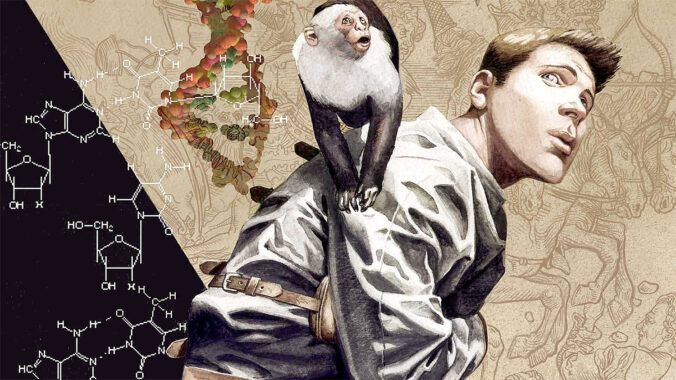
  • Y: The Last Man (2002), by Brian K. Vaughan and Pia Guerra
  • The Walking Dead (2003), by Robert Kirkman and Tony Moore
  • All-Star Superman (2005), by Grant Morrison and Frank Quitely
  • Fell (2005), by Warren Ellis and Ben Templesmith
  • Mouse Guard (2006), by David Petersen
  • Criminal (2006), by Ed Brubaker and Sean Phillips
  • The Umbrella Academy (2007), by Gerard Way and Gabriel Bá
  • Locke & Key (2008), by Joe Hill and Gabriel Rodríguez
  • Asterios Polyp (2009), by David Mazzuchelli

In chronological order of first publication.

Favorite 1990s Graphic Narrative

  • Sin City (1991), by Frank Miller
  • Bone (1991), by Jeff Smith
  • Hellboy (1993), by Mike Mignola
  • Strangers in Paradise (1993), by Terry Moore,
  • Les Mondes d’Aldébaran (1994), by Leo
  • Preacher (1995), by Garth Ennis and Steve Dillon
  • Batman: The Long Halloween (1996), by Jeph Loeb and Tim Sale
  • Transmetropolitan (1997), by Warren Ellis and Darick Robertson
  • Road to Perdition (1998), by Max Allan Collins and Richard Piers Rayner
  • The League of Extraordinary Gentlemen (1999), by Alan Moore and Kevin O’Neill

In chronological order of first publication.

Favorite 1980s Graphic Narrative

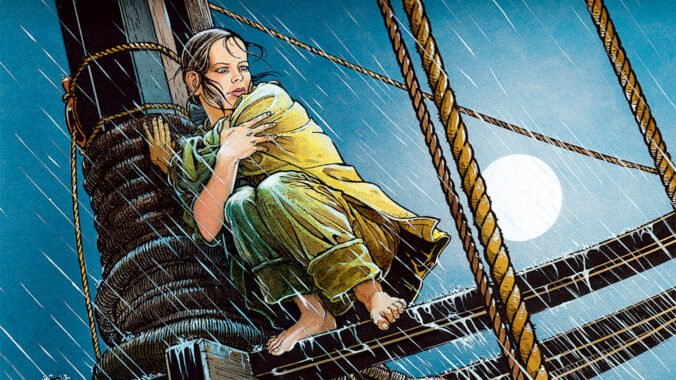
  • Les Passagers du Vent (1980), by François Bourgeon
  • Maus (1980), by Art Spiegelman
  • The Incal (1980), by Alejandro Jodorowsky and Moebius)
  • The Nikopol Trilogy (1980), by Enki Bilal
  • Torpedo (1981), by Enrique Sánchez Abulí and Jordi Bernet
  • X-Men: Days of Future Past (1981) by Chris Claremont and John Byrne
  • V For Vendetta (1982), by Alan Moore and David Lloyd
  • Akira (1982), by Katshuiro Otomo
  • Nausicaä of the Valley of the Wind (1982), by Hayao Miyazaki
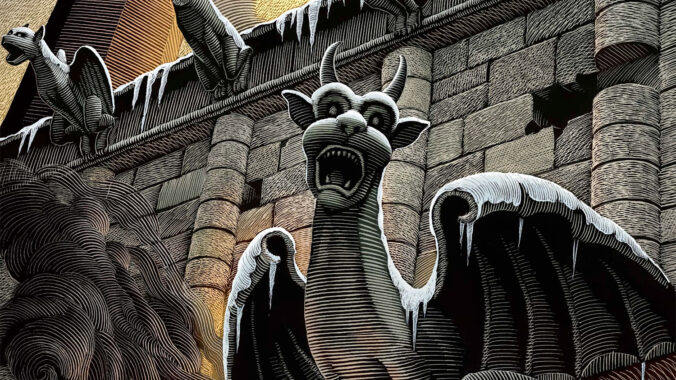
  • Les Cités Obscures (1982), by François Schuiten and Benoît Peeters
  • Usagi Yojimbo (1984), by Stan Sakai
  • Les Compagnons du Crépuscule (1984), by François Bourgeon
  • Les Tours de Bois-Maury (1984), by Hermann
  • Crisis on Infinite Earths (1985), by Marv Wolfman and George Pérez
  • Watchmen (1986), by Alan Moore and Dave Gibbons
  • Batman: The Dark Knight Returns (1986), by Frank Miller
  • Batman: Year One (1987), by Frank Miller and David Mazzucchelli
  • The Sandman (1989), by Neil Gaiman and several artists

In chronological order of first publication.

Favorite 1970s Graphic Narrative

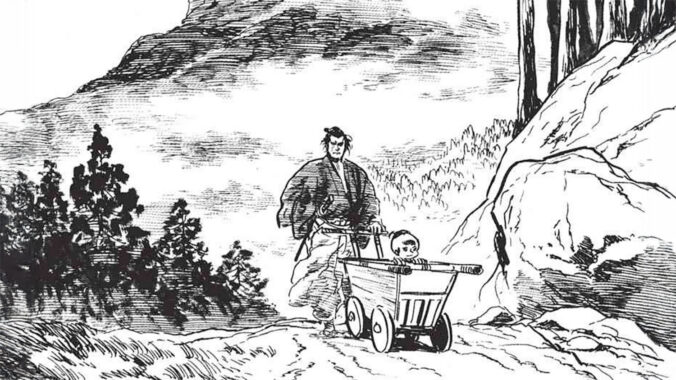
  • Lone Wolf and Cub (1970), by Kazuo Koike and Goseki Kojima
  • Yoko Tsuno (1970), by Roger Leloup
  • Métal Hurlant (1974), various authors
  • Arzach (1975), by Moebius
  • Paracuellos (1975), by Carlos Giménez
  • Le Garage Hermétique (1976), by Moebius
  • American Splendour (1976), by Harvey Pekar and several artists
  • The Extraordinary Adventures of Adele Blanc-Sec (1976), by Jacques Tardi
  • ElfQuest (1978), by Wendy and Richard Pini
  • X-Men: The Dark Phoenix Saga (1979), by Chris Claremont and John Byrne

In chronological order of first publication.

Favorite 1960s Graphic Narrative

  • The Fantastic Four (1961), by Stan Lee and Jack Kirby
  • The Amazing Spider-Man (1963), by Stan Lee and Steve Ditko
  • Blueberry (1963), by Jean-Michel Charlier and Jean “Moebius” Giraud
  • Creepy (1964), various authors
  • Eerie (1966), various authors
  • Lone Sloane (1966), by Philippe Druillet
  • Corto Maltese (1967), by Hugo Pratt
  • 5 por Infinito (1967), by Esteban Maroto

In chronological order of first publication.

Favorite pre-1960 Graphic Narrative

  • Little Nemo in Slumberland (1905), by Winsor McCay
  • Les Aventures de Tintin (1929), by Hergé
  • Flash Gordon (1934), by Alex Raymond
  • Secret Agent X-9 (1934), by Dashiell Hammett and Alex Raymond
  • The Phantom (1936), by Lee Falk
  • Prince Valiant (1937), by Hal Foster
  • Blake & Mortimer (1946), by Edgar P. Jacobs
  • Lucky Luke (1946), by René Goscinny and Morris
  • The Adventures of Alix (1948), by Jacques Martin
  • Tex (1948), by Gian Luigi Bonelli and Aurelio Galleppini
  • El Eternauta (1957), by Héctor G. Oesterheld and Francisco Solano López
  • Asterix (1959), by René Goscinny and Albert Uderzo

In chronological order of first publication.

« Older posts

© 2026 Zander Dulac

Theme by Anders NorenUp ↑