Tag: movies (Page 1 of 4)

Did you really write that book?

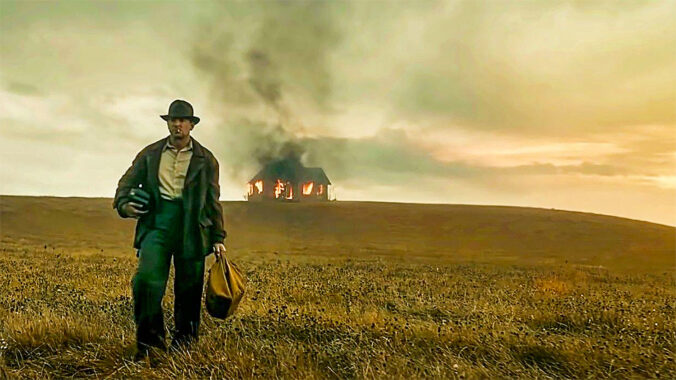
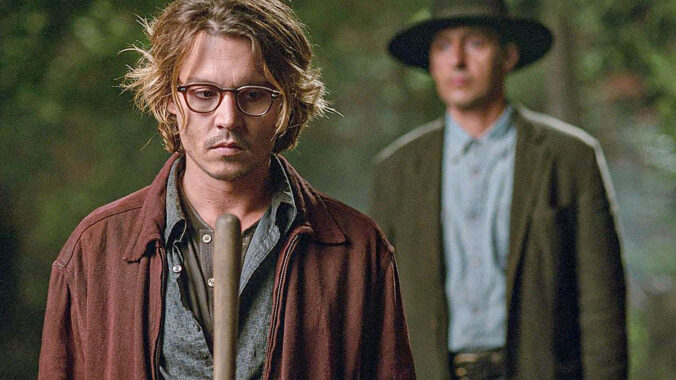
There’s a very specific narrative hook that shows up only occasionally in film: a writer comes into possession of a manuscript that is not theirs, and decides to pass it off as their own. It’s a narrow premise, almost schematic. Yet across three films, A Murder of Crows (Rowdy Herrington, 1998), The Words (Lee Sternthal & Brian Klugman, 2012), and Secret Window (David Koepp, 2004), it opens into three distinct genres: thriller, drama, and psychological horror.

The divergence doesn’t come from the setup. In all three cases, the situation is similar enough: a struggling or compromised writer faces a moment of temptation, and a text appears that could change everything. What differs is not the act itself, but how each protagonist responds to it and how the film chooses to interpret that response.

In A Murder of Crows, the reaction is pragmatic, almost opportunistic. The protagonist treats the manuscript less as a moral problem and more as a solution to a stalled life. The tone that follows is accordingly external. The story looks outward, toward consequences that take the form of pursuit, exposure, and danger. The question is not “should he have done it?” but “what will happen now that he has?” The film aligns itself with the mechanics of a thriller: escalation, suspicion, and the constant sense that something is closing in. Authorship becomes a liability, a trigger for events that move faster than the protagonist can control.

The Words approaches the same decision from the opposite direction. Here, the act is less impulsive than quietly rationalized. The protagonist is aware, perhaps too aware, of what he is doing, and the film lingers on that awareness. Instead of building outward momentum, it turns inward, toward reflection and consequence over time. The tension is not driven by immediate danger but by the slow accumulation of moral weight. Recognition, success, and admiration all arrive, but they are never uncomplicated. The premise becomes a vehicle for examining ambition, insecurity, and the cost of becoming the person you wanted to be under false pretenses. If A Murder of Crows asks what happens when you get away with it, The Words asks whether “getting away with it” is even possible.

Then Secret Window takes the same premise and bends it into something less stable. The protagonist’s reaction is not clearly opportunistic or reflective: it is defensive, even evasive. The accusation of theft, when it appears, is treated not as a legal or ethical dispute but as something more personal, more intrusive. The film doesn’t expand outward like a thriller, nor does it settle into introspection like a drama. Instead, it destabilizes the ground beneath the protagonist. Certainty erodes. The question of authorship, who wrote what, and who has the right to claim it, becomes entangled with identity itself. The premise is no longer just about taking a story, it is about whether the boundaries of the self can hold. In that sense, the film naturally slips into psychological horror. The threat is not exposure or guilt, but disintegration.

Seen together, the three films suggest that the core idea, publishing someone else’s work as your own, is less about literary ethics than about pressure points in the self. One protagonist treats it as an opportunity and is pulled into a world of external consequences. Another treats it as a compromise and is forced to live with its internal cost. The third cannot contain the implications at all, and the situation turns into something far more unstable.

It’s a useful reminder that genre is often less about plot than about emphasis. The same premise can generate suspense, reflection, or dread depending on where the camera lingers: on the chase, on the conscience, or on the fracture.

28 Days/Weeks/Years: Rage, Ruin, and Rewriting the Infected

When 28 Days Later (Danny Boyle, 2002) appeared, it did not simply revive the zombie film. It replaced it with something leaner, faster, and more psychologically pointed. The infected were not undead bodies driven by hunger but living humans stripped down to a single overwhelming impulse. That conceptual precision gave the film its force. The famous opening, Jim (Cillian Murphy) waking alone in a hospital and wandering through an emptied London, has often been compared to the later beginning of the tv series The Walking Dead, but the resemblance is mostly structural. In Boyle and Garland’s film the hospital is not just a place between life and death: it is the threshold between civilization and the revelation of what lies beneath it.

The Rage virus is crucial because it keeps the horror grounded in biology and behavior rather than folklore. The infected do not feed, do not organize, and do not build anything. They attack because they are pure discharge. Their violence is expressive, not instrumental. That makes them terrifying in the short term but unsustainable in the long term, a detail the film quietly emphasizes when it suggests that many of them will eventually starve. Rage, in this world, cannot create a new order. It can only burn through the existing one.

This biological logic supports the film’s moral argument. The true threat is not the infected but what remains of human society once restraint is removed. The soldiers Jim encounters are not functioning as representatives of a system, they are men cut loose from it. Their brutality is feudal and personal, an attempt to reconstruct power through domination and control. The film’s vision of “man preying on man” operates on the smallest scale: a handful of individuals reverting to coercion and sexual violence as a survival strategy. The infected are the eruption of rage, while the soldiers are its conscious counterpart.

28 Weeks Later (Juan Carlos Fresnadillo, 2007) shifts the level of analysis. Its extraordinary opening, in which Don (Robert Carlyle) abandons his wife in order to escape, makes cowardice rather than cruelty the initiating sin. From that moment onward the film is concerned less with individual moral collapse than with the logic of systems. The repopulation of London under NATO supervision is presented as a triumph of procedure: biometric screening, containment zones, surveillance. The disaster that follows is not the result of sadism but of institutional thinking. When the military begins shooting civilians it is acting according to a doctrine in which the distinction between infected and uninfected has become operationally irrelevant.

The presence of the United States military has often been read as an accusation, as if the film were suggesting that only Americans would be capable of such a response. In practice the choice functions as a cinematic shorthand for global containment power. The Americans represent the machinery of intervention, the external force that arrives with logistics, firepower, and the ability to leave. Britain becomes a managed disaster zone. The emotional distance this creates is essential: the violence is not personal, and no one enjoys it. It is procedural, the endpoint of a security logic that treats human beings as variables. In the context of the mid-2000s, with its preoccupation with “collateral damage” and the trade-off between safety and civil liberties, the film reads as a study in how systems abandon ethics in the name of efficiency.

The graphic novels that bridge the two films expand this perspective rather than altering it. They move across scattered survivor communities and emphasize the slow normalization of cruelty. Their importance lies in reinforcing the central idea that the Rage virus does not create monsters so much as remove the structures that allow people to pretend they are not capable of monstrosity. Throughout this phase of the series the infected remain a biological event. They cannot form a culture. They are the negative image of one.

The conceptual break arrives with 28 Years Later (Danny Boyle, 2025). Here the infected are no longer short-lived explosions of aggression but a persistent population capable of feeding, reproducing, and organizing under figures such as the Alpha, Samson. The film does not provide a medical mechanism for this transformation. The absence is striking because the earlier films derived so much of their authority from a pseudo-epidemiological realism. What replaces that realism is mythic logic. The infected are no longer patients but a people.

This shift alters the dramatic conflict. The earlier films were structured around the opposition between ethical and non-ethical modes of being, between the fragile discipline of civilization and the release of rage. In 28 Years Later the tension becomes something closer to civilization confronting a rival form of humanity. The survivors who live in isolated, ritualized communities are themselves no longer recognizably modern. Both groups have taboos, territories, and inherited knowledge. The difference between them is not sanity but cultural form.

Samson embodies this change. In the first film rage erased identity, but here it produces continuity. He is less a host of a pathogen than a figure out of post-apocalyptic myth, a body that has endured long enough to become an origin. The film’s interest lies in inheritance and memory, in what happens when a generation is born into a world where the old categories no longer apply. The Rage virus becomes an environment rather than an event.

For viewers whose engagement with the series was rooted in its earlier materialism, this can feel like a rupture rather than an evolution. The hospital corridors, quarantine procedures, and questions of moral choice under pressure give way to temples, alphas, and ritual encounters. The infamous gang of blond youths in The Bone Temple (Nia DaCosta, 2026) illustrates the problem. Their stylized ultraviolence evokes A Clockwork Orange, but Kubrick’s droogs are the product of a functioning society and exist within a debate about free will and state control. In a world where society has already vanished, the reference imports the surface of that imagery without its philosophical weight. It becomes pastiche rather than argument.

The same is true of the sequence in which Dr. Ian Kelson (Ralph Fiennes) shares a drug-induced communion with Samson. In the new mythic framework the scene is meant to collapse the boundary between human and infected, to suggest that the two are parallel continuities rather than enemies. Yet this requires the abandonment of the biological and ethical logic that defined the earlier films. What was once a study of behavior under extreme conditions becomes a symbolic encounter between cultures.

Seen across the entire span, the series traces a movement from shock to system to legend. 28 Days Later asks what remains of morality when the structures of daily life vanish. 28 Weeks Later asks what happens when the structures return in a form that values control over humanity. 28 Years Later asks what becomes of those questions once enough time has passed for the original world to lose its authority. The infected, who began as a metaphor for the unsustainability of rage, end as a competing branch of the future.

Whether that transformation is experienced as a bold expansion or as the abandonment of a coherent project depends on what one valued in the first place. The early films offered a precise and unsettling thesis: that the apocalypse is not the triumph of monsters but the revelation of how little separates civilization from its opposite. The later films are interested in something else entirely, the emergence of new forms of life after the collapse has lasted longer than memory. It is less a continuation than a metamorphosis, a change not only in subject but in the language with which the subject is approached.

Two Dark Carnivals, Two Very Different Kinds of Magic

There is a particular kind of American fantasy that rolls into town on squeaky wheels: a carnival, a circus, a sideshow. It promises wonder, then quietly reorders your soul. Charles G. Finney’s The Circus of Dr. Lao (1935) drops a surreal menagerie into a dusty Arizona town. Ray Bradbury’s Something Wicked This Way Comes (1962) delivers a traveling nightmare to a small town in Illinois, baiting people with the one thing they want most.

The enduring appeal of these fantasies becomes even more apparent when examining their film adaptations, which reveal as much about Hollywood as about the books themselves. George Pal’s 7 Faces of Dr. Lao (1964) turns Finney’s sharp, episodic satire into a warm(ish) fantasy Western built around a tour-de-force gimmick performance, while Jack Clayton’s Something Wicked This Way Comes (1983) becomes a beautifully moody, famously troubled production even though Bradbury wrote the screenplay himself.

Finney’s The Circus of Dr. Lao is compact, strange, and structured like a chain of encounters. The circus arrives in Abalone, Arizona, and townspeople wander through attractions that feel less like entertainment than moral or existential stress tests. The creatures aren’t just monsters, they are arguments in costume. The book even caps itself with an appendix-style catalogue that snarks, clarifies, and undercuts, as if the novel can’t resist heckling its own myth-making.

Bradbury’s Something Wicked This Way Comes is not episodic but a continuous, intensifying narrative centered on Jim Nightshade and Will Halloway. They confront a carnival led by Mr. Dark, who exploits longings, especially fear of aging, regret, and loneliness.

Where Finney’s prose often feels like a clever blade, Bradbury’s feels like autumn air. It’s lyrical, nostalgic, and then suddenly freezing. Even the premise carries a thematic engine: the carnival doesn’t merely frighten you, it customizes itself to whatever soft spot you refuse to admit you have.

Both novels use “the show” as a delivery system for temptation and revelation. But Finney’s circus is a surreal civic audit (the town is measured, found wanting, and left with consequences that feel harshly cosmic), while Bradbury’s carnival is intimate and psychological (it’s about the moment childhood ends, and the first time you realize adults are just kids with heavier masks).

George Pal’s 7 Faces of Dr. Lao (1964) is explicitly based on Finney’s novel, but it only follows it in the loosest sense: it keeps the basic situation (a magical circus transforms a town) while changing and simplifying much of what makes the book so wonderfully abrasive. The most obvious pivot is the movie’s central hook: Tony Randall plays Dr. Lao and a roster of other figures (the faces), turning the story into a showcase of performance and transformation. The film also adds a more conventional, external conflict, an outright land/railroad-related swindle subplot, to give the town a plot in the Hollywood sense, not just a series of encounters. And then there’s the craft: the movie is famous for its makeup and effects. Makeup artist William Tuttle received a special Academy Award for this work, even though makeup was not an official Oscar category at that time. But the adaptation also drags a cultural problem into the spotlight. The film’s version of Dr. Lao (a Chinese character played by a non-Asian actor) sits in the long, ugly history of Hollywood “yellowface”, which changes the flavor of the story in a way the book doesn’t require.

On paper, the Something Wicked This Way Comes (1983) adaptation sounds like the dream scenario: Bradbury wrote the screenplay for the film version of his own novel. In practice, it became a case study in how films get transformed into a different creature. Both AFI’s production history and widely repeated accounts point to the same core reality. The movie had a turbulent development and a troubled production, with studio intervention after test screenings. After test screenings, Disney sidelined the director, replaced the editorial and music choices, and undertook extensive changes. And yet, when the film works, it works because it honors Bradbury’s mood: the autumnal dread, the hush before the scream, the sense that the fun of a carnival is just a mask with something hungry behind it. The casting helps: Jonathan Pryce’s Mr. Dark is an elegant menace, and Jason Robards brings gravity to the father figure who, in Bradbury, functions as the story’s moral counterweight.

The contrast between novel and film is especially sharp in Pal’s movie, which treats Dr. Lao as a premise rather than a structure. The novel’s episodic cruelty and meta-textual bite (including that catalogue appendix) are difficult to translate directly, so the film makes a pragmatic decision: give the audience a throughline (a town conflict) and a spectacle engine (Randall’s transformations).

Bradbury’s novel is already cinematic in the way it builds dread. But the film version ends up fighting two impulses: to preserve Bradbury’s lyric melancholy and moral seriousness, and to package the darkness in a Disney-friendly vessel. The production history matters here. It explains why many viewers report a movie with moments of genuine power, but with seams visible from reworking and reshaping.

Taken together, these two carnival stories map a fascinating spectrum of American fantasy, both on the page and on the screen. Finney gives you a surreal, satirical circus that exposes a town’s smallness with almost mythic indifference. Bradbury gives you a dark fairytale of adolescence, in which evil is less a monster than a transaction. “I’ll give you what you want, and take what you are.” And their adaptations remind you of a final truth: when Hollywood buys a ticket to a strange show, it often tries to rewrite the act. Sometimes that produces a charming new performance (7 Faces of Dr. Lao). Sometimes it produces a beautiful, bruised artifact that still smells like autumn lightning (Something Wicked This Way Comes).

The Harry Palmer Trilogy

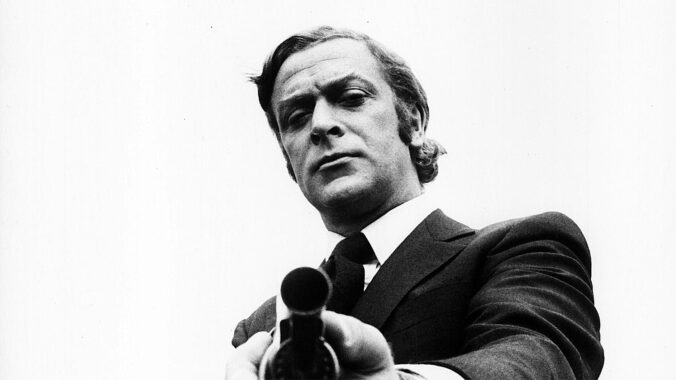
Between 1965 and 1967, British cinema produced an unlikely espionage trilogy centered on an unglamorous, bespectacled intelligence officer named Harry Palmer. Adapted from Len Deighton’s novels and starring a then-young Michael Caine, these films (The Ipcress File, Funeral in Berlin, and Billion Dollar Brain) were conceived as a realistic alternative to the wildly successful James Bond franchise. Yet within just three years, the series evolved from sharp anti-Bond realism to stylistic excess, reflecting both the creative volatility of 1960s British cinema and the limits of translating Deighton’s dry, ironic prose into spectacle.

Len Deighton’s 1962 novel The Ipcress File was a sardonic, semi-bureaucratic take on the spy genre, closer in tone to John le Carré’s The Spy Who Came in from the Cold than to Ian Fleming’s glamorous world of tuxedos and martinis. Its narrator, a nameless intelligence officer reporting through official documents and memos, is cynical, wry, and deeply aware of the absurdities of Cold War espionage.

When the story reached the screen, with The Ipcress File (Sidney J. Furie, 1965), the transformation was substantial. The film, produced by Harry Saltzman (who was also one of the producers behind the Bond series), necessarily reimagined the anonymous protagonist as a third-person character: Harry Palmer. The name, chosen for its ordinariness, suited the film’s anti-heroic tone. Unlike Bond, Palmer is underpaid, under-appreciated, and perpetually irritated by paperwork. He cooks gourmet meals in his small London flat, wears thick-rimmed glasses, and navigates an intelligence service riddled with office politics and procedural tedium.

Caine’s performance as Palmer cemented his early stardom. He embodied a new kind of British masculinity (working-class, witty, confident) perfectly suited to the mid-60s mod aesthetic. His Palmer was as stylish as he was cynical, but never suave in the Bond sense. His sharp suits and clipped humor projected competence without glamour. He was, in short, the spy as civil servant.

Though conceived as a counter-Bond project, The Ipcress File shared significant DNA with the 007 franchise. Saltzman’s involvement brought the production team of Ken Adam (production design) and John Barry (score), both Bond veterans. Yet director Sidney J. Furie went in the opposite visual direction: claustrophobic compositions, oblique camera angles, and a palette of grey offices and shadowy corridors. Instead of Monte Carlo casinos, we get fluorescent lights and filing cabinets. The effect was startlingly modern, even subversive, a film that made the world of espionage look not exciting but exhausting.

Critics quickly noted that The Ipcress File‘s world resembled le Carré’s bureaucratic labyrinths more than Fleming’s fantasies. The film’s story of kidnapped scientists, brainwashing, and double agents is told through meetings, memos, and missed lunch breaks. Even the climax, an experimental brainwashing sequence that fractures Palmer’s sense of reality, feels psychologically invasive rather than heroic. Deighton’s grim wit survived the translation: in Palmer’s world, the greatest danger isn’t the enemy, but the incompetence of your own superiors.

A year later came Funeral in Berlin (Guy Hamilton, 1966), widely regarded as the best of the series. The tone is more controlled, the world more vivid, and the moral ambiguities more pronounced. This time, Palmer is sent to Berlin to arrange the defection of a Soviet colonel, and, of course, nothing goes according to plan.

Curiously, the filmmakers skipped Deighton’s second novel, Horse Under Water, set mainly in Portugal, moving directly to his third, Funeral in Berlin. The official reason was logistical: the story’s underwater sequences were expensive to film. But in retrospect, the decision made artistic sense. Berlin, divided by the Wall, was a perfect stage for Cold War intrigue. The city’s atmosphere of constant surveillance and simmering paranoia provided precisely the kind of authenticity that the Bond series avoided.

A significant asset to the film was Oskar Homolka as Colonel Stok, the weary, sardonic KGB officer who seems as trapped by bureaucracy as Palmer himself. Homolka’s performance gives the film its heart, a sense that espionage, for all its cynicism, still involves ordinary human beings caught between absurd systems. The scenes at Checkpoint Charlie and along the Wall exude a documentary realism that anchors the plot’s twists in genuine geopolitical tension.

Ironically, Funeral in Berlin was directed by Guy Hamilton, who had helmed Goldfinger (1964) and would go on to direct three more Bond films (Diamonds Are Forever, Live and Let Die, The Man with the Golden Gun). Yet Hamilton’s approach here is far more restrained. Gone are the gadgets and explosions. In their place, shadows, dossiers, and double-crosses. The result is a taut, sophisticated spy film, perhaps the most authentic cinematic embodiment of Deighton’s world.

Where The Ipcress File was innovative, Funeral in Berlin was masterful. Precise, tense, and steeped in the melancholy of divided Europe.

Then came Billion Dollar Brain (Ken Russell, 1967) and the spell broke. It’s the film that effectively destroyed the franchise. Where the previous entries were grounded, Billion Dollar Brain veered into farce. The opening credits sequence mimicked Bond’s stylized montages, complete with silhouettes and swirling graphics, an ironic move for a series originally designed as the anti-Bond. Palmer, once the sardonic clerk-spy, now found himself in a world of computer-controlled espionage, private armies, and megalomaniacal generals. The novel’s already complex plot about a right-wing Texas tycoon and an anti-Soviet conspiracy was rendered on screen as convoluted, incoherent, and often unintentionally comic.

Ken Russell, later famous for his flamboyant, operatic style (Women in Love, The Music Lovers,The Devils), was an ill-matched choice for this material. His taste for surrealism and exaggeration clashed with Deighton’s dry wit and realism. What had been a series about bureaucratic absurdity became a carnival of absurd set pieces, exploding ice floes, cartoonish villains, and a plot that collapsed under its own eccentricity.

Adding to the film’s oddities was an early Donald Sutherland cameo (blink and you’ll miss it), one of many pointless flourishes in a movie that seemed determined to squander its tone. The cold, ironic edge of The Ipcress File had dissolved into psychedelic nonsense. The climax, involving a private army storming across a frozen sea, plays like self-parody. By the end, even Caine’s Palmer seems bewildered, as if the actor himself realized the character’s credibility had melted away.

Audiences agreed. Billion Dollar Brain underperformed, and no further theatrical films followed. Palmer would reappear decades later in low-budget television movies, but the cultural moment had passed. The trilogy had begun as the thinking man’s answer to Bond and ended as a confused imitation of him.

Taken together, the three films trace an unintended arc, not only of a character but of a cinematic era. The Ipcress File captured the post-Suez, post-imperial malaise of Britain: espionage as office work, heroism as endurance. Funeral in Berlin perfected the formula, locating human tragedy amid ideological walls. Billion Dollar Brain succumbed to the late-sixties’ obsession with style over substance, collapsing under its own excess.

Harry Palmer began as the antithesis of James Bond, ordinary, sardonic, bespectacled, and ended, fittingly, as a relic of a world that no longer knew what to do with ordinary spies. The bureaucrat had outlived his moment, but for a brief, brilliant time, he made espionage feel real.

Four Mutinies on the Bounty

Few sea stories have captured the public imagination like the Mutiny on the Bounty. In April 1789, a group of sailors on HMS Bounty, led by the young master’s mate Fletcher Christian, seized the ship from the irascible Lieutenant William Bligh and cast him and his loyalists adrift. The mutineers would scatter across the Pacific, hiding on Tahiti or disappearing into the isolation of Pitcairn Island, while Bligh undertook one of the most astonishing open-boat voyages in maritime history. Because the surviving accounts sharply contradict one another, the tale was destined to become a battleground of interpretation: a perfect canvas for novelists and filmmakers to project questions of leadership, justice, rebellion, and mythmaking.

Charles Nordhoff and James Norman Hall’s 1932 novel Mutiny on the Bounty (part one of their Bounty Trilogy) is the definitive popular version of the story. Written in the style of 19th-century nautical fiction, it features a fictional narrator (Roger Byam), partly inspired by the real midshipman Peter Heywood. The authors weave together Bligh’s official logs, court-martial transcripts, and the memoirs of Heywood and James Morrison, shaping them into a straightforward moral narrative: Bligh as a tyrant whose cruelty pushes decent men to revolt, and Christian as a tragic, reluctant rebel crushed by the consequences of his actions.

The novel is dramatically compelling, richly detailed, and hugely influential. But it is also selective. Nordhoff and Hall harmonize conflicting testimonies to create a coherent story, smoothing away ambiguity. Their Bligh is harsher than many historians now judge him to have been, and their Christian is more romantic, more tortured, and more heroic than the fragmentary historical record supports. As narrative art, the novel is excellent. As history, it is debatable.

Frank Lloyd’s 1935 movie adaptation, Mutiny on the Bounty, starring Clark Gable as Christian and Charles Laughton as Bligh, cemented the legend for generations. It takes Nordhoff and Hall’s interpretation and intensifies everything for cinematic effect. Bligh becomes a nearly cartoonish sadist, sneering, petty, and addicted to cruelty. Christian emerges as a dashing moral hero, a man driven to mutiny by compassion. The Tahitian interlude becomes a romantic Eden corrupted by Bligh’s tyranny.

It is gorgeously shot in black and white, dramatically rousing, and acted with enormous flair, but it veers the farthest from history. Bligh’s strictness, while real, is exaggerated into villainy. Christian’s internal struggle is rewritten into clean melodrama. Still, for classic Hollywood storytelling, it is a hit. The film’s cultural impact was such that, for decades, its version of events was the only version.

Lewis Milestone’s 1962 Mutiny on the Bounty remake, with Marlon Brando as Christian and Trevor Howard as Bligh, arrives with big CinemaScope prestige but a strangely diffused point of view. Brando’s Christian is whimsical, ironic, and detached, a proto-counterculture figure who seems less tortured than bored. Howard’s Bligh is more controlled than Laughton’s but still rigidly villainous, echoing the novel’s version more than historical analysis. The film leans heavily into Tahiti as an exotic paradise, extending the love story but weakening narrative momentum.

The result is handsome, intermittently fascinating, but tonally inconsistent. Brando’s eccentric performance, though engaging, sometimes pulls the story toward satire, while the script seeks to retain classic moral seriousness. It neither fully humanizes Bligh nor fully dramatizes the mutiny as a tragic inevitability. Historically, it remains in the same mythic register as the 1935 film, but without its sharp dramatic spine.

Roger Donaldson’s 1984 film, The Bounty, starring Mel Gibson as Christian and Anthony Hopkins as Bligh, marks the first major adaptation to challenge the established myth. Drawing on more recent scholarship and using Bligh’s own writings as inspiration, it reframes the mutiny as a clash of flawed personalities rather than a simple tale of tyranny.

Hopkins’s Bligh is not sadistic but disciplined, overbearing, ambitious, and socially insecure. He is capable of kindness but blind to how his rigidity alienates his crew. Gibson’s Christian is not a born revolutionary but an inexperienced young officer emotionally overwhelmed by conflict and guilt. The film foregrounds Bligh’s astonishing 3,600-mile open-boat journey with rare accuracy. Tahiti is portrayed not as Eden but as a complex society whose allure and cultural differences unsettle the crew’s discipline.

This version incorporates contradictions rather than ironing them out. It acknowledges that the mutineers gave wildly inconsistent explanations, that Bligh’s harshness was real but within the norms of the era, and that Christian’s motives remain opaque. As storytelling, it is more muted, less swashbuckling, but also far more psychologically credible. And, unfortunately, not as interesting.

The truth of the Mutiny on the Bounty lies somewhere between heroism and dysfunction, and between Bligh’s defensiveness and the mutineers’ self-justification. Modern historians tend to see the mutiny as the product of cumulative interpersonal friction, culture shock in Tahiti, Bligh’s abrasive management, and Christian’s psychological instability. This messy human drama resists clean moral binaries.

The saga of the Bounty endures precisely because it resists definitive interpretation. The 1932 novel shaped the mythic template: Bligh the tyrant, Christian the reluctant rebel. The 1935 film amplified this into an iconic melodrama. The 1962 film embellished it with Hollywood exoticism and Brando’s idiosyncrasies. The 1984 film challenged it with a more balanced, psychologically layered approach. Each version reflects the concerns of its era: authoritarian villains in the 1930s, romantic individualism in the 1960s, and distrust of simple moral narratives in the 1980s.

Manchurian Candidates

Richard Condon’s The Manchurian Candidate is one of the defining Cold War thrillers of American literature. Published in 1959, it captures a world of paranoia, espionage, and ideological extremism at the height of the Red Scare. The novel follows Sergeant Raymond Shaw, a decorated Korean War veteran who, unbeknownst to himself, has been brainwashed by Communist agents into becoming an unwitting assassin. The real tragedy (and brilliance) of Condon’s construction is that Shaw’s mother, Eleanor Iselin, is the true villain: an ambitious, ruthless woman who manipulates both her son and her husband, Senator John Iselin, a demagogic McCarthy caricature, to seize political power.

Condon’s prose is cynical and darkly humorous. His world is one where politics is theatre, patriotism a mask for greed, and psychological control the ultimate weapon. The book’s central concept, the creation of a sleeper assassin through brainwashing, tapped directly into Cold War fears about Communist mind control and the fragility of individual will. It is both satire and nightmare, a vision of America’s self-destruction through hysteria and manipulation. The novel’s mix of political cynicism, psychological horror, and sexual tension (especially the quasi-incestuous relationship between Shaw and his mother) gives it a lingering unease that transcends its pulp roots.

John Frankenheimer’s The Manchurian Candidate (1962), starring Frank Sinatra, Laurence Harvey, and Angela Lansbury, was the first screen adaptation of the novel, and is remarkably faithful in tone to Condon’s original, even as it alters several key details. The setting remains within the Cold War, with the Communist conspiracy intact, but Frankenheimer reshapes the story for cinematic clarity and impact.

The film drops much of Condon’s verbose narration and focuses on stark, paranoid visuals and taut performances. Laurence Harvey’s Raymond Shaw is a more tragic, wounded figure than in the book, while Angela Lansbury’s portrayal of Eleanor Iselin is chilling, a manipulative political matriarch who weaponizes maternal affection for control. Her relationship with Shaw remains disturbing, though Frankenheimer’s film makes it more symbolic than explicit.

The satire of McCarthyism is sharpened: Senator Iselin becomes an obvious buffoon, his hysteria exploited by his wife for her own Machiavellian ambitions. The eerie brainwashing sequences, shot with dreamlike cross-cutting between a genteel ladies’ tea and a Communist demonstration, remain some of the most haunting scenes in American cinema in the sixties. Frankenheimer’s film ends on a tragic note, with Shaw breaking free of his conditioning just long enough to stop the assassination but sacrificing himself in the process, a finale that feels more moral and cathartic than Condon’s more cynical ending. The movie is both a product and a critique of its time, when Americans feared both Communist infiltration and their own government’s capacity for manipulation.

Jonathan Demme’s 2004 remake reimagines The Manchurian Candidate for a post–Cold War, post–Gulf War world of corporate power and digital control. The Communist brainwashers are gone. In their place stands Manchurian Global, a multinational conglomerate symbolizing the new face of power: corporate, financial, and global rather than ideological.

Here, the soldiers were captured during the Gulf War, and the brainwashing is achieved not through crude psychological techniques but through biotechnology and microchip implants. The shift mirrors the new century’s fears: not of Communist ideology, but of corporate totalitarianism, surveillance, and technological control. Raymond Shaw (Liev Schreiber) is now a congressman and war hero groomed for the vice presidency, while Denzel Washington’s character (renamed Major Ben Marco) becomes the paranoid veteran uncovering the truth. Meryl Streep’s Eleanor Shaw is modeled less on McCarthy-era figures than on modern political dynasties, her mix of maternal warmth and icy calculation evokes Hillary Clinton as filtered through Lady Macbeth.

The 2004 version trades Cold War dread for corporate conspiracy and biotechnology anxiety. It is slickly directed and well-acted, but its atmosphere of dread feels more diffuse. The brainwashing, once shocking, now feels metaphorical: a commentary on media control, marketing, and mass manipulation. Yet it lacks the biting satire of the novel or the surreal power of Frankenheimer’s film. Its conclusion, in which the brainwashing plot is uncovered by the authorities but kept secret from the public, attempts some sort of closure but can feel naive at certain points, and never reaches the tragic resonance of 1962’s climax.

As a story, the novel remains the most conceptually rich and biting. It captures the spirit of Cold War cynicism with vicious humor and invention. But Frankenheimer’s 1962 adaptation is the most engaging and entertaining, a perfect marriage of paranoia, late noir aesthetics, and tragedy. Its sharp political satire and unforgettable performances give it enduring power.

Favorite Non Giant Movie Monsters

  • Count Graf Orlok (Nosferatu, 1922)
  • Frankenstein’s creature (Frankenstein, 1931)
  • Gillman (Creature from the Black Lagoon, 1954)
  • Alien (Alien, 1979)
  • The Thing (The Thing, 1982)
  • Brundlefly (The Fly, 1986)
  • Pinhead (Hellraiser, 1987)
  • Pale Man (Pan’s Labyrinth, 2007)

In chronological order.

Three Times Tron

When Tron premiered in 1982, it was unlike anything audiences had ever seen. Made by Walt Disney Productions and directed by Steven Lisberger, the film combined live-action footage with computer-generated imagery in ways that were not just new but revolutionary. Yet for all its visual daring, Tron remains a strange hybrid: a movie that wedded an almost childishly simple story to some of the most sophisticated visual technology of its time.

At its core, Tron tells a fairly naive story. Kevin Flynn (Jeff Bridges), a brilliant but wronged programmer, is digitized and transported inside a computer, where he must battle malevolent programs to reclaim evidence of his stolen work. Inside the digital world, programs appear as humanoid avatars of their users, a literal personification of software that feels endearingly clumsy today. The notion that “programs” could have personalities, faiths, and gladiatorial games seems laughably anthropomorphic, a product of a pre-internet imagination still struggling to visualize the invisible.

The plot unfolds as a straightforward hero’s journey filtered through a video-game lens: Flynn becomes a digital messiah, liberating enslaved programs from the tyrannical Master Control Program. There’s little emotional depth or philosophical nuance. The dialogue often lapses into techno-babble or spiritual platitudes about “the users”. Yet, this simplicity arguably works in the film’s favor, allowing the visuals and the conceptual world to take precedence, and its mythic overtones give a primitive sense of grandeur to what might otherwise be just a chase movie in neon armor.

Where Tron truly excels is in its audacious use of technology. Disney’s animators, effects artists, and computer scientists achieved a technical marvel long before digital filmmaking became standard practice. Though only about fifteen to twenty minutes of the film are genuinely computer-generated, the entire aesthetic (fluorescent lines, geometric light patterns, and glowing grids) feels entirely digital. The look was achieved through a combination of backlit animation, optical compositing, and early CGI, giving Tron a coherence and abstraction that was utterly unique at the time.

It was the first major studio film to make computer imagery a central design principle rather than a mere novelty. The light cycles, data tanks, and disc battles remain iconic, not because they are realistic, but because they are pure visual ideas, machines imagined through mathematics and art rather than mechanical engineering. In this way, Tron anticipated the future of digital aesthetics: clean, glowing, and immaterial.

Tron occupies a peculiar space in film history. It is both a corporate experiment by Disney (eager to regain relevance with younger, tech-savvy audiences) and an avant-garde visual project closer to experimental cinema than traditional science fiction. Its neon landscapes and geometric compositions recall the work of artists like Oskar Fischinger or early video art installations. The narrative might be clumsy, but the imagery evokes something visionary: a dream of humanity’s entry into the digital frontier.

When Tron: Legacy was released nearly three decades after Steven Lisberger’s 1982 original, it promised both a revival and a transcendence, a digital myth brought into the 21st century. Directed by Joseph Kosinski and scored by Daft Punk, the film sought to update Tron‘s primitive neon vision into a sleek cyber-symphony of light, geometry, and electronic pulse. What emerged was a visually dazzling but philosophically muddled sequel, oscillating between reverent mythmaking and narrative incoherence.

Even Tron: Legacy‘s fiercest critics concede its audiovisual power. Kosinski and cinematographer Claudio Miranda created one of the most distinctive digital worlds in modern cinema, a realm of sterile beauty, reflective surfaces, and minimalist architecture. Every frame seems designed like a concept art painting: light cycles streaking through black glass, towers pulsing with faint luminescence, Daft Punk’s robotic beats synchronizing with the visual rhythm.

The film’s aesthetic coherence is extraordinary, a total design vision that feels more like an art installation than a story. In this sense, Legacy continues what the original began, not a plausible depiction of computer space, but a dreamlike abstraction of it. It is less about technology than style as metaphysics, a meditation on control, perfection, and isolation rendered through geometry and sound.

Narratively, Tron: Legacy functions as a mythic sequel rather than a direct continuation. Sam Flynn (Garrett Hedlund), the disaffected son of Kevin Flynn (Jeff Bridges), enters the digital world (the Grid) in search of his long-lost father. Inside, he finds a totalitarian system ruled by Clu, a younger digital replica of Flynn who has turned his creator’s ideal of “perfection” into fascist tyranny. The story echoes countless archetypes: the prodigal son, the fallen god, the rebel angel.

And yet, beneath its mythic ambitions lies a host of unanswered questions. How can a digitized human bleed? Why does Flynn’s avatar age? How can a purely digital being like Quorra become flesh in the real world? Why does Tron, after years as the villainous Rinzler, suddenly revert to heroism without explanation? None of these have consistent answers, because Tron: Legacy is not really science fiction. It is digital mysticism.

Its rules are spiritual, not logical. The Grid is portrayed less as software than as an alternate dimension shaped by human thought. Flynn’s aging represents psychological weariness. Quorra’s materialization symbolizes enlightenment crossing into reality. Tron’s “conversion” is the awakening of a suppressed conscience. The film borrows the form of science fiction but uses it as a language for myth, sacrifice, and transcendence.

It is impossible to watch Tron: Legacy without sensing the influence of The Matrix trilogy. Both depict digital realms indistinguishable from reality, overseen by artificial overlords and populated by programs with human personalities. The parallels are striking. The Grid vs. The Matrix: self-contained digital worlds reflecting humanity’s flaws and aspirations. Clu vs. Agent Smith: the creation that turns on its creator, obsessed with perfection and control. Castor vs. The Merovingian: decadent exiles who understand the system better than its heroes. Flynn vs. Morpheus: aging guides who see beyond binary logic. Sam vs. Neo: reluctant heirs to a digital destiny.

However, while The Matrix builds an intricate philosophical architecture around its virtual world, merging cyberpunk with Gnosticism, existentialism, and Buddhist allegory, Tron: Legacy gestures toward profundity but rarely engages it. It borrows the aesthetic grammar of The Matrix (slow-motion combat, slick monochrome interiors, leather-clad deities) but not its intellectual rigor. The result is a film that feels profound while saying little that withstands scrutiny.

The film’s emotional core, the relationship between father and son, offers genuine resonance. Jeff Bridges gives a weary, Zen-like performance as the elder Flynn, a digital ascetic torn between guilt and enlightenment. His dual role as both creator and destroyer (Flynn and Clu) provides the story’s most potent theme: the hubris of trying to perfect the imperfect. In that sense, Legacy flirts with theological depth, with a creator imprisoned by his own creation, echoing Milton’s Paradise Lost more than any programming manual.

Yet the film is also a $170 million corporate product designed to sell both nostalgia and a new generation of merchandise. Its pacing alternates between meditative stillness and promotional spectacle. The human story is often drowned out by digital bombast. For a film about the boundary between real and virtual, it sometimes feels emotionally simulated and curiously cold.

Tron: Ares (Joachim Rønning, 2025) is the third live-action film in the franchise, following Tron (1982) and Tron: Legacy (2010). It takes place about fifteen years after Legacy, and features the rivalry between two corporations, ENCOM and Dillinger Systems, as they fight to bring digital constructs into the real world.

The film does attempt to preserve the franchise’s core concept: users, programs, and digital worlds bleeding into the physical world. But it also shifts the focus from the earlier theme (user/program relationships, deification of the user) into more recently familiar “AI in our world” tropes (corporations, digital beings entering meatspace). It is a semi-sequel (or a soft-reboot) rather than a seamless continuation.

One of the film’s stronger aspects is how it visually nods back to the original Tron aesthetics: neon lines, stark light/dark contrast, reflective surfaces, and minimalist digital architecture. While the original (1982) was limited by its time, its aesthetic language was iconic. Tron: Ares brings that back, especially when programs or entities from the Grid enter the physical world (or vice versa), showing light trails, digitized forms, and the sense of “digital becoming material”.

The plot, however, is weak and full of “unexplained science” moments, particularly regarding the so-called permanence code. This algorithm allows information transferred from the digital world to remain in the real world as matter, from an orange tree to a war machine to a “digital sentient being”. But how would that work? How is that mass created? Where do the atoms come from? Is energy converted into matter, or is there some pre-existing “matter bank”? The film treats this as a technological given rather than even trying to explain it. 

The original Tron remains a landmark for its time: daring, low-budget yet visionary, conceptually brave in its depiction of the digital world. Tron: Ares doesn’t have the same surprise factor (how could it?) and the large budget gloss sometimes dilutes the conceptual edge. The first Tron could be rough and experimental, while this third film is slick and commercial. But it’s still the original that holds cultural weight.

Favorite Movies About Apes

  • King Kong (Merian C. Cooper, 1933)
  • Planet of the Apes (Franklin J. Schaffner, 1968)
  • Gorillas in the Mist (Michael Apted, 1988)
  • Congo (Frank Marshall, 1995)

In chronological order.
Only one movie per franchise.

« Older posts

© 2026 Zander Dulac

Theme by Anders NorenUp ↑