Page 8 of 9

Traveling with Sinbad and Ray Harryhausen

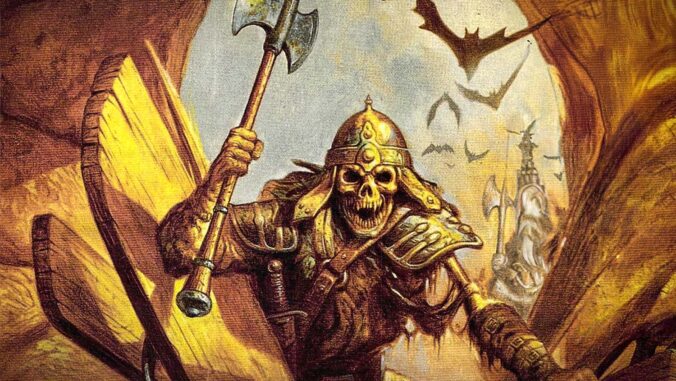
The stop animation of Ray Harryhausen has always fascinated me. That sword fight against skeletons in Jason and the Argonauts (Don Chaffey, 1963) will forever have a place in my heart. So, when I recently had the chance to watch three of his films, I didn’t hesitate. None of these are great movies, but even the worst of them has some good moments.

The 7th Voyage of Sinbad (Nathan Juran, 1958) is a classic in the realm of fantasy cinema. At that point, it was a significant leap forward in visual effects, establishing itself as a milestone for stop-motion animation and popularizing the genre of mythological fantasy adventures.

The true standout of The 7th Voyage of Sinbad is Ray Harryhausen’s stop-motion animation, which brought to life some of the most iconic creatures in cinematic history. From the menacing cyclops to the serpentine dragon and the sword-fighting skeleton, Harryhausen’s work elevated the film far beyond its contemporaries. His unique Dynamation process, which combined live-action and stop-motion animation, allowed fantastical creatures to interact with the human characters in a way that felt groundbreaking at the time. The battle between Sinbad and the skeleton is particularly memorable, later influencing fantasy films like Jason and the Argonauts and even contemporary blockbusters. While the monsters may look dated by today’s standards of computer-generated imagery, they still hold a certain charm and sense of wonder. The tactile, handcrafted nature of Harryhausen’s animation gives the creatures a weight and physical presence that CGI often lacks. In fact, modern audiences may appreciate the artistry and patience required to bring these creatures to life frame by frame.

The film follows the basic structure of a classic adventure tale, with Sinbad and his crew embarking on a perilous journey to the island of Colossa in order to find a way to reverse the curse placed on Princess Parisa, who has been shrunk by the evil sorcerer Sokurah. The plot is simple, but it effectively serves as a vehicle for the fantastical encounters and adventures that unfold. This Sinbad (Kerwin Mathews), however, strays significantly from the original character from the Arabian Nights tales. Rather than focusing on Sinbad as a seasoned sailor, the film presents him more as a heroic adventurer, imbuing him with qualities of both a swashbuckling action hero and a chivalrous knight. This transformation aligns with mid-20th-century Hollywood’s tendency to simplify and romanticize complex source material for mainstream audiences, packaging it as family-friendly entertainment. The result is, unfortunately, largely one-dimensional, serving as the archetypal hero figure without much complexity.

The mythological elements also don’t conform with the original Middle Eastern tales and instead offer a blend with Greek mythology, perhaps in an attempt to have a broader, more universal appeal. However, this fusion sometimes lacks cohesion, feeling more like a showcase of Harryhausen’s creatures than a unified narrative. At some points, we wonder whether this is Sinbad or Ulysses.

The villain Sokurah (Torin Thatcher) ends up being a more interesting character, despite the over-the-top performance. Driven by ambition and greed, he is a classic antagonist in the tradition of mythological evil-doers, though he too remains somewhat shallow. The princess Parisa (Kathryn Grant) is given little to do besides being the damsel in distress. Her character, like many female roles in adventure films of the era, is underdeveloped and primarily serves as a plot device rather than an active participant in the story.

The rousing musical score, by no other than Bernard Herrmann, with its use of exotic instruments and bold, sweeping melodies, enhances the film’s mythical atmosphere and adds to the excitement of Sinbad’s various encounters. Yes, that’s the man who created the soundtrack for Orson Welles’s Citizen Kane and Alfred Hitchcock’s Vertigo, North by Northwest, Psycho, among many others.

It’s also worth noting that The 7th Voyage of Sinbad reflects the cultural attitudes of the 1950s, particularly in its portrayal of Middle Eastern characters and settings. Like many films of its era, it relies on Westernized interpretations of non-Western cultures, resulting in some problematic depictions and a lack of authenticity. Sinbad, for instance, is portrayed by a white actor, and the film’s version of the Middle East is filtered through an exotic, orientalist lens that flattens the culture into a fantasy world for Western audiences.

The Golden Voyage of Sinbad (Gordon Hessler, 1973), tries to repeat the success of The 7th Voyage of Sinbad using the same blend of mythological ambience, swashbuckling action, and groundbreaking stop-motion animation. But, for an adventure movie, it has a very slow pace. Some sequences, particularly in the middle portion of the film, feel sedate and lack the urgency needed to maintain momentum. The episodic structure of Sinbad’s journey can also make the film feel somewhat disjointed at times, with the plot sometimes pausing for the next creature encounter rather than unfolding organically.

This Sinbad (John Phillip Law) is a bit more charismatic than his predecessor, but once again doesn’t have the same screen presence as the villain Koura (Tom Baker, who would later achieve fame as the Fourth Doctor in Doctor Who), an evil magician (it’s always an evil magician, isn’t it?). Baker imbues Koura with a menacing presence and a deeper motivation than many fantasy villains of the time. His desperation to regain his youth and power adds a layer of pathos to his character, making him more than just a stock villain. Koura is cunning and relentless, using dark magic at great personal cost, which slowly drains his life force. This adds an intriguing dynamic between the hero and villain, as Koura becomes increasingly desperate and physically weakened as the story progresses, making him a tragic antagonist. In contrast, Sinbad’s love interest, Margiana (Caroline Munro) seems to be there just to display her cleavage, the only thing preventing her from disappearing in the background.

There are also some anachronisms. The original Sinbad from One Thousand and One Nights is supposed to have lived between the 8th and the 9th centuries. However, here he decides to travel to Lemuria, a lost continent hypothesized only in the 19th century by zoologist Philip Sclater. But this is a fantasy movie with magic and mythological creatures, so it may not matter.

Once again, the true star of The Golden Voyage of Sinbad is Ray Harryhausen’s stop-motion work. Among his extraordinary creatures, this time we have a centaur and a griffin in a deadly battle, and the fascinating six-armed goddess Kali, a statue brought to life. As always, Harryhausen’s work retains a sense of wonder even in a modern context, because the craftsmanship behind the animation feels tangible. The creatures possess a surreal quality that sets them apart from today’s computer-generated monsters, making the action sequences feel dreamlike and otherworldly.

Sinbad and the Eye of the Tiger (Sam Wanamaker, 1977), is the weakest in the Sinbad trilogy brought to life by producer Charles H. Schneer by Ray Harryhausen. It follows the same idea of having a Sinbad detached from the original Arabian Nights tales and mixed with elements from Greek mythology. At this point, however, there’s a sense of formulaic repetition.

This Sinbad (Patrick Wayne, the son of legendary actor John Wayne), is quite bland. He lacks the charisma and gravitas needed to make Sinbad a compelling figure, leaving the character as little more than a stoic action hero. The great villain this time is reduced to a yelling caricature, Zenobia (Margaret Whiting, the British actress, not the American country singer). Her transformation into various animals and her pursuit of Sinbad create some tension, but the character lacks the depth and tragic elements of Koura from The Golden Voyage of Sinbad. And all that yelling leaves you wondering if that is supposed to be funny or is just the result of overacting and poor directing skills. There’s also Melanthius (Patrick Troughton, known for his role as the Second Doctor in Doctor Who), introduced as a wise man and eccentric scientist, but his wisdom is highly doubtful. He manages to interrogate someone and give her more information than he is able to extract. Then, in the same scene, he acquires a potion that enlarges creatures and decides to test it on a poisonous wasp, creating a lethal monster that endangers everyone on the ship. Lastly, as expected, we have Princess Farah (Jane Seymour, who would later win two Golden Globes and one Emmy) largely relegated to a passive role, as is the fate of all of Sinbad’s love interests in this series.

Once more, Ray Harryhausen’s stop-motion creations are the most significant highlight of the film. There’s a mechanical minotaur (creatively named Minoton), a massive saber-toothed tiger, a giant troglodyte (which reminds us of the cyclops from the first movie), and a menacing baboon that houses the spirit of a cursed prince. Unfortunately, though, while impressive in its own right, the stop-motion animation feels less fluid and polished than in previous films, which may reflect both the demands of the increasing complexity of the creatures and the potential limitations of the budget or production schedule.

The quest structure (traveling from one mystical location to the next while overcoming a series of obstacles) follows the formula established in the previous films. However, it feels more mechanical here, with little sense of novelty or innovation. There are some anachronisms here too. Again, the original Sinbad from One Thousand and One Nights is supposed to have lived between the 8th and the 9th centuries. But Melanthius refers to Archimedes of Syracuse, who lived in the 3rd century BCE, as if they were contemporaries. Anyone cares about these inconsistencies?

If you have to choose just one of these movies, get the first one. The 7th Voyage of Sinbad remains a landmark film in the fantasy genre, particularly for its groundbreaking use of stop-motion animation. While its narrative and characters are somewhat shallow, the film succeeds in creating a world of wonder and adventure that continues to captivate audiences. Its influence on the genre is undeniable, paving the way for later films that embraced the fantastical and the mythological.

Favorite 1970s Live Action TV Series

In chronological order.

  • Columbo (1971-1977)
  • M*A*S*H (1972-1983)
  • Kojak (1973–1978)
  • The Six Million Dollar Man (1973-1978)
  • Planet of the Apes (1974)
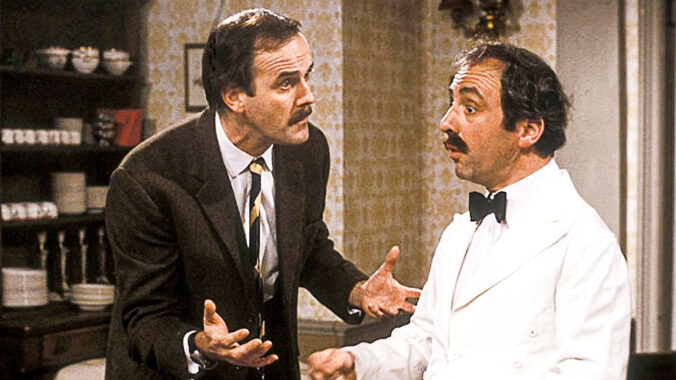
  • Fawlty Towers (1975 & 1979)
  • The Incredible Hulk (1977-1982)
  • Battlestar Galactica (1978–1979)

Playing Old CRPGs Again: The Bard’s Tale Trilogy

Ah, how many hours I spent roaming the streets of Skara Brae with a party of underdeveloped and underequipped adventurers, just trying to get enough experience to be able to explore the catacombs under the city. The Bard’s Tale was the first computer game where I got the sense of playing an RPG, instead of just fighting against weak design and poor mechanics.

For this rerun, I got the remastered version launched by inXile Entertainment in 2018, The Bard’s Tale Remastered Trilogy, which is fantastic. It revamps the graphics without losing the flavor of the original, unifies the mechanics of the three games, and adds some precious features like automap or being able to save the game anywhere.

The first time I played this game, I only finished the first story, Tales of the Unknown: The Bard’s Tale (1985), and never had a chance to play The Bard’s Tale II: The Destiny Knight (1986) or The Bard’s Tale III: Thief of Fate (1988). My plan now was to go through all the three games with the same party of adventurers. My team was formed by Trane (male human paladin), Ella (female human paladin), Basie (male dwarf warrior, who was seriously underperforming and was replaced), Duke (male human paladin, who replaced Basie), Chet (male human bard), Monk (male elf conjurer/sorcerer/wizard/magician), Mingus (male elf conjurer/sorcerer/wizard/magician), and Billie (female elf magician/sorcerer/wizard/conjurer). The names are inspired by jazz musicians.

It is a hard game, generating a mix of frustration (from things like rooms that extinguish any light source and turn you around, or being frequently poisoned by spiders in the dungeon without having any cure other than running back to the city looking for a temple) and satisfaction (sometimes just surviving a tough fight in the dungeon and being able to return to the surface before everyone died of spider poisoning was celebrated like a big victory). Even with auto mapping (added in the remastered version), The Bard’s Tale does a very good job of confusing the player into getting lost. Some diabolical locations mix zones of darkness, spinners, teleporters to identical rooms, and other niceties. But, with much patience and much grinding, I managed to complete the first game.

I fought the last battle in Tales of the Unknown: The Bard’s Tale, against Mangar and his vampire lords and greater demons (which he continues to summon), at level 22 for Trane, Ella, and Chet, 20 for Duke (who joined the party later), and level 7/7/7/5 for Monk, Mingus, and Billie. After the experience gained in the last combat, Trane, Ella, and Chet jumped to level 26, Duke to 23, and Monk, Mingus, and Billie to 7/7/7/7 plus a stack of extra experience. They also had a bit over one million gold in the bank and some nice trinkets to be transferred to the next game.

The Bard’s Tale II: The Destiny Knight is even more brutal than the first Bard’s Tale, but if you import an experienced party from the previous game the beginning of the story is much more pleasant. The first dungeon we find in the starting city of Tangramayne hosts many of the tricks from the first game, plus a couple of new ones. As if the spinners, teleporters, and dark rooms weren’t annoying enough, there are two situations here where you can get stuck for a long time. There’s a chasm that cannot be traversed unless you have accepted a certain winged creature from a previous location into the party (and you are not given that information). If you are travelling with a full party of seven, it’s unlikely that you will replace one of your loyal adventurers with an unknown monster you found in a dungeon. But without the winged creature there is no way to progress. Then, after the chasm there is a door that will only open if your bard is playing a certain song. If you unwisely decided to have a party without a bard in a game called The Bard’s Tale, there is no way to pass through those doors. At least the rewards for this quest are amazing. Even with a veteran party like mine, the experience I got at the end was enough to jump three levels ahead.

The trickery gets much worse later in the game, but I think the worst case is found early at Fanskar’s Castle, where you have to choose one among three doors, and two of them will lead to rooms where the party is instakilled just by entering: “As you enter the room a fiery cavalcade assaults your mortal forms, destroying you instantly.” As if this wasn’t bad enough, you have to make your choice in the dark, without a compass, and the doors have spinners before them. That doesn’t only kill your characters, it also kills the fun.

And then there is the part that made me quit the game. It’s called Dargoth’s Tower, which can be accessed from the city of Philippi. After several levels full of spinners, anti-magic squares, darkness areas, and other traps, you finally get to the top level. Fighting Dargoth and his minions is not a problem. But to get the third piece of the MacGuffin you are looking for, the Destiny Wand, you have to go through a maze. It starts with a riddle that has an answer of eleven (!) words that have to be guessed from various vague hints found throughout the tower and then entered in a specific order. That done, you are teleported and given a warning about a timer (there is a beating heart sound in the background to indicate that time is running off). Then you have to go through a specific sequence of places fighting monsters and collecting the passwords they give. The whole area is full of spinners and it’s not possible to cast spells (so you have no compass). Halfway through this process, there is a corridor with a door on one side and a magic mouth on the other, seven squares apart. You need to collect six different sentences from the mouth, and to get each one requires you to exit the corridor and reenter. Between the door and the mouth there are two spinners and between the spinners a trap that drains hit points. To get in and out with one sentence, it takes a long time to deal with the spinners and some damage from the trap. To get all the sentences you have to go through that twelve times. Even if you manage to survive the damage from the trap, the timer runs out before you can complete the sequence of sentences and your party simply dies. It’s the most infuriating dungeon design I have ever encountered. This is not entertainment, it’s torture.

I was really looking forward to playing with the same party through all the three games. But after this annoying level design in the second game I lost the will to continue. You can only use the same party in the last game if you finish the previous one, so I just abandoned the whole thing. Very disappointing. On to the next game…

Favorite 1960s Live Action TV Series

In chronological order.

  • The Twilight Zone (1959–1964)
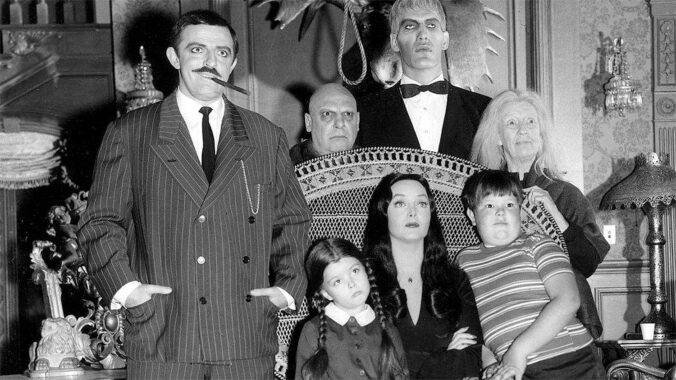
  • The Addams Family (1964-1966)
  • Bewitched (1964-1972)
  • The Munsters (1964-1966)
  • Voyage to the Bottom of the Sea (1964-1968)
  • I Dream of Jeannie (1965-1970)
  • Lost in Space (1965-1968)
  • Batman (1966-1968)
  • Mission: Impossible (1966-1973)
  • Star Trek (1966-1969)
  • The Time Tunnel (1966-1967)
  • Monty Python’s Flying Circus (1969-1974)

Six Terminators

How many Terminator movies can you watch in a single day? Well, if you are a geek like me and happens to be stranded at home feeling a bit sick, you can watch all of them. At the time of this writing, there are only six Terminator movies out there, so I was able to fit the whole 722 minutes (that’s a bit over twelve hours) into my totally not busy schedule for the day.

The Terminator (James Cameron, 1984) started everything. A near-unstoppable cyborg assassin (Arnold Schwarzenegger), is sent from a future dominated by machines, to kill Sarah Connor (Linda Hamilton), the mother of the future leader of the human resistance, while a guerrilla fighter (Michael Biehn) also travels back to protect her. We had seen time travel before, like for example in Time After Time (1979). We had seen computers declaring war on humanity, like in Colossus: The Forbin Project (1970). We had even seen determined killer androids, like in Westworld (1973). But all those elements combined into a cohesive story and presented in a gritty narrative made The Terminator an instant science fiction classic. The Terminator itself became an iconic figure, representing the cold, unfeeling nature of machines contrasted with the resilience and ingenuity of humans.

The Terminator does more than just tell a standalone story. It lays the groundwork for a complex mythology that would be expanded (and eventually ignored) in the subsequent films. The concept of Skynet, the self-aware AI that decides humanity is a threat, and the nuclear apocalypse known as Judgment Day, are pivotal in defining the thematic core of the series.

Like many time travel movies, it invites some questions regarding the logic of causes and consequences, and the possibility of paradoxes. If the Terminator succeeds in killing Sarah Connor, John Connor will not be born and will not become the leader of the resistence, and there will be no reason to send a Terminator back in time. Then, with no Terminator traveling to the past, who killed Sara Connor? Also, ironically, if Kyle Reese is not sent to stop the Terminator, he won’t father John Connor, which means it’s the Skynet mission to prevent John Connor’s existence what makes his existence possible.

Terminator 2: Judgment Day (James Cameron, 1991) picks up years after the events of the first film. A more advanced Terminator, the liquid-metal T-1000 (Robert Patrick), is sent back from the future by Skynet to kill John Connor (Edward Furlong), the future leader of the human resistance. He is supposed to be 10 years old, but he looks like a 14-year-old juvenile delinquent. To protect John, the resistance reprograms another Terminator, a T-800 (Arnold Schwarzenegger), and sends it back in time. The film explores Sarah Connor’s (Linda Hamilton) struggle to prevent Skynet’s creation and stop Judgment Day, the apocalyptic event in which Skynet becomes self-aware and triggers a nuclear holocaust.

The depiction of the characters one decade after the first movie is convincing. With the knowledge of what’s going to happen, Sarah Connor becomes a self-reliant paranoid survivalist. And her son, growing up from foster home to foster home, is a precocious proto-nihilist rebel. But what makes the sequel memorable is the return of the Terminator now as a heroic figure, this time sent back to protect John Connor.

In Terminator 2 we get a more detailed explanation of how Skynet was created. A company called Cyberdyne Systems reverse-engineered future technology found in the remnants of the dismantled Terminator from the first movie, and used it build Skynet. Sarah Connor is determined to prevent that by destroying the Terminator parts. No future technology, no Skynet, no Judgement Day. But if she succeeds in stopping that future from happening, who sent the Terminators in the first and second movies? And if she fails and Skynet is created, that’s a classic closed loop time travel paradox: Skynet exists because of the technology that only exists due to its own future existence, being at the same time the cause and the consequence.

The new model of Terminator is visually striking but also raises some questions. First, we know that the time travel machine only allows for live tissue to go through. Kyle Reese was human and the T-800 model was fully covered in live human tissue. But if the T-1000 model is all liquid metal, how was it able to travel? Second, while the T-800 has a power source (and even an alternative battery), the T-1000 doesn’t (it’s all liquid metal). Quite a lot of energy is spent running after the protagonists, changing shapes, or even taking a walk, but that mass of mimetic polyalloy is not receiving energy from anywhere. It just spends it, never acquires any. That’s never explained.

Terminator 3: Rise of the Machines (Jonathan Mostow, 2003) is much weaker than the previous two movies. Nick Stahl as a young adult John Connor is very unconvincing. He has a passive or reactive role, lacking decisiveness and leadership qualities. That’s not someone capable of organizing a weekend camping trip, much less of leading the human resistance against the machines. And we are missing Sarah Connor in this movie, because she apparently has died.

The new Terminator model, the T-X (Kristanna Loken), is too powerful to be credible. It can do everything the T-1000 could do, plus it can create machines with moving parts, sophisticated electronic devices, remote controls vehicles, and even has an internal mini-lab for DNA testing. Power source? T-800 says she’s driven by a plasma reactor. It looks more like magic. Claire Danes as Kate Brewster, future wife and fellow resistance fighter of John Connor, is a nice addition. But the few good moments here are actually provided by Arnold Schwarzenegger as a new (and funny) good Terminator.

Terminator 3 negates the plot achievements of Terminator 2. Sarah and John believed that by destroying Cyberdyne Systems and the T-800’s arm and chip they had averted the creation of Skynet. But here we learn that Skynet’s development seems inevitable, regardless of Cyberdyne’s destruction. And the proof that Skynet is alive and well in the future is that it keeps sending Terminators to hunt John Connor and his associates.

Terminator Salvation (McG, 2009) is the first film in the series to take place completely in the post-apocalyptical world that follows Judgement Day. After unborn John Connor, child John Connor, and youngster John Connor, it’s logical this time we get adult John Connor. Christian Bale is very good in the role. Anton Yelchin as young Kyle Reese is also a good surprise. Bryce Dallas Howard replaces Claire Danes as Kate Brewster, now Kate Connor. Sam Worthington is Marcus Wright, a human-terminator hybrid experiment. Schwarzenegger, governor of California at the time, allowed his CGI image to be used so the original T-800 could be in the story. Overall, the movie feels like a big improvement after the weak Terminator 3.

Time travel is just hinted here, and only because we already know about the Kyle Reese versus T-800 battles from the first movie. It focuses instead on the ongoing clash between humanity and Skynet, emphasizing war, survival, and moral ambiguity. It’s possibly the darker film in the series. One of the more compelling aspects of Terminator Salvation is Marcus Wright’s journey. Marcus, who is revealed to be a cyborg, grapples with questions of identity, free will, and what it means to be human. His internal conflict drives much of the emotional weight of the film, adding some complexity to a narrative that otherwise focuses heavily on action. It’s unclear, however, why human-machine hybrids aren’t used more widely by Skynet, and why Marcus is the only one we’ve seen.

Terminator Genisys (Alan Taylor, 2015), the fifth movie in the series, makes some unexpected choices. It ambitiously revisits and reinterprets the franchise’s mythology, especially the first two iconic films, while disregarding the later sequels. By doing that, it basically reboots the series by offering an alternate timeline that alters key events from the original films.

The movie opens with familiar territory: the year is 2029, and the human resistance, led by John Connor (Jason Clarke), is on the verge of defeating Skynet. Skynet’s last-ditch effort is to send a Terminator (Arnold Schwarzenegger) back to 1984 to kill Sarah Connor (Emilia Clarke) before she can give birth to John. In response, John sends Kyle Reese (Jai Courtney) back in time to protect her. However, when Reese arrives in 1984, he finds that the timeline has been altered: Sarah Connor is already a skilled fighter and is protected by an aging T-800, affectionately called Pops (also played by Schwarzenegger). This sets off a series of events involving alternate timelines, new villains, and the discovery that John Connor himself has been turned into a machine by Skynet.

Surprisingly, there are many things that work very well here. The opening sequence is a direct homage to The Terminator, with shot-for-shot recreations of iconic scenes, such as the arrival of the T-800 at the Griffith Observatory. The movie taps into nostalgia by revisiting familiar moments and offering new spins on key events, like Sarah Connor’s first encounter with the T-800. Schwarzenegger returning as the T-800 brings a new twist, as he is now playing an older version of the character, the Pops Terminator, with a blend of action prowess and humor. His interactions with Emilia Clarke’s Sarah Connor (a good choice for the role) provide some of the film’s more heartfelt and comedic moments, especially in the dynamic of their surrogate father-daughter relationship.

The new takes on established characters (for example, Sarah Connor is no longer the vulnerable, unsuspecting woman from the first film, but instead she has been raised by the T-800 and is fully aware of her role in shaping humanity’s future) and the idea of a fractured timeline (events from the original films have been altered) bring a much needed freshness to the series.

The new logic of time travel, however, raises new problems. For example, if the timeline has been altered, why does Skynet send the original T-800 back to 1984 when the Sarah Connor of that timeline is already prepared for him? The film never adequately explains why Skynet and the resistance continue to send agents back in time despite the timeline having already changed. If Skynet is aware that the timeline has been altered, why does it still use strategies from the original timeline?

Despite what some people may consider cheating (ignoring the events of Terminator 3 and Terminator Salvation) and despite the plot holes (how many movies about time travel avoid those?), Terminator Genisys can be quite entertaining.

Terminator: Dark Fate (Tim Miller, 2019) feels like a bad joke. After the alternative view offered by the previous movie, this one goes with “forget everything not made by James Cameron and let’s pretend this is the third installment of the franchise”. Not surprisingly, Cameron is the producer and one of the story creators. The film begins with a shocking and controversial twist: John Connor, the leader of the future human resistance, is killed by a rogue T-800 Terminator shortly after the events of Terminator 2. That reduces the importance of the character’s story arc, which was central to the original films. Killing him off in the opening scene not only feels disrespectful to the character but also undermines the emotional investment fans had in his journey. The whole “John Connor must live because he will lead the human resistance against the machines” becomes irrelevant. Why would they do that? It feels like a bad decision fueled by the desire to pander to a woke audience: let’s kill the white male hero and replace him with a hispanic female protagonist. I like stories with strong female leads, but not when that requires disrespecting the legacy of an established plot line.

In conclusion, and in very simple terms: The Terminator (1984), Terminator 2: Judgment Day (1991), Terminator Salvation (2009), Terminator Genisys (2015), all good. Terminator 3: Rise of the Machines (2003), Terminator: Dark Fate (2019), not good. But I’m sure sooner or later there will be more Terminator movies. Like Schwarzenegger would say, “I’ll be back”.

A Few Scattered Thoughts About Lists

Lists can be used for many purposes, some more practical (like a shopping list) and others more literary (like Vladimir Nabokov’s inventory of tourist attractions in Lolita), some more serious (like the articles of the United States Constitution) and others more lighthearted (like Benjamin Franklin’s 228 synonyms for drunkenness). Lists can also be an entertaining format to communicate tastes and preferences, and these are the ones that always intrigue and entertain me. Here are the main reasons why I enjoy making lists of favorites and looking at other people’s lists of favorites. Organized, of course, as a list.

01 – To reexamine and challenge my own preferences.

It’s too easy to categorize a book or a movie based on our first impressions and then leave it there forever. But our relationship with cultural artifacts changes over time, as we learn new things and generate new ideas, and revisiting previously labeled and catalogued works may reshape our perception of them.

For example, perhaps you first read Jack Kerouac’s On the Road when you were a teenager, while living with your parents, and then you rediscovered it as an adult, after you made a long trip by yourself and had a few adventures of your own, and it was almost like a different book. Or perhaps you watched Jack Clayton’s The Innocents when you were younger and thought it was a boring movie, a horror story without horror, and then saw it again many years later and discovered that it’s actually a subtle tale of fear and uncertainty, much better than the cheap scares you get from most contemporary horror movies.

Cultural artifacts may also change themselves in relation to the context that surrounds them. Reading J.R.R. Tolkien’s The Lord of the Rings before watching Peter Jackson’s trilogy of the same name is definitely not the same experience as reading it after you’ve seen the movies. George Orwell’s Nineteen Eighty-Four has always been influential since its publishing in 1949, but the experience of reading it is fundamentally different when you know your government is practicing mass surveillance on its citizens and trying to mislead the media and manipulate public opinion.

Making a list is an opportunity to review my categorizations, reevaluate them, sometimes revisit some favorites to see if they are still favorites or perhaps to replace them with new discoveries.

02 – To reshuffle ideas and reorganize memories.

I have been making lists for many years, and I must confess that once in a while I look at an old list and have no idea why I included or excluded something from it. Yes, any list of my favorite foods would include sushi, and there it is, but where is the paella? I love paella, how could I forget the paella? And was I drunk when I listed Philippe de Broca’s Le Magnifique among my top movies from the seventies? I don’t even remember it that well. Time to shake and reorganize these lists. Perhaps I will watch Le Magnifique again, possibly followed by paella and a good Rioja.

03 – To present ideas in a quick and simple way.

Many of us, perhaps too many, seem to want to know everything but would not take the time to learn anything. Because there are other things to do and we don’t want to miss them. Combine TL;DR (too long; didn’t read) with FOMO (fear of missing out) and you have someone eager to consume information in the smallest portions available. Lists can provide that ideal format, very short and direct, a promise of immediate knowledge.

Or, perhaps to rebel against frenetic consumption, lists can be less direct and more convoluted, like this one. Unless you are only reading the headings and ignoring all the verbiage, in which case this list, to you, is also short and direct. But you would be missing all the fun.

04 – To generate conversations.

You may learn more about a person from their answer to “what are your three favorite movies” or “what are your favorite places in the world for a long weekend” than what you would get from more habitual queries like “where are you originally from” or “what do you do for a living”.

In some cases you don’t even need to see the contents of the list, as the choice of what to list can already be a powerful statement. The person making a list of “the healthiest ways to prepare your tofu” is probably a very different individual than the one telling you about “the most delicious ways to grill pork ribs”.

Great conversations usually happen when the lists are very similar with just one or two exceptions. If you like Dashiell Hammett and Raymond Chandler, and you see them in my list of top crime writers, and also see Jim Thompson there, an author you haven’t read, you may want to learn more about him and perhaps try some of his novels. (Incidentally, Jim Thompson is one of the most interesting hardboiled novelists. But that’s a story for another time.) If you and your friend have both included John Coltrane, Charlie Parker, Lester Young, and Stan Getz in your respective lists of top five jazz saxophonists, it may be interesting to see your friend try to defend Kenny G as his fifth pick. Even if we consider such defense an impossible task, the first four picks show that you already agree on many things in this particular topic, and the conversation should at least be amusing and stimulating. (Defending Kenny G as one of the best jazz sax players is as unwise as defending Jar Jar Binks as one of the best characters in Star Wars. Unless, of course, you embrace the non-canonical theory of Binks as the Sith Lord secretly controlling all events around him. Perhaps that’s the only way to defend Kenny G: call him Darth G.)

05 – To pretend we can bring order to chaos.

A list is in itself an attempt to organize things or ideas. Even unordered lists create a system with two categories, one of things that are in the list and the other of things that are not in the list. Lists help us create an appearance of order.

Establishing a set of internal guidelines can take this a step further and enhance the sense of organization. I like to work with a few self-imposed guidelines when creating my lists. For example, when listing favorite movies from a certain period or in a certain genre, I usually restrict it to only one title per director. Also, since the decisions about what to include and what to exclude are hard enough, sometimes I save myself from the extra distress of having to order the items internally. Instead, I list my selections in chronological or in alphabetical order. Guidelines like these can reinforce the sense of a solid structure with sturdy internal order.

It can be very satisfying to have these lists, categories, rules, selection criteria, with everything ending up neatly organized. But, of course, it’s all pretense. Life, as Shakespeare famously wrote, “is a tale told by an idiot, full of sound and fury, signifying nothing”. Hey, that’s a great quote. You should put it on a list.

Learning to play chess: my first fifty games

Well, it didn’t take long. The first five games necessary for getting my rating on chess.com, all victories. The sixth game, a defeat. I was rated 1264 and got paired against a 1313 player. That’s what I expected from the beginning, advancing to a rating that reflected my abilities and then being held there by being paired against stronger opponents. So after fifty games my rating is not much different than after five games. I managed to cross the 1300 barrier, but was sent back down by a few defeats.

I am now at rating 1276, with 27 games won (54.0%), 2 drawn (4.0%), and 21 lost (42.0%). 100% win rate against opponents up to 1199, 48.1% win rate against opponents up to 1299, and 35.7% win rate against opponents higher than 1300. Average accuracy: 73.48. If I am to improve those numbers, I believe I need to do two main things. The first one is to learn more about openings. Many of my losses were due to a weak position after responding poorly to openings I didn’t know. The second one is to pay more attention and to play slower. I make silly mistakes because I don’t see some threats and move my pieces too fast before fully analyzing the position.

My next step is to be humble and study a book of chess for beginners. I chose Levy Rozman‘s new book How to Win at Chess, which is supposed to walk you from the very basics of the game to an intermediate level. I don’t forget that my current rating is already beyond my original goals, but I see room for some improvement. Let’s see whether a little study can make me a better player or if I’m already at my peak.

(This is the end of the post. What follows is just a list of notes for my own use, which you will probably find boring. Move on to the next post.)

*****

I will list below a long series of short notes I made about my first fifty games (well, the first five are here: Learning to play chess: my first five games). They are of little interest to most people, but I wanted to leave it registered for my own use and this seems to be a good place to do it.

For my first defeat, I was paired against a player with a rating of 1313. The game was pretty even for the first 20 moves. Then I secured an advantage by capturing two pawns, let him capture three of mine, and forced a trade of a knight for a pawn (otherwise I would crown the pawn). I was happy with my position but let my guard down and was forked, losing a bishop and arriving at hopeless situation on move 32. After that, I still fought for another 20 moves but was unable to stop his extra pawn from crowning, and decided to resign. That cost me 45 points in my rating. Despite losing, I got reasonable good marks in the game review: “You had a pretty competitive game there. The opening was balanced. It was an incredible middlegame by both of you. You both battled pretty evenly in the endgame.” My accuracy was 78.8, against 81.0 from my opponent. Estimated 1450 rating for this game, against 1500 from my opponent. Opponent from: Bangladesh. Opening: Colle System.

I rebounded from that defeat with a victory by resignation on the 13th move with the black pieces after my opponent blundered his queen. My accuracy was 78.2. Estimated 1400 rating for this game. Opponent from: Georgia. Opening: Saragossa.

Another victory by resignation with the black pieces, this time on the 52nd move. My accuracy was 62.2. Estimated 1050 rating for this game. Opponent from: Georgia. Opening: King’s Fianchetto. With this victory I reached a rating of 1307.

A strange game here. With the white pieces, I opened with 1.d4. My opponent immediately offered a draw. I refused and he aborted the game. Curiously, it didn’t count as a loss for him or a victory for me.

With the black pieces once more, a sad loss in the endgame, with one of his paws too fast for my king. My accuracy was 72.3. Estimated 1250 rating for this game. Opponent from: United Kingdom. Opening: Accelerated London System. Back to a rating of 1264.

With the white pieces, I played a ridiculous game where I had to resign on the 20th move for playing so badly. I just put my queen in a place where it could be captured by a pawn. My accuracy was 65.1. Estimated 1100 rating for this game. Opponent from: France. Opening: Zuketort, Chigorin Variation. Back to a rating of 1230.

White pieces again, and a victory by checkmate on the 38th move. My accuracy was 87.2. Estimated 1650 rating for this game. Opponent from: USA. Opening: Indian Game: East Indian, Colle, Grunfeld Formation. Rating of 1254 now.

Another victory with the white pieces, by resignation on the 41st move when mate in three was unavoidable. The computer said I played two great moves. My accuracy was 73.3. Estimated 1250 rating for this game. Opponent from: India. Opening: Queen’s Pawn Opening: Zukertort Variation. Rating of 1275 now.

I was playing such a good game with the black pieces, with an advantage of three pawns and a good position, and then on move 27 I blundered a bishop and resigned in frustration. My accuracy was 77.8. Estimated 1450 rating for this game. Opponent from: Canada. Opening: King’s Gambit.

With the white pieces, I got a quick victory by resignation on the 16th move, after some tactical combinations left my opponent down 17 points of material. My accuracy was 77.4. Estimated 1350 rating for this game. Opponent from: USA. Opening: Englund Gambit. Rating of 1270 now.

The next game was strange. My opponent was playing at a certain low level (even got a bishop trapped) and then suddenly started to play much better, like a computer. I felt he was cheating. But I didn’t play well either. My accuracy was 58.3. Estimated 950 rating for this game. Opponent from: Mexico. Opening: Queen’s Pawn Opening: Zukertort Variation. Rating of 1246 now.

Another loss with the black pieces, by resignation on move 40, in a hopeless position. He had a well studied opening and I had no answer for that. My accuracy was 58.3 (exactly the same as in the previous game). Estimated 900 rating for this game. Opponent from: Indonesia. Opening: King’s Gambit Accepted. Rating of 1224 now.

Then I played what was possibly my worst game ever. Good opening with the white pieces, a bishop sacrifice to corner his king, then two great moves, and when I was ready to give the final blow I blundered a piece exchange and resigned. My accuracy was 75.5. Estimated 1350 rating for this game. Opponent from: Brazil. Opening: Queen’s Pawn Opening: Horwitz Defense. Rating of 1206 now.

Finally, after several defeats, a victory with the black pieces, by checkmate. The game was decided much earlier, but my opponent decided to play until the end, even after he lost all his pieces and his king was all alone. My accuracy was 81.0. Estimated 1500 rating for this game. Opponent from: Canada. Opening: Queen’s Pawn Opening: Zukertort Variation. Rating of 1226 now.

And then a victory by checkmate on the 37th move with the white pieces. My opponent was paying attention to the pawn race we were engaged on, trying to crown his pawn first, and didn’t realize I was going to use my pawn not to make another queen but to trap his king. My accuracy was 80.1. Estimated 1450 rating for this game. Opponent from: USA. Opening: Queen’s Pawn Opening: Zukertort, Chigorin Variation. Rating of 1245 now.

And another win by checkmate, this time with the black pieces on the 54th move. He had more pawns in the endgame, but I had a passed pawn closer to the final line. He still tried to crown a pawn but missed the checkmate of queen and knight. The computer said I had five great moves, my record so far in a single game. My accuracy was 78.9. Estimated 1450 rating for this game. Opponent from: USA. Opening: English Opening: Reversed Sicilian, Kramnik-Shirov Counterattack. Rating of 1264 now.

Game number 21 was my fastest win so far. My opponent, playing with the white pieces, hung a knight on move four and resigned on move five after I took it. My accuracy was 100 (which is funny for just five moves). Estimated 2100 rating for this game. Opponent from: Indonesia. Opening: Queen’s Gambit Declined: Baltic, Pseudo-Slav Defense (does anyone know all these names?). Rating of 1282 now.

Then I got a victory by checkmate with the white pieces on move 31. My accuracy was 80.5. Estimated 1500 rating for this game. Opponent from: India. Opening: Queen’s Pawn Opening: Zuketort Variation. Rating of 1298 now.

The next game was a very bitter draw with the black pieces. I was moving my rook to apply checkmate when my time ran out and the game was declared a “drawn by timeout vs insufficient material” (king, queen and rook vs king). That taught me a lesson: enable premoves, so I can play faster in situations like these. Since my opponent was higher rated than me, the draw still gave me 4 points, enough to take me to 1302. My accuracy was 80.4. Estimated 1550 rating for this game. Opponent from: USA. Opening: King’s Pawn Opening: Leonardis Variation. Rating of 1302 now.

Another early resignation in the next game, as my opponent surrendered on move 11 with the black pieces, after realizing the only way to stop my early attack on the king was by sacrificing his queen. My accuracy was 92.7. Estimated 1950 rating for this game. Opponent from: India. Opening: Queen’s Pawn Opening: Zuketort, Chigorin Variation. Rating of 1318 now.

Then I got totally outplayed by another Indian player who knew his opening better than I did. I resigned on move 30. My accuracy was 76.9. Estimated 1400 rating for this game. Opponent from: India. Opening: Queen’s Pawn Opening: Horwitz Defese. Rating of 1302 now.

I thought I was going to lose the next game as well, with the black pieces, because I got to the endgame with three pawns less than my opponent. But I played a solid and stubborn defense and managed to take the advantage after 62 moves. He resigned. My accuracy was 84.2. Estimated 1600 rating for this game. Opponent from: Italy. Opening: Ruy Lopes Opening: Morphy Defese. Rating of 1315 now.

It seems that every time I pass the mark of 1300 I start losing. This time I resigned on move 46 with the black pieces, after getting outplayed in the endgame. My accuracy was 70.5. Estimated 1200 rating for this game. Opponent from: India. Opening: Queen’s Pawn Opening: Zuketort Variation. Rating of 1300 now.

And then I made my worst mistake ever, blundering my white queen on the 13th move and resigning immediately. My accuracy was 60.7. Estimated 1000 rating for this game. Opponent from: Uruguay. Opening: Queen’s Pawn Opening: Horwitz Defense. Rating of 1290 now.

It’s sad and funny at the same that that my next opponent also blundered his queen and resigned, on move 16 with the black pieces. My accuracy was 69.9. Estimated 1250 rating for this game. Opponent from: Mexico. Opening: Queen’s Pawn Opening: Zuketort Variation. Rating of 1304 now.

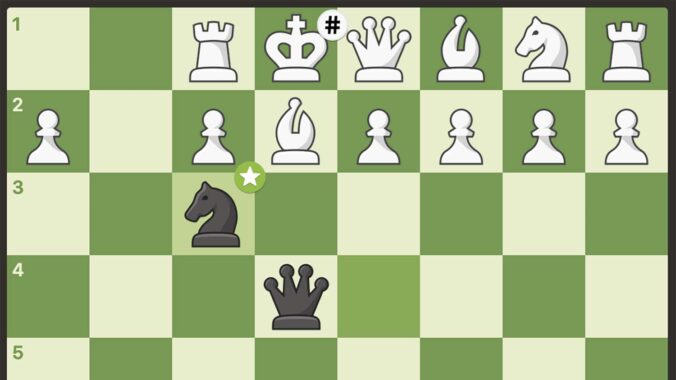
For my 30th game, I played the Blackburne Shilling Gambit with the black pieces, one of the very few opening tricks I know. My opponent was clearly not familiar with it and was checkmated on move 7 (that’s the main image for this blog post). My accuracy was 92.9. Estimated 1950 rating for this game. Opponent from: Argentina. Opening: Blackburne Shilling Gambit. Rating of 1316 now.

Not a good day for chess. Three losses in a row, and one was not even my fault.

I thought I had a solid position with the black pieces but then my opponent started taking my pawns, one, two, three, and that was a poor endgame for me with that material disadvantage. Resigned on move 50. My accuracy was 79.7. Estimated 1550 rating for this game. Opponent from: USA. Opening: Bishop’s opening, Berlin Defense. Rating of 1303 now.

The next game was befuddling. I had my opponent one move from checkmate. He sacrificed a bishop to avoid that. And then four moves later he checkmated me. I totally missed that, it was the first time I was checkmated in all my games. Very disappointing. My accuracy was 64.3. Estimated 1550 rating for this game. Opponent from: Kazakhstan. Opening: Queen’s Pawn Opening: Zukertort, Chigorin Variation. Rating of 1293 now.

Another frustrating experience. I was doing well with the white pieces, up a bishop on move 35, and then the electricity went off. Lost by abandonment. That brought me down to rating 1281.

Finally, I got a victory, with the white pieces. My opponent lost a rook in some poorly calculated piece exchange, and resigned on move 24. My accuracy was 78.1. Estimated 1450 rating for this game. Opponent from: Philippines. Opening: Queen’s Pawn Opening: Anti-Torre Attack. Rating of 1290 now.

Then a victory with the black pieces, by resignation on move 54. My opponent actually tried to give me the Scholar’s Mate. I defended appropriately, of course, and the computer classified my sixth move, a knight sacrifice, as brilliant. It’s my first brilliancy ever. My accuracy was 76.0. Estimated 1350 rating for this game. Opponent from: India. Opening: Bishop Opening. Rating of 1298 now.

Appalling game. Big blunder on move 22 with the black pieces, gave a rook away and resigned. My accuracy was the worst ever, 46.7. Estimated 600 rating for this game. Opponent from: Philippines. Opening: King’s Gambit. Rating of 1286 now.

Another defeat. Slowly outplayed, little by little lost material, got to the endgame with my bishop and two pawns against his rook and two pawns, nothing to do but resign. My accuracy was 69.4. Estimated 1150 rating for this game. Opponent from: Indonesia. Opening: Englund Gambit. Rating of 1278 now.

Finally, a win. With the white pieces, in an endgame of queen and pawns, I outmatched my opponent and he resigned on move 61. My accuracy was 73.4. Estimated 1300 rating for this game. Opponent from: Romania. Opening: King’s Pawn Opening: Goldsmith Defense. I’m not sure how this can be a King’s Pawn Opening if I started with 1.d4. Perhaps it’s a transposition, because I played 2.e4? Rating of 1287 now.

A blunder on the 18th move with the black pieces makes me lose the will to play. After losing a bishop that I didn’t see was being attacked, I resigned. My accuracy was 69.3. Estimated 1200 rating for this game. Opponent from: Russia. Opening: Polish Opening. Rating of 1277 now.

The next game, again with black, wasn’t much better. I messed up the opening so badly that I ended up resigning on move 28, feeling totally defeated. My accuracy was 62.2. Estimated 1050 rating for this game. Opponent from: Philippines. Opening: Blackburn Shilling Gambit Declined. Rating of 1267 now.

A draw is better than a loss, so I imagine I shouldn’t be sad about this game. I got a good material advantage but my opponent was lucky that he could force a draw by repetition. My accuracy was 69.0. Estimated 1200 rating for this game. Opponent from: Philippines. Opening: Indian Game: East Indian. Rating of 1268 now.

A little victory to get me going. Endgame of black rook and bishop (me) versus white rook and knight (him) resulted in his resignation on move 47. My accuracy was 75.0. Estimated 1350 rating for this game. Opponent from: Bosnia and Herzegovina. Opening: Blackburn Shilling Gambit Declined. Rating of 1276 now.

It seems every time I start to gain a little confidence I’m paired with a stronger opponent. This one had three Great Moves (according to the computer) and made me resign with the white pieces on move 42. My accuracy was 70.9. Estimated 1200 rating for this game. Opponent from: New Zealand. Opening: Queen’s Pawn Opening: Krause Variation. Rating of 1268 now.

Checkmate on move 66 with the white pieces makes me smile again, especially against a higher rated opponent who started the game with an insulting trap (1. d4 e5, 2.dxe5 Bc5, 3. f3 d6, 4. exd6 Ne7, trying to get my queen). My accuracy was 74.9. Estimated 1350 rating for this game. Opponent from: United Arab Emirates. Opening: Englund Gambit. Rating of 1278 now.

Got a bad opening, with material advantage but allowing my opponent to have two unstoppable connected passed pawns. Resigned on move 37. My accuracy was 68.9. Estimated 750 rating for this game. Opponent from: France. Opening: Blackburn Shilling Gambit Declined. Rating of 1268 now.

Then a quick victory with the black pieces, to keep my spirit up. My opponent resigned on move 25 after I trapped his queen. My accuracy was 80.2. Estimated 1450 rating for this game. Opponent from: Indonesia. Opening: Queen’s Pawn Opening. Rating of 1274 now.

Lost the next one with the black pieces in an endgame against pawn superiority and a stronger opponent. Resigned on move 67. My accuracy was 71.7. Estimated 1300 rating for this game. Opponent from: Canada. Opening: Slav Defense. Rating of 1268 now.

A strange game where my opponent tried to attack me very early and very forcefully with the black pieces, and after I defended myself appropriately he resigned on move 21. Even though I played solidly enough to make him resign, the computer wanted me to follow some other plan and gave me very low scores for not doing it. My accuracy was 49.9. Estimated 700 rating for this game. Opponent from: Kazakhstan. Opening: Queen’s Pawn Opening: Horwitz Defense. Rating of 1275 now.

I consider very poor sportsmanship when the player is about to be checkmated and, instead of letting it happen or resigning the game, lets the clock run until he loses on time. That’s what happened in this game, where I won with the black pieces on move 88 in a rook and pawns endgame. My accuracy was 73.3. Estimated 1300 rating for this game. Opponent from: Iran. Opening: Scotch Game. Rating of 1283 now.

To close my first series of fifty games I had a very silly loss where I wasn’t really paying attention to what I was doing and made a couple of serious blunders. Resigned on move 19. My accuracy was 64.5. Estimated 1100 rating for this game. Opponent from: France. Opening: Queen’s Pawn Opening: Zukertort Variation. Rating of 1276 now.

Favorite Movies 2011-2020

In chronological order, only one movie per director.

  • Mientras Duermes (Jaume Balagueró, 2011)
  • Her (Spike Jonze, 2013)
  • About Time (Richard Curtis, 2013)
  • Only Lovers Left Alive (Jim Jarmush, 2013)
  • The Grand Budapest Hotel (Wes Anderson, 2014)
  • Birdman (Alejandro González Iñárritu, 2014)
  • Ex Machina (Alex Garland, 2014)
  • Relatos Salvajes (Damián Szifrón, 2014)
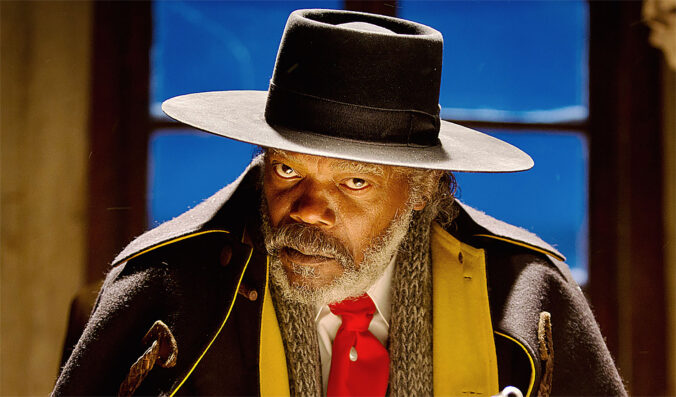
  • The Hateful Eight (Quentin Tarantino, 2015)
  • The Lobster (Yorgos Lanthimos, 2015)
  • Trumbo (Jay Roach, 2015)
  • Captain Fantastic (Matt Ross, 2016)
  • The Shape of Water (Guillermo del Toro, 2017)
  • Marjorie Prime (Michael Almereyda, 2017)
  • Get Out (Jordan Peele, 2017)
  • Parasite (Bong Joon-ho, 2019)
  • Dolor y Gloria (Pedro Almodóvar, 2019)
  • Waiting for the Barbarians (Ciro Guerra, 2019)
  • Ventajas de Viajar en Tren (Aritz Moreno, 2019)
  • The Midnight Sky (George Clooney, 2020)

Playing Old CRPGs Again: the plan

One of my projects for 2024 (yes, I have many projects) is to play again (or, in some cases, for the first time) old computer role playing games (CRPGs). It’s something that gave pleasure for many years and I want to experience it again. I think I will be disappointed in some cases but rewarded in others.

I won’t start with games from the Ultima series (Origin Systems) or the Gold Box series (SSI) because I was never able to like them. It wasn’t because of the primitive graphics, I don’t mind that (I still enjoy playing the classic Rogue, which is just white letters and symbols over a black background). It was the clunkiness of the gameplay and in some cases the silliness of the story.

I was never a fan of the Ultima series. The whole mythology centered around the figure of Lord British (game creator Richard Garriott’s alter ego) was silly, and made even sillier by the pretentious use of Old English expressions like “thee” and “thy”. The worst part, however, was the gameplay. These games were never fun, just piling up one annoyance after another. Working on spreadsheets was more entertaining than playing these early Ultima games. The only game in the series that I had a sliver of fun playing was Ultima Underworld: The Stygian Abyss (1992). This was the first time we saw freedom of 360 degrees movement in a game. Even in that low resolution, it was impressive. The gameplay was still cumbersome, unfortunately. And the collision calculations were still primitive, making it hard to deal with enemies and obstacles. A fantastic advance in game technology but still not really an enjoyable experience to play it.

I had already played more advanced games before I got to Gold Box series (Pool of Radiance and its sequels). After that, those older graphics and interface felt primitive and cumbersome. Everything took forever, with an excess of keystrokes to accomplish even simple tasks like equipping a character. And the battles were long and tedious. There was no enjoyment. The only thing I remember appreciating in these games was that after killing many monsters in a battle the last ones would flee instead of staying to be slaughtered. I thought that was a nice touch.

So I will start my replaying of CRPGs with the first games that I really fully enjoyed: The Bard’s Tale (Interplay, 1985) and Eye of the Beholder (SSI, 1991). I won’t strictly follow a chronological order and may eventually jump to more recently titles and then jump back to the old classics. I don’t want to write a thesis about this, I just want to have some fun.

Favorite Movies 2001-2010

In chronological order, only one movie per director.

  • The Lord of the Rings (Peter Jackson, 2001/2003)
  • The Ring (Gore Verbinski, 2002)
  • Basic (John McTiernan, 2003)
  • The Dreamers (Bernardo Bertolucci, 2003)
  • Lost in Translation (Sofia Coppola, 2003)
  • Kill Bill: Volume 1 / Volume 2 (Quentin Tarantino, 2003/2004)
  • Sideways (Alexander Payne, 2004)
  • Eternal Sunshine of the Spotless Mind (Michel Gondry, 2004)
  • Crash (Paul Haggis, 2004)
  • House of Flying Daggers (Zhang Yimou, 2004)
  • Match Point (Woody Allen, 2005)
  • A History of Violence (David Cronenberg, 2005)
  • La Moustache (Emmanuel Carrère, 2005)
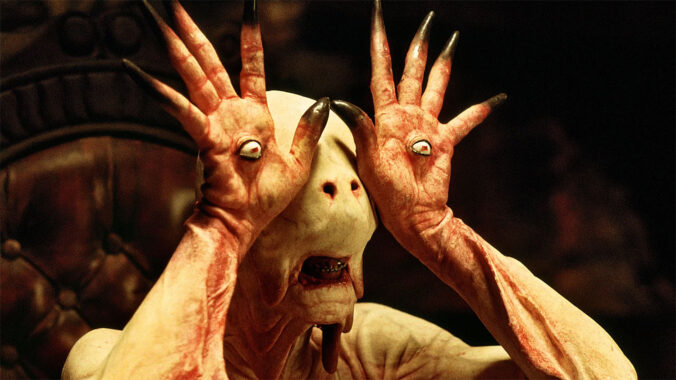
  • Pan’s Labyrinth (Guillermo del Toro, 2006)
  • Volver (Pedro Almodóvar, 2006)
  • The Lives of Others (Florian Henckel von Donnersmarck, 2006)
  • The Man from Earth (Richard Schenkman, 2007)
  • Synecdoche, New York (Charlie Kaufman, 2008)
  • The Time Traveler’s Wife (Robert Schwentke, 2009)
  • Inception (Christopher Nolan, 2010)
« Older posts Newer posts »

© 2026 Zander Dulac

Theme by Anders NorenUp ↑