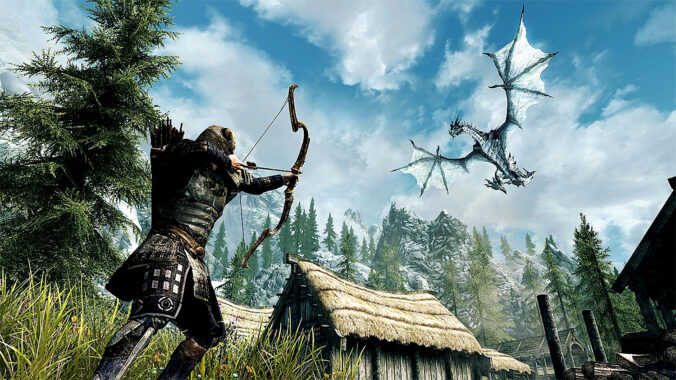
Among video game enthusiasts, especially those who enjoy CRPGs, there is often an unspoken assumption that the “right” way to play is on the hardest difficulty setting available. Finishing a game on Normal is respectable. Finishing it on Hard is admirable. Finishing it on Nightmare, Insanity, Death March, or whatever intimidating name the developers have invented this time, is treated almost like a badge of honor.
I understand the appeal. Some of my favorite gaming memories come from overcoming difficult challenges. There is genuine satisfaction in mastering a complex combat system, learning enemy patterns, and finally defeating a boss that seemed impossible only a few hours earlier.
But as I’ve gotten older, I’ve found myself increasingly drawn to easy games and easy difficulty settings. Not because I can’t handle harder games, but because they often provide a different kind of enjoyment.
When I sit down to play a game, I am usually looking for relaxation rather than stress. Real life already provides deadlines, obligations, unexpected problems, and difficult tasks. I don’t need my leisure activities to do the same. Sometimes I simply want to spend an evening wandering through a beautiful virtual world, following an interesting story, and enjoying myself.
Easy difficulty allows me to focus on the parts of games I often value most: atmosphere, exploration, characters, and narrative. Instead of replaying the same battle twenty times until I finally win, I can continue moving forward and experiencing what the developers created. The challenge becomes discovering the world rather than surviving it.
There is also something liberating about not caring whether a game judges my performance. On easy mode, I am more willing to experiment. I’ll try unusual weapons, strange character builds, or reckless strategies, simply because they seem fun. When every encounter is a life-or-death struggle, experimentation often gives way to optimization. Players stop asking “What would be interesting?” and start asking “What works best?”
Time is another factor. As a teenager, I could spend an entire weekend learning how to defeat a particularly difficult boss. Today, I would rather spend those hours playing several different games, reading a novel, watching a film, writing, traveling, or simply enjoying a good meal with friends. Easy modes allow me to experience more games without demanding the same level of commitment.
I also think the obsession with difficulty sometimes confuses challenge with quality. A game is not automatically better because it is harder. Some games are memorable because of their stories. Others because of their art direction, music, characters, or world-building. Difficulty is only one element among many. No one would argue that a novel becomes better if every page contains a vocabulary quiz, or that a movie improves because the audience must solve a puzzle before each scene. Yet gamers often treat difficulty as if it were the primary measure of value.
Perhaps most importantly, games are entertainment. They are one of the few activities in life where there is no objective reason to impress anyone else. Nobody gives out medals for selecting Hard Mode. Nobody’s career depends on defeating a boss without taking damage. The purpose is enjoyment.
For some people, enjoyment comes from extreme challenge. For others, it comes from immersion, exploration, storytelling, or simple relaxation. Neither approach is superior.
These days, I play games the same way I travel. I am not trying to prove anything. I am there for the experience. If an easy setting allows me to enjoy that experience more, then that is the setting I choose. And I have absolutely no regrets about it.