The three versions of Wakefield (Nathaniel Hawthorne’s 1835 short story, E. L. Doctorow’s 2008 novella, and the 2016 film directed by Robin Swicord) share the same central premise: a man abandons his family without actually leaving their lives. Instead of disappearing into another city or beginning a new identity, he hides nearby and secretly observes the people who believe he has vanished. Yet the similarities largely end there. Each work reflects the concerns of its own era, transforming the same bizarre premise into a very different exploration of identity, marriage, and modern alienation.
Hawthorne’s original story, published in Twice-Told Tales (1837), is one of the strangest pieces in nineteenth-century American literature. Wakefield, an ordinary London husband, steps out one evening intending to be gone only briefly. Instead, for reasons that neither he nor the narrator can fully explain, he rents a room just around the corner from his own house and remains there for twenty years. During this time he watches his wife continue her life, attends public events where she appears, and quietly becomes a ghost haunting his own existence. Eventually, as inexplicably as he left, he simply walks back into his house.
What makes Hawthorne’s story remarkable is that almost nothing happens externally. There are no adventures, conspiracies, or dramatic revelations. The mystery lies entirely inside Wakefield’s mind, and even that mystery remains unresolved. Hawthorne refuses psychological certainty. His narrator speculates about Wakefield’s motives (curiosity, pride, habit, indecision) but never settles on a definitive explanation. The result is less a character study than a philosophical thought experiment. Hawthorne is fascinated by the thin line separating participation in life from merely observing it. One arbitrary decision is enough to exile a man from his own existence.
Doctorow’s version, published in The New Yorker in 2008, preserves Hawthorne’s central premise but transforms it into psychological realism. His Wakefield is no longer an almost allegorical figure but a successful modern professional whose marriage has gradually become emotionally exhausted. After an argument with his wife Diana, he impulsively decides not to return home. Instead of renting a room, he occupies an abandoned garage not far from his suburban house, surviving through scavenging while secretly watching his family adapt to his disappearance.
Unlike Hawthorne, Doctorow is deeply interested in interior consciousness. Much of the novella consists of Wakefield’s reflections on marriage, masculinity, aging, success, and failure. The disappearance becomes an experiment in self-erasure. He imagines that by removing himself from his domestic role he will somehow discover who he really is. Instead, he discovers that identity cannot exist independently of the relationships that define it. As the months pass, he becomes physically filthy and socially invisible, while his wife slowly reconstructs a life without him.
Doctorow also introduces an element almost absent from Hawthorne: shame. Wakefield increasingly understands that his absence is not liberating but childish. The longer he stays away, the harder returning becomes. Every additional day raises the emotional cost of explaining himself. His imprisonment is therefore largely self-created. What began as an impulsive decision gradually becomes impossible to reverse.
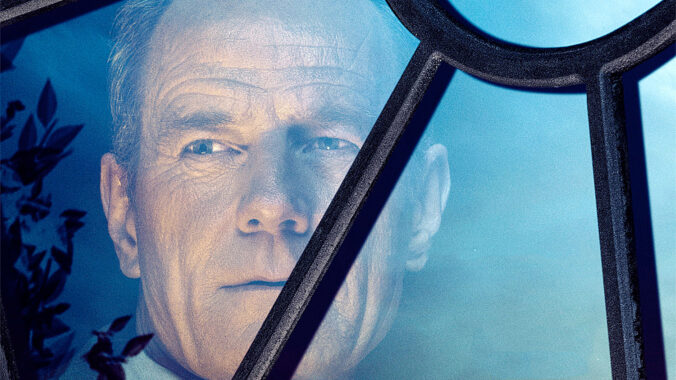
The 2016 film adaptation, Wakefield, starring Bryan Cranston and directed by Robin Swicord, follows Doctorow’s version much more closely than Hawthorne’s but shifts the emphasis once again. Cinema naturally externalizes what literature can leave internal, and the film compensates by relying heavily on narration. Cranston’s voice-over preserves much of the introspective quality of Doctorow’s prose while allowing the audience to observe the visible deterioration of both his body and his living conditions.
The film is also more sympathetic toward its protagonist than either previous version. Hawthorne keeps Wakefield fundamentally unknowable, while Doctorow often presents him as vain, self-deluding, and absurd. Cranston’s performance emphasizes vulnerability beneath the narcissism. His Wakefield remains selfish and irresponsible, but he is also visibly lonely, frightened, and emotionally adrift. The audience is encouraged to understand him even while recognizing the damage he inflicts on his family.
Another important difference is the portrayal of the wife. Hawthorne’s Mrs. Wakefield is almost entirely seen from outside. She exists mainly as the object of her husband’s observation. Doctorow gives Diana somewhat greater independence, showing how she slowly rebuilds her emotional life after believing herself abandoned. The film goes further still through Jennifer Garner’s performance. Diana becomes a fully realized character rather than simply the absent husband’s object of fascination. Her grief gradually evolves into resilience, making Wakefield’s eventual return morally more complicated than in Hawthorne’s original.
The endings also reveal the changing concerns of the three works. Hawthorne concludes almost where he began. Wakefield returns home, and the narrator extracts a moral lesson about the danger of separating oneself from ordinary human existence. The return is startling precisely because it lacks melodrama. Life simply resumes, though the reader cannot help wondering whether anything could truly return to normal after twenty years.
Doctorow’s conclusion is considerably more ambiguous emotionally. The return is less about restoring the old marriage than acknowledging the impossibility of living outside human connection. Wakefield has not solved the problems that drove him away. He has merely discovered that isolation solves nothing.
The film introduces an even stronger note of redemption. Without becoming sentimental, it suggests the possibility of forgiveness and renewed intimacy. This ending is perhaps the greatest departure from Hawthorne, reflecting a contemporary preference for emotional reconciliation over moral allegory. Some critics have found this hopeful conclusion less convincing than Doctorow’s harsher psychological vision, while others see it as a natural culmination of Cranston’s deeply human performance.
Viewed together, the three works also illustrate changing literary priorities across nearly two centuries. Hawthorne writes like a moral philosopher, presenting a symbolic puzzle whose meaning the reader must contemplate. Doctorow writes like a psychological novelist, examining the complexities of consciousness and identity in modern suburban life. The film, finally, becomes a character drama, focusing on emotional relationships and personal redemption.
What remains constant across all three versions is the extraordinary power of the original premise. Most stories about disappearance ask what happens to the missing person. Wakefield asks the opposite question: what happens when someone chooses to become a spectator of his own life? The answer changes from one version to another, but each arrives at a similar conclusion. Identity cannot be preserved in isolation. A person exists not only through private consciousness but through participation in the ordinary relationships that make up everyday life.
Few literary premises have proved so durable. Hawthorne created one of American literature’s most unsettling thought experiments. Doctorow transformed it into a meditation on middle age and modern masculinity. The 2016 film translated it into an intimate study of marriage and loneliness. Each version belongs unmistakably to its own time, yet all continue to ask the same unsettling question: how long could someone stand outside his own life before he ceased to belong to it at all?